RSS Feed | Podcast Index | Spotify | Amazon Music | Samsung Podcasts | Listen Notes
Apple Podcasts | Google Podcasts | Pandora | Tune In | Stitcher | iHeartRadio | Deezer

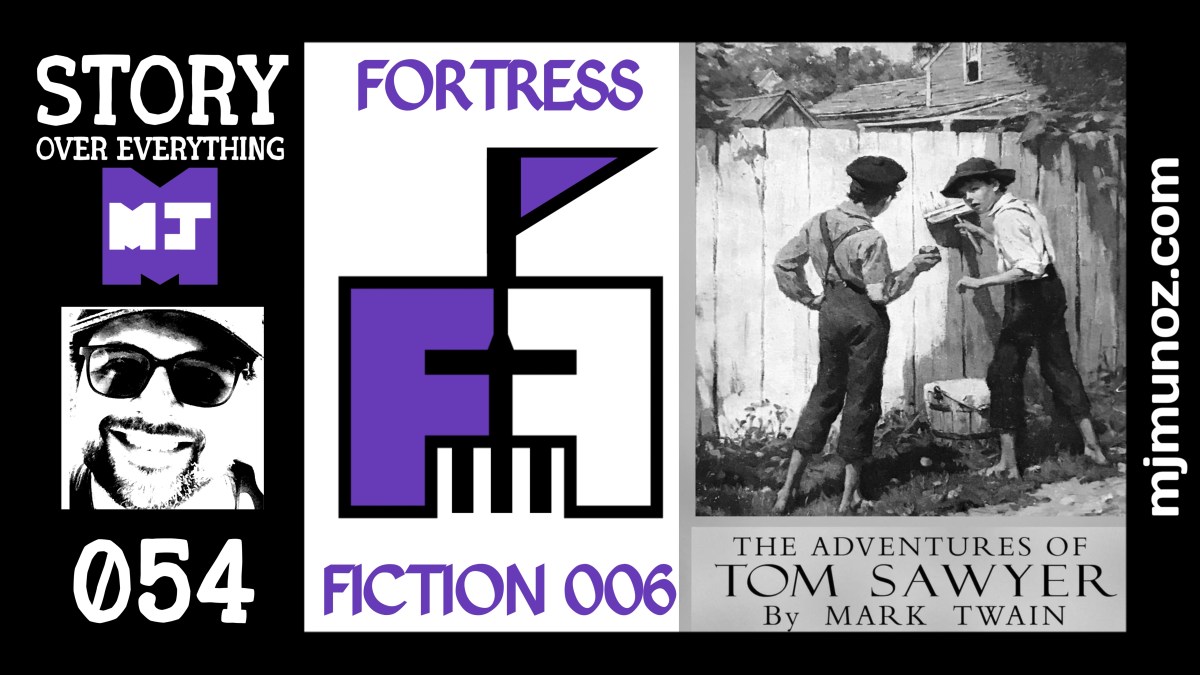
The Adventures of Tom Sawyer – Fortress Fiction 6 |SOE 054 – Fortress Fiction
Join MJ as he talks about The Adventures of Tom Sawyer by Mark Twain.
#amreading #middlegrade #bookreview #Book #Fantasy #MJXMG #FOTRESSFICTION
LINKS
How To Read
The book can be borrowed from CloudLibrary, Librivox or Project Gutenberg, or purchased from this site.
My Candid Thoughts on Mark Twain’s The Adventures of Tom Sawyer – Rewritten from transcript by Claude AI
Introduction
Welcome to Fortress Fiction episode 6! I’m MJ Muñoz, an author, artist, and analyzer, sharing my insights on literary works. Today, we’re delving into “The Adventures of Tom Sawyer” by Mark Twain, a novel that has sparked debates about its place in the literary canon. Does it deserve a spot in Fortress Fiction? Let’s find out.
Synopsis of The Adventures of Tom Sawyer
“The Adventures of Tom Sawyer,” published in 1876, is a classic tale set in a Mississippi River town. It follows the mischievous adventures of Tom Sawyer and his friends, primarily Huckleberry Finn. The novel, initially a commercial failure, became one of Twain’s best-selling works during his lifetime. It’s known for its vivid depiction of childhood and societal observations.
Does Tom Sawyer Belong in Fortress Fiction?
Despite my enjoyment of the book, I contend that “The Adventures of Tom Sawyer” does not fully belong in Fortress Fiction. While entertaining and honest, it often glorifies bad behavior without instilling virtue. Tom Sawyer, as a character, is more of a “bad boy” than a hero. The book’s realism is commendable, but its moral ambiguity can be problematic.
The Duality of Tom Sawyer’s Character
Tom Sawyer is a complex character. His antics are amusing and endearing, yet his behavior isn’t always exemplary. He embodies the qualities of a trickster, reminiscent of characters like Bugs Bunny and Ferris Bueller. Twain’s portrayal of Tom as both a potential great man and a mischievous boy highlights the duality of human nature.
The Setting: A Mississippi River Town
The novel is set in the fictional town of St. Petersburg, based on Hannibal, Missouri, where Twain grew up. This setting is crucial to understanding the social and cultural backdrop of the story. The town’s simplicity and the boys’ adventures paint a vivid picture of 19th-century American life.
Literary Significance and Reception
Initially a commercial failure, “The Adventures of Tom Sawyer” became a cornerstone of American literature. It is celebrated for its storytelling and Twain’s pioneering use of vernacular speech. Despite being overshadowed by its sequel, “The Adventures of Huckleberry Finn,” it remains a significant work.
Themes Explored in The Adventures of Tom Sawyer
- Childhood Innocence and Mischief: The novel captures the essence of childhood with its playful yet poignant depiction of Tom’s adventures.
- Societal Critique: Twain subtly critiques societal norms and behaviors through the lens of a child’s perspective.
- Friendship and Loyalty: The bond between Tom and Huck is central to the story, showcasing themes of loyalty and camaraderie.
Moral Ambiguity and Virtue
One of the main critiques of the novel is its moral ambiguity. While it contains moments of virtue, such as Tom and Huck’s bravery, it often promotes mischievous behavior. This raises questions about its suitability as a moral guide for young readers.
The Realism of Tom Sawyer’s World
The novel’s realism is both a strength and a weakness. It accurately portrays the raw and unfiltered aspects of childhood and society. However, this rawness can be unsettling, as it doesn’t shy away from depicting the less virtuous side of life.
Autobiographical Elements
Mark Twain infused the novel with autobiographical elements, drawing from his own childhood experiences. This adds a layer of authenticity to the story, making it feel both personal and universal.
The Impact of Twain’s Writing Style
Twain’s witty and observant writing style is one of the novel’s standout features. His ability to capture the nuances of human behavior and societal quirks is unparalleled. This style makes the book engaging but also raises questions about its deeper messages.
Comparison to Other Literary Works
Comparing “The Adventures of Tom Sawyer” to other works, such as “The Prince and the Pauper” and “A Connecticut Yankee in King Arthur’s Court,” highlights Twain’s versatility. Each of his novels offers unique insights into human nature and society.
The Role of Humor in The Adventures of Tom Sawyer
Humor is a key element of the novel. Twain uses it to address serious themes in a light-hearted manner, making the story accessible and enjoyable. However, this humor sometimes downplays the book’s more profound messages.
Controversial Aspects and Censorship
The novel has faced controversy, particularly regarding its depiction of race and use of language. Some argue for censoring certain terms, while others believe in preserving the original text as a historical artifact. This debate continues to influence how the book is taught and perceived.
The Legacy of Tom Sawyer
“The Adventures of Tom Sawyer” has left a lasting legacy. Its influence is seen in various adaptations and its continued presence in literary discussions. Despite its flaws, it remains a beloved classic that offers valuable insights into American culture and childhood.
Personal Reflections on The Adventures of Tom Sawyer
As an adult, I appreciate the novel’s honesty and entertainment value. It reminds me of childhood stories and the blend of reality and imagination that defines youth. However, its lack of a strong moral compass makes me hesitant to recommend it unreservedly.
Notable Works by Mark Twain
In addition to “The Adventures of Tom Sawyer,” Twain’s notable works include:
- “The Gilded Age: A Tale of Today”
- “The Prince and the Pauper”
- “A Connecticut Yankee in King Arthur’s Court”
- “The American Claimant”
- “Pudd’nhead Wilson”
- “Personal Recollections of Joan of Arc”
- “A Horse’s Tale”
- “The Mysterious Stranger”
Upcoming Fortress Fiction: The Westing Game
In the next episode of Fortress Fiction, I’ll be discussing “The Westing Game” by Ellen Raskin. This quirky mystery from 1978 involves 16 heirs competing to uncover the secrets behind Tycoon Sam Westing’s death. Stay tuned for an engaging exploration of this classic mystery.
FAQs
What is “The Adventures of Tom Sawyer” about?
“The Adventures of Tom Sawyer” is about a mischievous boy named Tom Sawyer growing up in a Mississippi River town. The novel follows his adventures with friends, including Huckleberry Finn.
Why is “The Adventures of Tom Sawyer” significant in American literature?
The novel is significant for its vivid portrayal of childhood, use of vernacular speech, and Twain’s sharp societal observations. It captures the essence of 19th-century American life.
Is “The Adventures of Tom Sawyer” appropriate for children?
While entertaining, the novel’s moral ambiguity and portrayal of mischievous behavior make it a complex read for children. It is better suited for mature readers who can appreciate its nuances.
How does “The Adventures of Tom Sawyer” compare to “The Adventures of Huckleberry Finn”?
While both novels are beloved classics, “The Adventures of Huckleberry Finn” is often considered more profound due to its deeper exploration of themes such as race and morality.
What are some controversial aspects of “The Adventures of Tom Sawyer”?
The novel’s depiction of race and use of period-specific language have sparked debates about censorship and its appropriateness in modern times.
What is the main theme of “The Adventures of Tom Sawyer”?
The main theme is the exploration of childhood innocence and mischief, set against the backdrop of societal norms and expectations.
Conclusion
“The Adventures of Tom Sawyer” remains a beloved yet contentious classic. Its blend of entertainment and realism makes it a unique read, but its moral ambiguity poses challenges. As we continue to explore literary works, it’s important to consider both their artistic merits and ethical implications. Keep reading, stay curious, and join the conversation on Fortress Fiction.
 MJ Muñoz