

Kamen Rider Zeztz 18 – Shake Up – Rider Tears
Watch Analysis
Kamen Rider Zeztz Episode 18 isn’t the best episode of the series so far.
But it is the episode that proves Yuya Takahashi is one of the best Kamen Rider writers the franchise has ever had.
And the reason is simple: he keeps coming back.
That alone is proof. Another proof is that this show is doing everything it’s doing right now, especially in Episodes 17 and 18.
A Rare Achievement: A True Jumping-On Point That Still Respects Continuity
Episodes 17 and 18 work simultaneously as:
- a jumping-on point for new viewers, and
- a rich continuation for people who have been watching from the beginning.
Everything that happens before still matters. The context still matters. It absolutely makes the experience richer if you’ve been following along.
But at the same time, this is a genuinely great place to start.
If you jump in here, you very quickly understand:
- what Baku is about
- what Zeztz is
- who his rival is
- what their conflict looks like
- what CODE is, and why it’s compromised
You also immediately understand that there has been a change in leadership. And all of this happens in a very short time frame.
That’s impressive.
You get enough of a handle on the conflict to be satisfied and intrigued, and to want to keep watching. And if you have been watching all along, it’s even better, because now things are changing.
Kureha’s Entrance and a Shift in Cast Energy
One of the biggest changes comes with Kareah’s introduction.
She comes in with a very strong presence and a very dynamic vibe. It turns out the actress is a veteran tokusatsu performer; she played Papillon Ohger in Ohsama Sentai King-Ohger. I didn’t recognize her at first, which makes sense, because in that show her face is almost always partially covered.
Here, she is not subdued.
That contrast really stands out when you compare her to Nasuka. I like Nasuka as a character, but her portrayal is very subdued, very flat, almost monotone. She has moments where she panics or reacts violently—kicking Fujimi, little jokey slapstick violence—but it’s always sideways. Even when she doesn’t want to do something, it comes out muted.
Kureha doesn’t do that.
She’s intense. She’s switched on. You always know what she’s feeling. And that’s a huge change in energy for the show, in a very good way.
The Name Slip: A Classic Takahashi Detail
There’s a small line early in Kureha’s introduction that immediately made me think, this has to be Takahashi’s writing.
Baku says Kureha’s name, even though he shouldn’t know it. He even acknowledges that he shouldn’t know it, but he does.
That’s not a throwaway line.
That’s the kind of quiet clue that Takahashi loves to plant, and that always comes back later. It’s clearly tied to something that happened in the past, and to what’s going to be revealed going forward.
I checked and all 18 episodes so far have been written by Yu Takahashi, and this moment feels like his writing to me.
Names, Symbols, and Dream Logic
I also really enjoy the symbolism baked into this episode.
Kureha’s name sounds like kuro (black), but it actually connects to dusk, a homophone that’s spelled differently. That’s clever. Nox is night, not “knight,” but night, like Nyx, the Greek goddess.
Baku himself is a dream-eater. His name literally refers to that. Even “Yurosu” carries this sense of multiplicity and scale.
These aren’t just cool names. They’re doing thematic work. Dreams, nightmares, memory, identity—this stuff keeps coming up, and it’s clearly intentional.
That attention to detail is something I really appreciate, not just from Takahashi, but from Kamen Rider when it’s operating at a high level.
Why This Episode Works as a Turning Point
I’ve said before that Ultraman tends to feel classier and more premium overall, and it’s easier to watch a full Ultraman series because it’s shorter. I have a lot of affection for it.
But Kamen Rider, when it’s on point, does really good deep thematic work, at least on the surface, and often deeper than that.
Episode 18 is a great example of that.
It’s a turning point.
It’s a continuation point.
And it’s a launching point.
It raises new questions:
- About CODE
- About Kureha and her lost memories
- About the Nightmares
- About how many other Agents this might have happened to
- And about what this all means for Baku going forward
Kureha doesn’t remember being an agent, but she was one. Will she be again? Or will she become something else entirely?
Final Thoughts
Episode 18 isn’t the loudest episode of Kamen Rider Zeztz.
But it might be one of the smartest.
It shows confidence. It shows restraint. And it shows exactly why Yuya Takahashi keeps getting trusted with major Rider projects. Zero One was the first Reiwa Kamen Rider series and it was made to be a jumping on point like Black, Kuuga or W. It suceeded on multiple levels in my opinion. Zeztz is the first Kamen Rider series framed as international from go and Takahashi was entrusted with that. That is a vote of confidence in his abilities.
I’m genuinely fascinated to see where this goes next.
Let me know what you thought about the episode.
Drop a comment below or tag me @MJ_Scribe on Twitter. Let’s have some fun talking about this.
If you enjoy thoughtful stories for kids and families, check out my book Mockwing Mayhem. It is a heartfelt adventure about magical bugs battling monsters and protecting children.
You can find more of my reviews, reflections, and stories with spine at mjmunoz.com, and join the mailing list there for behind the scenes updates and new releases.
Bonus Reflections
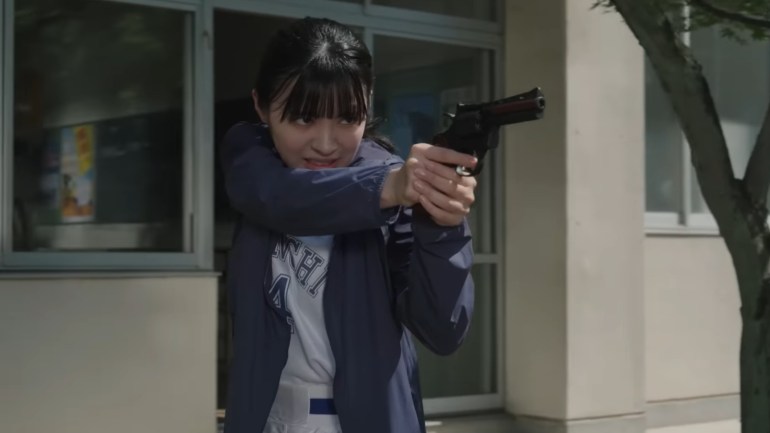
Kureha Miyamoto Was a CODE Agent and Does Not Remember
One of the most unsettling ideas introduced in Episode 18 is that Kureha Miyamoto was a CODE agent and does not remember it.
That immediately raises larger questions. How many other agents has this happened to. How deep does the memory manipulation go. At that point, CODE stops being just an organization with questionable leadership and becomes a direct threat to its own people.
This is where the story’s focus on identity really starts to come into view.
Episode 18 Proves Yuya Takahashi Is Elite
Episode 18 is not the flashiest episode of Zeztz so far. It does not rely on spectacle or shock. Instead, it proves why Yuya Takahashi continues to be trusted with major Rider projects.
This episode works as a jumping on point for new viewers and as a payoff for people who have been watching all along. You understand Baku. You understand CODE. You understand the conflict. The show does not stop to explain itself. That kind of structural clarity is difficult to pull off, and Episode 18 does it quietly and confidently.
A True Jumping On Point Without a Reset
You could realistically start Zeztz at Episode 18 and not feel lost. That does not mean earlier episodes do not matter. They absolutely do. But this episode reintroduces the core ideas cleanly and efficiently.
Baku’s role, CODE’s instability, the leadership shift, and the underlying tension are all communicated in a short amount of time. The show is not rebooting itself here. It is re establishing its foundation so it can move forward.
Why Episode 18 Changes Baku’s Story
Episode 18 might look like it is about Kureha, but it is really about Baku.
He knows things he should not know. He says names he should not remember. The episode does not explain this outright. It simply flags it and moves on. That restraint matters. It tells us that Baku’s past is more complicated than we have been led to believe, and that the truth is going to matter later.
This episode does not give answers. It tells us where to start paying attention.
 MJ Muñoz