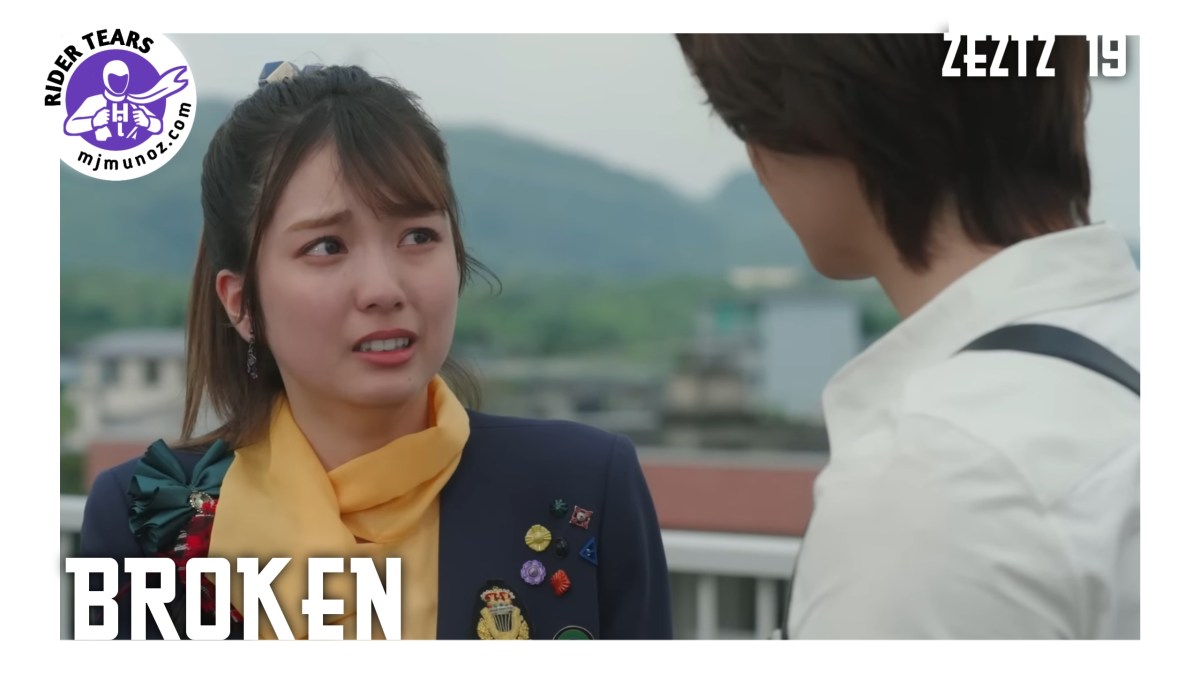

Kamen Rider Zeztz 19 – Broken – Rider Tears
Watch Analysis
Kamen Rider Zeztz episode 19 does something really interesting, almost an artful dodge. It allows Baku to admit something that a lot of shows would either avoid or try to justify away.
CODE is not wonderful.
There are problems with it. Real problems. And Baku knows that.
When Nox asks him why he is still serving CODE, or why he continues to fight for CODE, Baku does not offer a clean or comforting answer. He does not pretend the system makes sense. What he says instead is that he is still trying to figure out which parts of CODE are evil and which parts might not be.
But he does know this much. The people who are hurting others, the people who are giving them Nightmares, the people who are causing suffering, those people are bad. And he will fight them.
What I really appreciate about that moment is its clarity. Not clarity in the sense of certainty, but clarity in the sense of direction.
If you do not know what to do, if you are confused about what is right and what is wrong, sometimes all you can do is, unfortunately I am going to quote Frozen 2 here, do the next best thing.
When you are in an imperfect world, inside an imperfect system, and you yourself are imperfect, that may be all that is available to you. What is the next thing you can do. What is the best thing you can figure out right now.
And best does not mean good. Sometimes it just means the least bad option on the table.
That honesty about moral action inside a broken world is what makes this episode work for me.
Nem and the Fear of Being the Problem
The emotional center of this episode belongs to Nem.
There is a moment that genuinely feels like Baku is stopping her from killing herself. She has a knife. She is preparing to go after the Nightmare as part of the death game. And it feels like she is thinking that if she dies in the dream, maybe she will die in the real world too, and then she will no longer be the source of the Nightmares.
Nem learns that the Nightmares might be coming from her own subconscious. That does not make her evil. It does not make her culpable. But it does make her feel responsible.
And she hates that.
She cannot stand the idea that people might be suffering because of her, even unintentionally. That belief drives the entire conversation she has with Baku, and it is what pushes her toward that desperate, self destructive conclusion.
What matters most in that conversation is where it ends. Baku reminds her that she makes people happy. That she gives them hope. That she gives them something they need in order to keep going.
From the very beginning of the series, from episode one, we know that people have dreams with Nem in them. This episode starts to show us why that matters.
We do not know exactly how it works. We do not know when she disappeared, or how her consciousness became connected to everyone else’s dreams. But the emotional truth is clear. Nem cannot live with the idea that her existence might be hurting others.
Why Baku Stopping Her Matters
From a purely utilitarian perspective, Nem sacrificing herself could be framed as logical. One life to save many. End the Nightmares at the source. Solve the problem quickly.
That is not what Baku does.
He does not argue efficiency. He does not help her do it. He does not even entertain the idea.
He stops her.
And he stops her not because it is practical, but because she matters.
That choice tells us exactly who Baku is. He refuses to solve evil by accepting despair as the answer. He refuses to treat Nem as a tool, even if that tool could end the suffering faster.
Even while trapped inside a broken system, he draws a line he will not cross.
Being Part of a Broken System Anyway
There is another uncomfortable idea that this episode does not shy away from.
By continuing to fight, and by continuing to operate within CODE at all, Baku is still part of the system. He may be perpetuating it. He openly admits that he does not fully understand CODE or its true goals.
We do not even have a clear statement that CODE is truly opposed to the Nightmares, at least not in a way that feels clean or trustworthy.
So in a sense, Baku becomes part of the problem too.
But the episode does not present withdrawal as the moral solution. It does not suggest that walking away would be clean or righteous.
Instead, it presents action with awareness. Acting while knowing the system is broken. Acting while knowing you do not have all the answers.
Baku chooses to fight what he knows is wrong, even if he cannot yet dismantle the structure behind it.
That tension, being part of the problem while still trying to prevent greater harm, is where Zeztz 19 really lives.
Broken, but Still Choosing to Act
What ultimately makes Zeztz 19 work is that it refuses easy answers.
It allows Baku to say, honestly, that he does not really know what he is doing. That he wants to do better. That he wants to stand against what he knows is wrong. And that for now, this is the path he is on.
That is a powerful idea.
When we live in a broken world, facing what feels like insurmountable darkness, the answer is not always clarity. Sometimes the answer is commitment. Sometimes it is simply choosing to act against what you know is wrong, even while you are still figuring everything else out.
That is why this episode lands for me.
Question for Discussion
In a broken world, when you do not fully understand the system you are part of, what does it actually mean to do the right thing?
Let me know what you thought about the episode.
Drop a comment below or tag me @MJ_Scribe on Twitter. Let’s have some fun talking about this.
If you enjoy thoughtful stories for kids and families, check out my book Mockwing Mayhem. It is a heartfelt adventure about magical bugs battling monsters and protecting children.
You can find more of my reviews, reflections, and stories with spine at mjmunoz.com, and join the mailing list there for behind the scenes updates and new releases.
Bonus Reflections
Bonus Reflection 1: Stopping the Knife

One of the most striking moments in Zeztz 19 is when Baku stops Nem from using the knife. On the surface, it looks like a hero stopping a tragic mistake. But the more you sit with it, the more complicated it becomes.
Nem is not acting out of malice. She is acting out of responsibility, or at least what she believes responsibility demands. If the Nightmares come from her, then maybe the most direct solution is for her to remove herself from the equation entirely. It is a brutal, utilitarian logic, and in a broken system, it almost makes sense.
What matters is that Baku does not accept that logic. He does not let the system define what sacrifice must look like. He chooses to stop her, not because it is efficient, but because it is human. Zeztz 19 makes the case that some lines cannot be crossed, even if crossing them would make the problem go away faster.
Bonus Reflection 2: Not Guilty, Still Hurting People
Nem’s breakdown is one of the most honest moments in the episode. She is not told that she is evil. She is not told that she is to blame. And yet, she is forced to sit with the possibility that she is still the source of real harm.
That distinction matters. Being part of the problem is not the same as being guilty. But it still hurts. It still weighs on you. It still changes how you see yourself.
Zeztz does something rare here. It allows a character to feel crushing responsibility without assigning moral condemnation. Nem hates the idea that people are suffering because of her existence, even unintentionally. That emotional reality feels painfully familiar, especially in a world where systems hurt people regardless of anyone’s intent.
Bonus Reflection 3: Choosing to Act Without Certainty

Baku’s decision in this episode is quiet, but it is profound. He admits that he does not fully understand CODE. He admits that the system he works within is compromised. He admits that he may be perpetuating harm simply by participating.
And then he chooses to act anyway.
Not because he is sure he is right. Not because the system has earned his loyalty. But because he knows, with clarity, that the people creating suffering and Nightmares are wrong. In the absence of perfect knowledge, he chooses the next best thing.
That choice is the moral heart of Zeztz 19. It is not about purity. It is not about having clean hands. It is about refusing to surrender agency just because the world is broken.
 MJ Muñoz