Kamen Rider Zeztz 22 – Baku, CODE, and the Big Distraction – Rider Tears
Watch Analysis
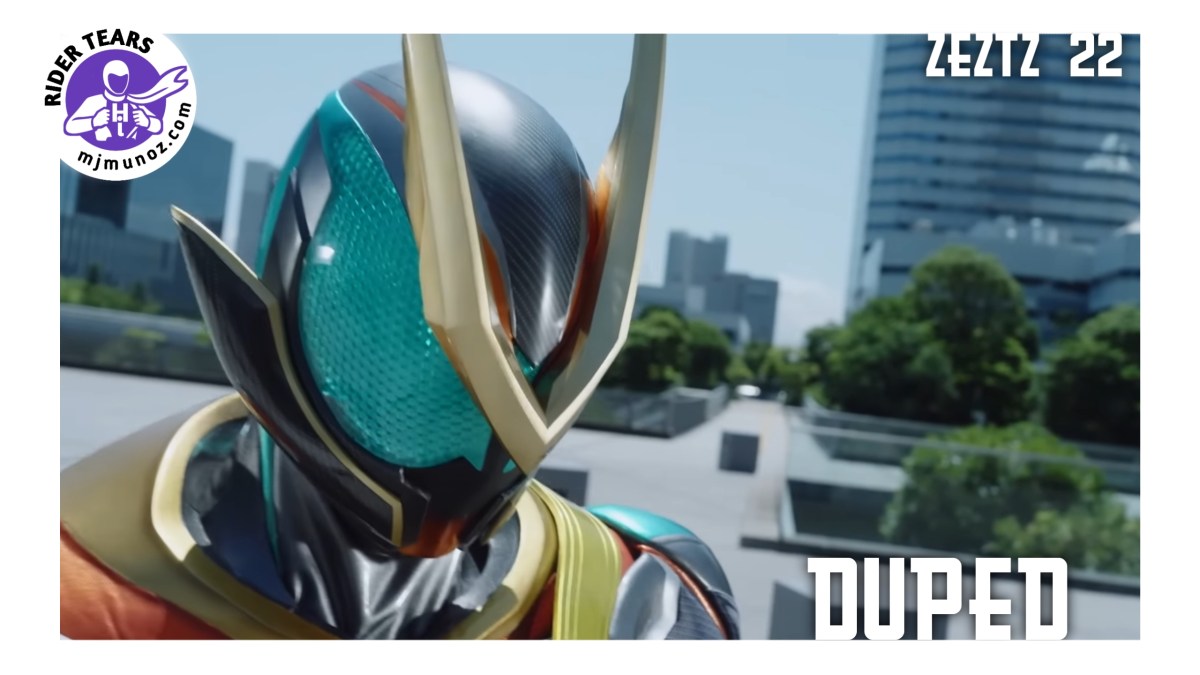
Episode 22 of Kamen Rider Zeztz proves that Yuya Takahashi has us all duped.
He’s got the characters duped.
He’s got the viewers duped.
And it’s interesting and frustrating at the same time.
Case22: Revenge delivers the debut of Zeztz Catastrom, the deaths of Kureha (Six) and Five, and one of the most explosive real-world Rider fights we’ve seen so far. But underneath all of that spectacle, something deeper is happening.
The Question That Gets Ignored
Baku asks a very legitimate question in this episode.
He questions CODE’s true purpose.
He questions what CODE is doing.
He questions whether CODE is even righteous.
That is a thematically important question. That is something we should explore.
But instead of exploring it, the episode pivots.
Baku feels guilt over letting Kureha die. He feels guilt over letting Five die. Because of his guilt and because of his trauma — sparked by his inaction — he buys into the idea that he has to use the power of nightmares.
This awful power.
The power of Catastrom.
And he totally wrecks Nox.
It is so satisfying to watch him wield that much power that it almost made me forget the question about CODE.
And that’s the trick.
Zeztz Catastrom and Spectacle as Distraction
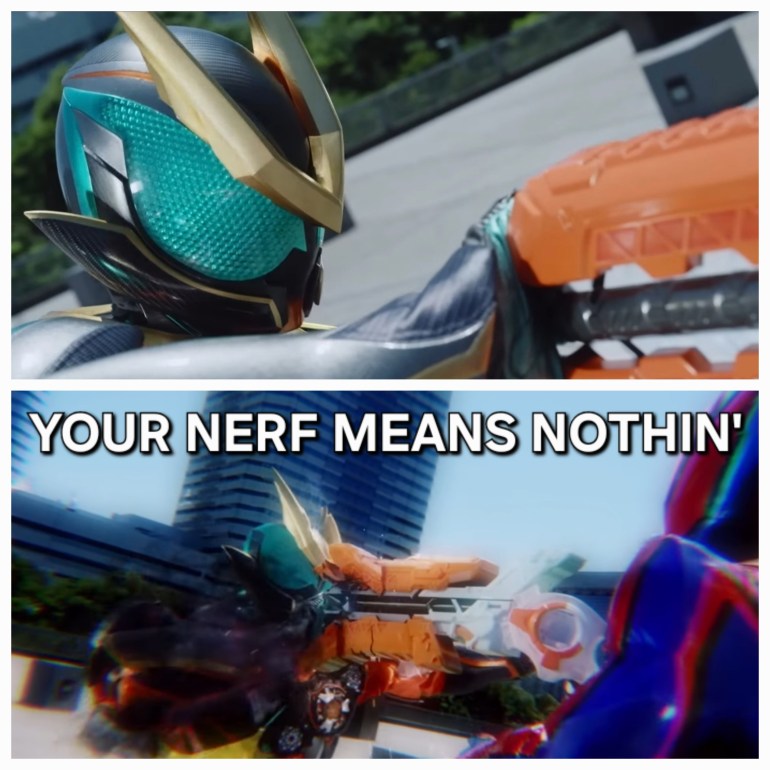
The debut of Zeztz Catastrom is overwhelming. He nerfs Nox’s weapon. He destroys the Breakam Buster with raw force. He overpowers him completely.
It’s super cool.
Even the fist bump with the Nightmare inside him — that clash with Catastrophe Gore — is interesting. The idea that this shadow, this darkness, this core of Zeztz’s power is something Baku embraces is powerful.
It works on two levels.
It satisfies people focused on story.
It satisfies people focused on spectacle.
Raising the moral question makes it legitimate.
Setting it aside to give us a crazy awesome fight makes it satisfying.
I don’t think that’s bad writing. I think it’s very clever writing.
But it is a sleight of hand.
CODE, Assassination, and Moral Ambiguity
Five openly states that part of CODE’s mission is assassination.
Baku is shocked. He never imagined that killing a human — Odaka — would be part of the mission.
Five frames it as a thankless job. Someone has to serve humanity’s interests. Someone has to eliminate those who have given up their humanity.
These are concepts I’m comfortable with in theory. I’m not a “Batman shouldn’t kill” person. I’m closer to “Batman should have killed the Joker when he had the chance.”
But I am uncomfortable just accepting it from CODE.
Because CODE is shady.
There isn’t enough information. There isn’t enough context. We don’t know whether what they’re doing is acceptable, moral, or manipulative.
And the episode doesn’t sit with that long enough.
Instead, it escalates into catastrophe.
The Catastrophe Dream and the Bigger Mystery
Baku’s dream as an infant — the world being destroyed around him — is bizarre.
Nem calls him Baku, not Seven.
Gravity shifts.
Green liquid leaks from his arms.
A shadow with glowing red eyes restrains Nem.
The Nightmare looks eerily similar to Zeztz himself.
Where did the Zeztz Driver really come from?
Did CODE really develop it?
Is Baku a byproduct of Nightmare power?
Is Catastrom an inversion of Nox?
These are huge questions.
But again, they get overshadowed by spectacle.
Revenge Without Reflection
Kureha dies.
Five dies.
Nox finishes them with a real gun in the real world.
Baku arrives too late.
His transformation into Zeztz Catastrom isn’t hopeful. It’s not heroic in the traditional sense. It’s grief-fueled. It’s anger-fueled. It’s destructive.
And when he tells Nox, “I will break you,” it doesn’t feel like justice. It feels like escalation.
Case22: Revenge lives up to its name.
But revenge is not resolution.
Are We Being Manipulated?
Yuya Takahashi avoids giving us answers. But we don’t really care in the moment because what’s happening on screen is impactful and entertaining.
Catastrom is a huge deal visually.
It looks powerful.
It looks final.
But thematically, we are being moved away from the uncomfortable question Baku raised.
Is it okay to serve a flawed system if you can help people in the short term?
Is CODE saving the world?
Or are we being emotionally manipulated into accepting something darker?
What do you think?
Is CODE righteous?
Am I off base?
Or did Episode 22 pull the wool over our eyes?
Drop a comment below or tag me @MJ_Scribe on Twitter. Let’s have some fun talking about this.
If you enjoy thoughtful stories for kids and families, check out my book Mockwing Mayhem. It is a heartfelt adventure about magical bugs battling monsters and protecting children.
You can find more of my reviews, reflections, and stories with spine at mjmunoz.com, and join the mailing list there for behind the scenes updates and new releases.
Bonus Reflections
Breakam Buster Busted
I have complicated feelings about the Breakam Buster. It’s obnoxious (hey, maybe that’s where the name comes from?!) by default, but it has been played off as really cool at times. It’s definitely a loud visual element and it kind of clashes with how sleek these designs are over all. Watching an enraged Baku wreck it like this was so satisfying. Maybe it’s a good thing it looks the way it does, it felt cathartic to see this thing destroyed. Also, it totally clashes with the Kamen Rider Nox Shadow from/suit. It’s not a good look. He recently got that gun or magnum Capsem that gave him that weird hand canon. Maybe he can get an arm or hand blade to make up for the loss of the Breakam Buster. That would be neat.
Are Baku and Nox the Same?
I find it fascinating that there is a mirroring and an echoing and an inversion going on between Nox and Baku.
For a while they almost had a friendly rivalry energy. We saw them evenly matched. We saw visual mirrors between them. Similar gestures. Similar comments. Reacting to each other in similar ways. It felt intentional.
Now that mirroring is being pushed even further.
Both of them are, in a sense, traitors to their organizations. Both of them are embracing shadows. Both of them are embracing darkness.
That is especially interesting because Nox previously warned Baku against doing exactly that. He warned him about giving in to darkness. But now Nox has fully embraced it himself.
And so has Baku.
Odaka has completely embraced darkness. But Baku embraces it too in order to counter him and to fight what is happening. That creates a strange symmetry between them.
I am still trying to figure out exactly what the purpose of that symmetry is. I do not know how this resolves yet. But the show is giving us very obvious visual cues that these two are mirrors of each other.
Maybe it is less that Nox is a shadow Rider and more that he is Baku’s shadow. His foil.
That idea really stands out to me.
The Visual Inversion
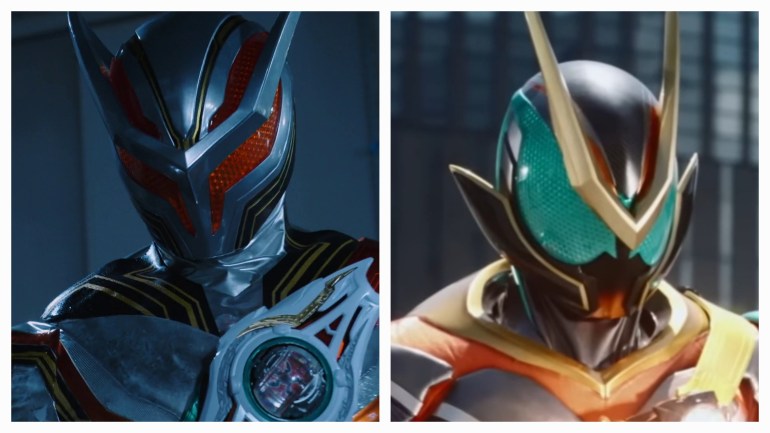
The visual echoing is striking.
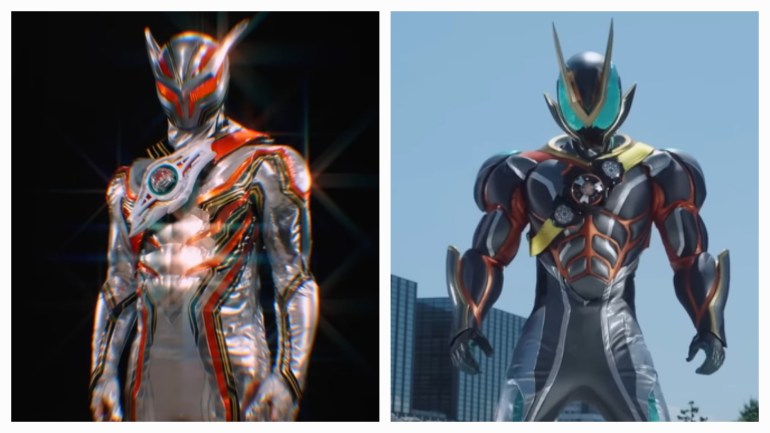
Catastrom is mostly matte finished. He is bulkier. He feels heavier. He has no weapon by default.
Nox, on the other hand, started off using the Breakam Buster without even transforming. Then he became a sleek, shiny, weapon wielding Rider form.
The lines on the suits are different, but they feel like different takes on the same ingredients.
Even the color palette looks almost identical. It is just shuffled between them.
Silver.
Orange.
Black.
Green.
Gold.
It does not feel random. It feels deliberate.
Catastrom looks like an inversion of Nox.
Nox looks like a refined expression of something that Catastrom distorts and intensifies.
These two Riders do not just oppose each other.
They reflect each other.
 MJ Muñoz