The Book of Three Chapter 11: Taran Grows Up – Fortress Fiction
VIDEO
How To Read
The book can be borrowed FREE from CloudLibrary and in audiobook format, or your local library or purchased from the publisher’s site and many online retailers including in audiobook format as well from KOBO, audible.
WIKI – The Chronicles of Prydain
Taran’s First Step Toward Manhood
In Chapter 11 of The Book of Three by Lloyd Alexander, Taran faces one of the most important moral decisions of the story. While the chapter is quieter than many others, it reveals the beginning of Taran’s journey toward true maturity. When Gurgi is injured and the companions are starving, Taran must decide whether survival matters more than mercy.
Earlier in the story, Coll and Dallben talk about Taran someday reaching manhood. Dallben even warns him that if he keeps acting the way he is, he may never reach it at all. That moment hangs over this chapter in an interesting way.
Now Taran is out in the world on his own.
Gwydion is presumed dead after the castle collapse. The companions are starving. They are running from the Horned King and the Cauldron Born, and things look bleak.
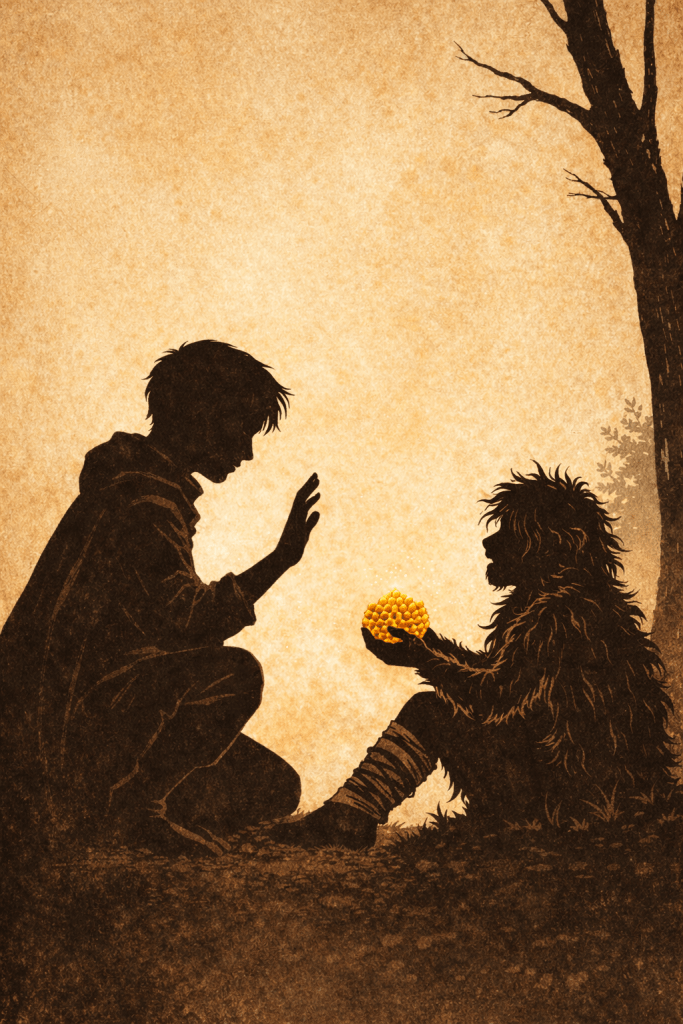
Then Gurgi breaks his leg while trying to gather honey from a tree.
Suddenly the group faces a terrible problem. Gurgi can no longer travel, and they barely have enough food to survive as it is.
Gurgi himself gives Taran the solution.
He tells him to kill him and leave the body behind.
Gurgi’s Tragic Perspective
Gurgi’s request comes from the strange place he occupies in the world.
Earlier in the book we learn that Gurgi is neither man nor beast. Because of that, he feels like he belongs nowhere. Beasts attack him. Humans distrust him. He exists somewhere in between.
That strange position explains some of Gurgi’s earlier behavior in the story. When we first meet him, Gurgi acts selfishly and opportunistically. He even tries to harm Taran.
From Gurgi’s perspective, survival is the only rule. If neither men nor beasts accept him, why should he follow their rules?
But by this point in the story, something has changed. Gurgi has begun to form real loyalty toward Taran.
That is what makes this moment so powerful.
Taran’s Choice
Taran now has a chance to solve the problem.
He could kill Gurgi.
And honestly, part of him probably wants to. When they first met, Gurgi tried to strangle him. Taran has never fully trusted him.
Fflewddur Fflam even claims that he would have done it.
But Taran refuses.
Instead, he chooses mercy.
He spares Gurgi’s life and refuses to abandon him.
Gurgi responds with gratitude, offering Taran his portion of the honeycomb they managed to gather. Taran refuses that as well and insists Gurgi keep it.
It is a small moment, but it shows something important.
The smell of wolfhound fur that used to disgust Taran no longer bothers him. The two characters even share a quiet smile.
What Manhood Actually Looks Like
This moment reveals something about the idea of manhood that Lloyd Alexander is presenting.
Manhood is not simply strength or heroism. It is not about killing someone when it would be convenient.
Instead, it looks like endurance.
It looks like compassion.
It looks like continuing forward even when things are confusing and difficult.
Taran is overwhelmed in this chapter. He compares himself to Gwydion, who always seems confident and capable. He hears Fflewddur claim he would have made the harsher decision. He is not sure what the right path is.
But he keeps going.
That persistence is the beginning of maturity.
A Quiet but Important Chapter
Chapter 11 is not flashy.
There are no great battles or dramatic victories here. The group is simply running for their lives and trying to survive.
But emotionally, a lot is happening.
Taran is learning how complicated the world really is. He is learning that leadership and compassion often require holding difficult truths together.
Those lessons matter.
In many ways, this quiet moment with Gurgi is one of the most important steps in Taran’s journey.
If you are reading along with The Book of Three, I would love to hear what you think about this chapter.
Did Taran make the right choice?
And do you think this moment is where his journey toward manhood truly begins?
Margin Notes on The Book of Three Chapter 11
Gurgi and Gollum
Gurgi reminds me a little of Gollum. Both characters exist in a strange moral gray space and both form complicated relationships with the heroes of their stories.
The difference is that Gurgi ultimately moves toward loyalty rather than corruption.
They both act as guides.
They both have mysterious origins.
They both play pivotal roles in their stories that come as a shock.
But where Gollum descends into obsession, Gurgi slowly moves toward trust.
Manhood and Patience
Ursula K. Le Guin once wrote something along the lines of:
Manhood is patience, and mastery is nine times patience.
That idea feels emotionally true when looking at Taran’s journey.
Taran does not become a man through heroics or violence. He becomes a man by enduring hardship and choosing mercy.
I have read all five books of The Chronicles of Prydain, and Taran’s journey is one of my favorites in all the stories I have enjoyed. This focus and angle makes it so powerful.
Fflewddur vs Gwydion
Fflewddur Fflam claims he would have killed Gurgi in order to survive, but that feels like a boast rather than the truth.
Except his harp did not break a string.
So maybe he really would have done it.
If Gwydion were in the same situation, my instinct is that he would have shown mercy.
Fflewddur is a flawed or weaker version of Gwydion. Or perhaps it is better to say that Prince Gwydion is a more refined version of King Fflewddur.
Either way, the harp matters.
Not a single string snapped or even strained when Fflewddur spoke. That means he was telling the truth.
He would have killed Gurgi.
Would that have been mercy for the poor creature or for the party?
I am not sure.
Would it have been the right decision?
I am not sure about that either.
I can see the logic in it. So can Gurgi.
Fflewddur is not perfect, but he is good and noble, and yet he would make such a decision.
I find this moral question interesting because Alexander does not clearly come down on either side of it.
The story never gives us a clean answer.
And that uncertainty is part of what makes Taran’s decision meaningful.
Book of Three Chapter Guide:
Previous: Chapter 10
Next: Chapter 12
 MJ Muñoz