AMAZING Ending… Weak Series? – Ultraman Arc Series Review |Going Ultra – Going Ultra – Presented by Henshin Inspection
What did you think of Ultraman Arc as a series?
Read my Ultraman-Inspired Story for kids
VIDEO
LINKS
Ultraman Connection – Official Site
Going Ultra! Ultraman Arc Series Review: Between Mid and Masterful
By MJ Muñoz – Author, Artist, Analyzer – MJMunoz.com
The Deceptive Final Illusion
Ultraman Arc had an amazing emotional climax that ended the series on a high note. But was that all an illusion? Was Arc’s final trick making me believe the entire series was actually good when it wasn’t? After completing the full 25-episode journey, I believe the truth lies somewhere in between.
Series Structure and Quality: A Rollercoaster Experience
The series had a strong start and an impressive finale, but suffered from inconsistency in the middle. I almost considered stopping at one point due to a quality decline, but my curiosity about the rest of the story kept me coming back. This speaks to how effectively the show hooked me in its early episodes.
The quality dramatically improved after the Blazar crossover (episodes 16-19), leading into a five-episode stretch to finish the series that was consistently strong—especially episodes 24-25, which formed a powerful two-part finale.
Something particularly noteworthy: some of the best episodes of Ultraman I’ve ever seen were in this show. However, having isolated great episodes doesn’t necessarily mean the overall show is great. The question is whether these standout episodes and the excellent finale can outweigh the inconsistency throughout.
The Blazar Crossover: Blessing or Curse?
The Blazar crossover represents an interesting dilemma. While I really enjoyed these episodes as a Blazar fan (it’s one of my favorite Ultraman series), devoting four episodes out of a 25-episode run to a crossover feels excessive—that’s 16% of the entire show.
This felt reminiscent of how The Book of Boba Fett was hijacked by The Mandalorian—except I actually enjoyed the Blazar content. Still, it created a disjointed experience that disrupted Arc’s narrative flow at a crucial point after introducing Sweed and the threat from another galaxy.
Plot Structure Issues
Several episodes felt disconnected from the main storyline, making it difficult to see how they contributed to the overarching narrative. Early on, the show established threats like the Uzi space parasite and space kaiju, but these elements never fully paid off or were incorporated into the finale.
Sweed, positioned as a major antagonist, appeared in only about four episodes total and disappeared for approximately eight episodes in the middle of the series. This created a disjointed feeling in the villain development.
The standalone episodes varied in quality and relevance. While some were eventually looped back into being meaningful to the overall story, others felt like detours that didn’t enhance the central narrative.
Character Development: Found Family Done Right
Where Arc truly shines is in its character development, particularly in the evolution of relationships among the SKIP crew. Ishido transformed from Yuma’s foil to a brother figure, creating a compelling found family dynamic that was developed effectively throughout the series.
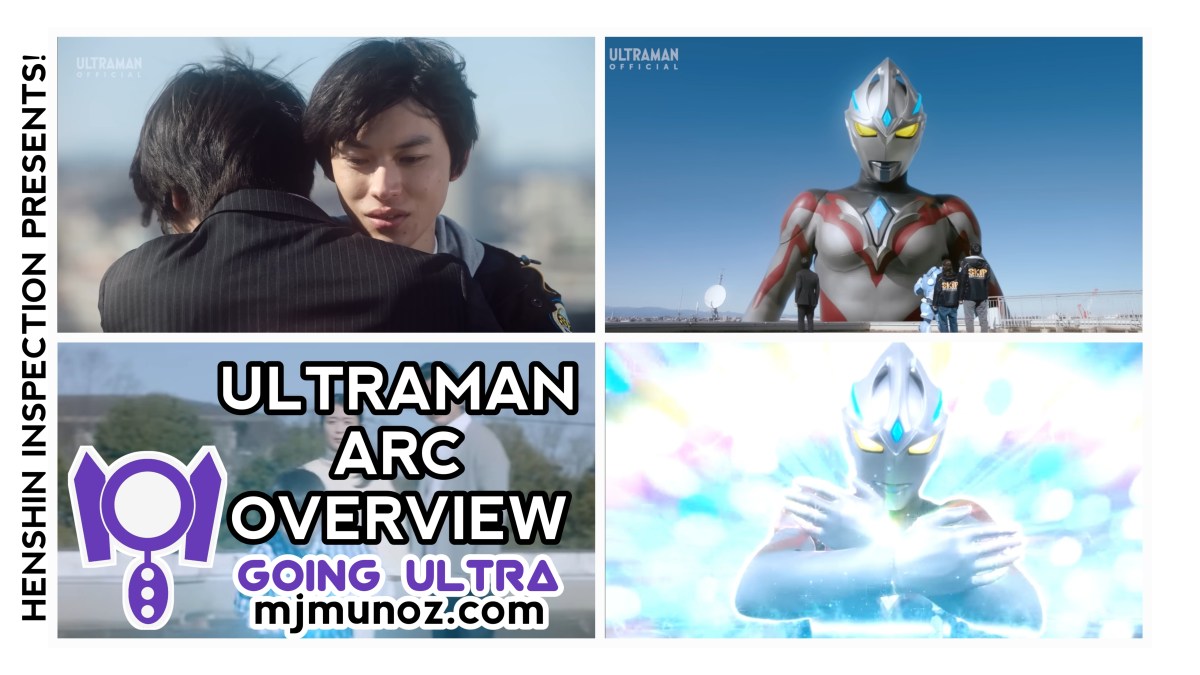
Yuma, having lost his parents, finds a new family in SKIP: Ishido as a brother, Rin as a sister figure, Chief Bon as an uncle/father figure, and YouPI (Yuppie) as… perhaps the family pet? The embracing transformation scene in the finale perfectly captures this theme, with Arc hugging the entire SKIP crew as they became his true family.
The series thoughtfully explores how Yuma learns about family dynamics despite being raised by his grandmother. Episodes like #20, featuring Chief Bon and his daughter, give Yuma insights into parent-child relationships he never experienced. The bond between Yuma and Ishido develops organically, with genuine moments of growth for both characters.
Another admirable aspect is the bravery of the SKIP crew. Unlike defense forces with powerful weapons, SKIP focuses on research, prevention, and evacuation. Their sonic emitters are defensive rather than offensive, making their willingness to enter dangerous situations even more heroic and noble.
Thematic Depth: Imagination, Dreams, and Reality
The series explores several interconnected themes that coalesce effectively in the finale:
Imagination as Power: Human imagination is presented as a unique ability valued by advanced species like Rution’s. While higher intellects like Sweed’s can’t “deceive themselves” to think outside the box, humans can imagine alternatives to reality—a power that ultimately saves Earth.
Questioning vs. Brute Force: The show repeatedly emphasizes the importance of finding alternative solutions rather than defaulting to violence, though this creates an interesting tension with Arc still needing to defeat kaiju.
Dreams vs. Reality: This theme emerges prominently in later episodes like “The Dream Bird” (21) and “Man in the White Mask” (22), before becoming central to the finale. In all three cases, characters must choose between comforting illusions and painful reality.
These thematic elements are brilliantly connected. In episode 21, Aoi must reject the dream and embrace pain to live authentically. In episode 22, the Man in the White Mask erases his identity to create a colorless, kaiju-free world—essentially choosing delusion over reality. And in the finale, Yuma must reject the illusory happiness of being with his parents to save the real world and his found family.
Visual Style and Direction
Aesthetically, the show is beautiful with many creative visual elements, especially in early episodes where we see through Arc’s or kaiju’s eyes. The “Arc trick shots” were a highlight that unfortunately diminished in the middle episodes.
Givas, the robot, instantly captured my heart with his weird, simple, clunky, yet cool retro-ish design. The fights were generally well-choreographed, though some middle episodes lacked imagination in their presentation—ironic for a show thematically centered on imagination.
Key Episodes Worth Highlighting
- Episode 3: “Unleash Your Imagination” – We see Yuma’s origin story and his connection to Arc, setting up themes that pay off in the finale
- Episode 11-12: “Message” – Introduces Givas in a two-parter that explores nuanced approaches to aliens and kaiju
- Episode 21: “The Dream Bird” – A standout episode that transcends tokusatsu, exploring themes of creativity, dreams, and facing reality
- Episode 22: “Man in the White Mask” – Delves into depression and the temptation to erase pain through denial
- Episodes 24-25: “Descending Dream” and “Time to Run Yuma” – A powerful finale that ties together the series’ themes of imagination, family, and choosing reality over comforting illusions
Could Episode Reordering Have Helped?
Looking back, I wonder if a different episode order might have created a more cohesive experience. If the Blazar episodes had come earlier, followed by Sweed’s introduction and the threat from another world, then the thematically rich episodes 21-22 serving as a prelude to the finale, the narrative might have flowed more naturally.
Episodes 3, 21, 22, and 24-25 create a thematically cohesive story about choosing reality over illusion, but other episodes between diluted this throughline.
Final Assessment: Very Good, Not Quite Masterful
Ultraman Arc falls somewhere between mid and masterful. Its conclusion is genuinely great, but the episode order and inconsistent quality hold it back from true greatness.
I’d give Arc an 8/10 – a very good show with moments of brilliance. “The Dream Bird” stands as an amazing episode of television generally, not just tokusatsu. The relationship between Ishido and Yuma provides emotional weight throughout, and the found family theme resonates strongly.
The series rewards deeper analysis – connections between episodes become more apparent upon reflection, and thematic parallels emerge that might not be obvious during initial viewing. This depth elevates Arc above many of its contemporaries, even if the journey isn’t always smooth.
If you’ve been on the fence about watching Ultraman Arc, I’d say it’s definitely worth your time, especially for the standout episodes and the emotional payoff of the finale. Just be prepared for some detours along the way.
If you enjoyed this analysis, check out my other Ultraman coverage including Blazar and Z at MJMunoz.com. I’m planning to cover Ultraman Omega when it releases as well.
Speaking of magical adventures, I’ve been working hard on my middle-grade novel, Mockwing Mayhem. Here’s a glimpse at what it’s about:
Sinister gremlins lurk in the shadows, always hunting for children. Only the Grobugs stand in their way. When a Mockwing, a mist-born Grimling, discovers a hidden Grobug fort, it doesn’t attack alone. It calls an entire flock. Now Chirp the bold and Quiver the cautious find themselves in a battle they were never trained for. Outnumbered and outmatched, can they survive the Mockwing’s onslaught and save their master?
For updates on the book’s release, exclusive Grobug World content, special pre-order offers, and behind-the-scenes insights, join the newsletter BELOW!
Until next time, take care and be well!
 MJ Muñoz