Kamen Rider Zeztz 09 Review – Rider Tears
What are your thoughts on Kamen Rider Zeztz 09?
#Tokusatsu #Toku #KamenRider #ShotaroIshinomori #manga
VIDEO
Zeztz Episode 9 Review: Poison, Dreamers, and Butterfly Lore
Kamen Rad Zeztz Episode 9, “Poison,” was a fun one. Written by Yu Takahashi and directed by Kazuya Kamihoichi (who also directed the last episode), it delivered a lot of great action and intriguing lore developments. Let’s dig in.
Action Highlights and Axe Form
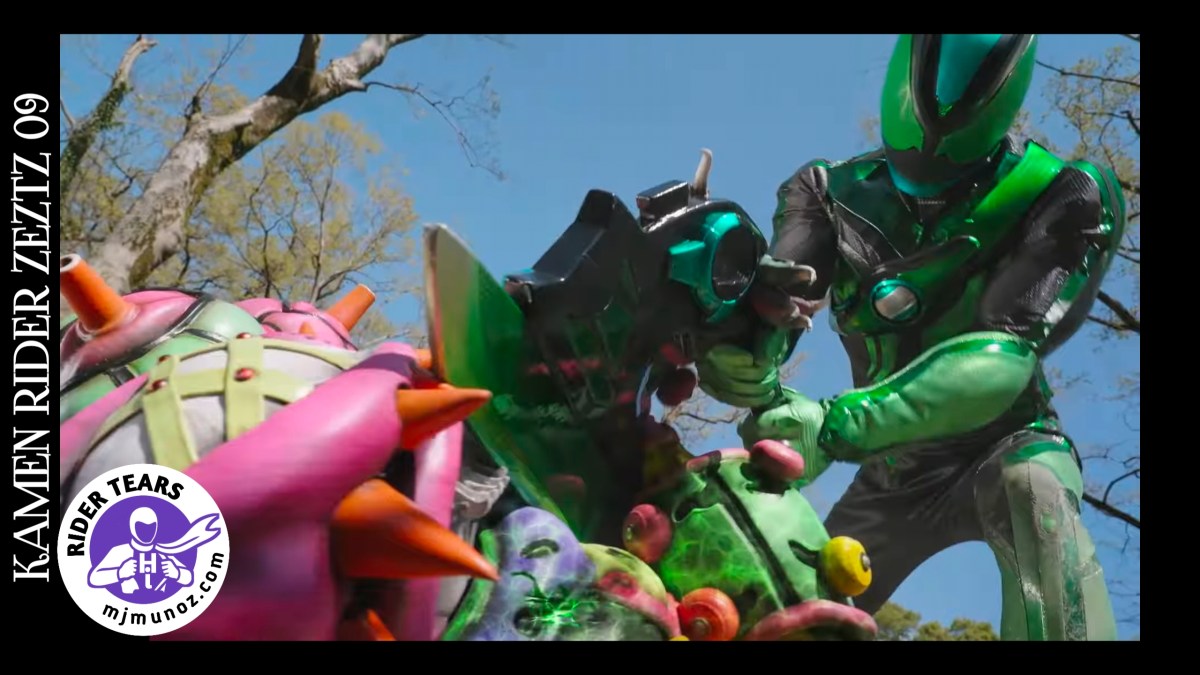
First off, axe form continues to be a visual treat. He’s fast and agile, but what makes it stand out is the mix of speed and raw power—lots of overhead chops and heavy swings that just look cool. I’m pretty sure there’s been at least one other Rider who used an axe before… maybe in Ryuki? Could’ve been the Gazelle guy or the Rhino guy? Or maybe it was just Kamen Rider Axe from Dragon Knight—which, to be fair, reused a lot of Ryuki suits. Anyway, point is, this version of axe form brings a satisfying weight to the action.
That Fake-Out Revival
The opening fake-out was great. We think Baku is dead—his heart or breathing definitely stops—but Nem revives him using the recovery capsum. What’s odd is the way the capsum behaves. When Baku used it last episode, it hurt him. When Nem uses it this time, it blasts her out of the room. But when Baku later uses it gently on the two sous-chefs, it seems to work just fine, no harm done.
So… what gives?
Maybe it’s about how the capsum is used? Fired vs. applied directly? Or maybe it ties into what Nox said last episode—that Baku will learn the limits or cost of this power. But is that warning about the capsum specifically? Or is it about the power of dreams in general? We don’t know yet. It’s vague, and it’s left hanging. But it’s something I’ll be keeping an eye on as the series progresses.
Dream Logic, Nightmare Mechanics
We still don’t fully understand how dreams and nightmares work in this world, but some pieces are coming together. Nightmares twist people’s dreams into something painful—against their will, of course. Do the nightmares feed off that pain? Or is it just a means to an end so we can get our weekly Rider action fix?
Sono, the head chef, is clearly the dreamer in this episode. His dream is to host a successful diplomatic banquet, and through that, pass on the prestige of the Royale Shirogane restaurant to his sous-chefs. He’s old, he’s ill, and he knows it’s time to hand things off. This isn’t some family legacy thing either—it’s a mentorship model, which I think is a great story angle.
But the nightmare corrupts that dream. And by the end of the episode, we learn the nightmare was being guided by Nox, who calls himself a “wanderer of dreams”—just like Nem.
Nox and Nem: Two Dreamwalkers?
That line about Nox being a wanderer of dreams like Nem—that hit me. What does it mean? How are they alike?
Nox is revealed to be Fujimi’s missing junior partner. He disappeared during one of the black cases, and that disappearance has been driving Fujimi’s mission. But how did Nox go from missing person to dreamwalking antagonist? And what about Nem? She was supposedly just a regular girl until her car accident. Something happened during that incident that turned her into… whatever she is now.
Are Nem and Nox opposite sides of the same coin? Is there some deeper link—maybe even a true name they share or a classification we don’t know yet?
Butterfly Symbolism and Dream Lore
This episode placed a lot of emphasis on butterflies. There’s a moment where we zoom in on Nem’s butterfly earrings—something I hadn’t really noticed before. Was she always wearing those? If so, the symbolism finally clicked into place.
Nightmares manifest as butterflies. When Baku saves people, their dreams flutter away like butterflies. Even the opening sequence has this amazing shot of Baku (as Zeztz) walking toward the camera, transforming, then blasting a butterfly midair. The symbolism is clear: he’s fighting back the dreams-turned-nightmares.
Butterflies have long been associated with souls and dreams. In Greek, psyche means both “soul” and “butterfly.” And there’s the classic quote from Zhuangzi: “I do not know whether I was then a man dreaming I was a butterfly, or whether I am now a butterfly dreaming I am a man.” That’s the kind of poetic dream/dreamer uncertainty this show seems to be riffing on.
Symbol Matching and Costuming Clues?
There’s also this neat little visual detail I caught. Nox has these geometric symbols on him—triangle, square, circle—and so does Nem, kind of. Her outfit includes some of the same shapes in her appliques. Coincidence? Maybe. Or maybe it’s another hint at their shared origin or function in the dream world.
I don’t know where it’s all going yet, but it’s layered storytelling like this that keeps me coming back.
Final Thoughts
Episode 9 deepens the mystery in a good way. The action is sharp, the worldbuilding is dreamlike but deliberate, and the butterfly imagery is starting to tie things together. I’m really curious where it’s all headed—especially the larger dream cosmology and how Nem and Nox fit into it.
Let me know what you thought of the episode. The lore? The symbolism? And hey, what about that report that Space Sheriff Gavan is replacing Super Sentai in the 9:30 slot on TV Asahi? That’s huge, and I’d love to discuss it.
Until next time, this is MJ with Rider Tears, brought to you by Henshin Inspection, signing out.
Thanks for joining me. What say you, fellow traveler? Drop a comment below or if you’re on Twitter, tag me @MJ_Scribe.
If you’re looking for something with magical creatures, high stakes, and a whole lot of heart, check out Mockwing Mayhem. Learn more at grobugs.com.
You can find more of my reviews, book reflections, and stories with spine at mjmunoz.com.

