Changed – HEART AND SOLD – Rider Tears
LINK TO ORIGINAL VIDEO VERSION
This is MJ, and welcome back to Henshin Reflection: Heart and Sold, my ongoing look at whether tokusatsu can survive the modern toy-sale cycle without losing its heart.
In Episode 2, I talked about how Power Rangers and Super Sentai hooked me long before I understood anything about gimmicks, ratings, or the business behind these shows. But eventually I started digging deeper—listening to podcasts, hearing fans talk about toy sales, and realizing just how much the industry side shapes the stories we get.
That’s where this next reflection begins. It picks up right at the moment when I first started noticing the tension between the stories I loved and the toy-driven structure behind them.
And that led me somewhere I didn’t expect.
When Things Quiet Down… and Then Come Roaring Back
I didn’t keep trying to watch Spider-Man or Batman: The Animated Series or anything like that. I had Power Rangers. And even when other interests came and went, something about that show left a mark on me—deep enough that I still remembered Masked Rider’s appearance in Power Rangers Season 3. That crossover was awesome.
Later, when I rewatched the first several seasons—maybe fourteen years ago—I hit that Edenoy arc again, “A Friend in Need,” and thought, Man… Masked Rider couldn’t have been this good, right?
I checked out the standalone show and… yeah. My memory was generous. Your mileage may vary.
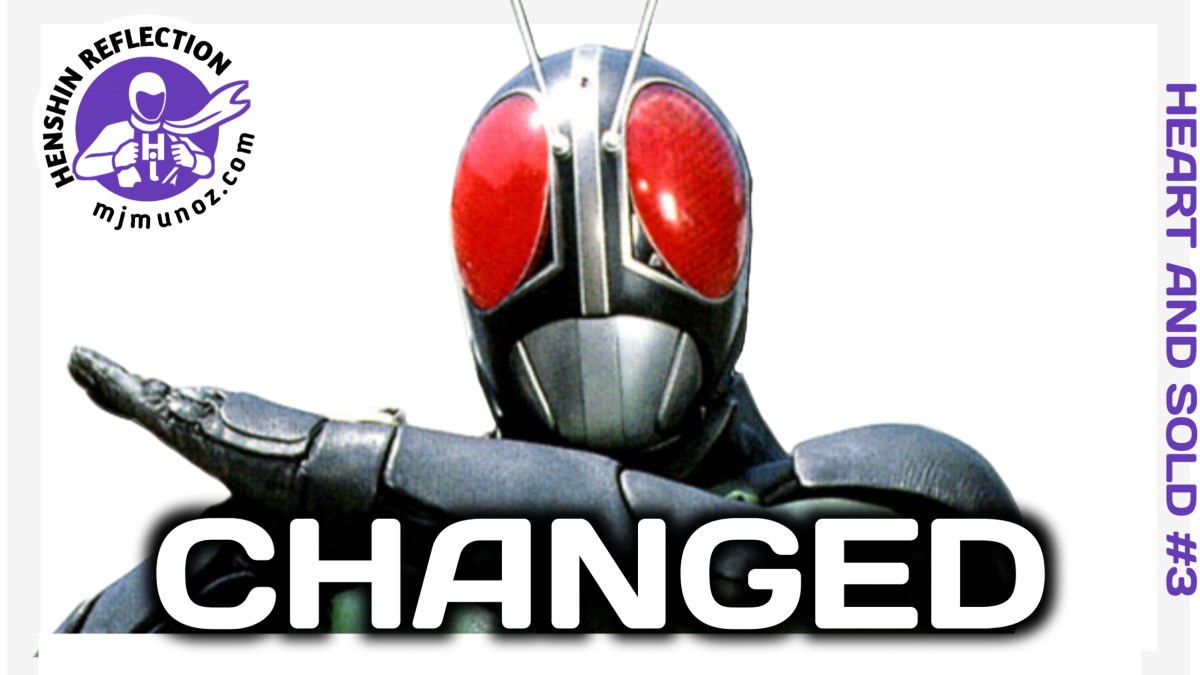
But the look of Black RX?
Burned into my brain.
The silhouette, the lines, the heroic presence—once I learned that that was what I had been seeing as a kid, I had to watch Black. And Black RX. And I learned how those two shows connected, how they formed a rare direct sequel pair in Rider history. That fascinated me.
And that’s when things started to shift.
The First Time I Noticed the Machine Behind the Mask
As I found more podcasts and dug into more modern shows, I started hearing fans talk about tokusatsu as “toy commercials.” I don’t remember whether that idea reached me before or after the podcasts—but once I started noticing it, I couldn’t unsee it.
Sometimes, an episode would slow down and suddenly shift its entire structure to make a new mecha or weapon look cool.
I love focus episodes. I love character stories. I love when a show pauses to explore a Ranger or Rider or Ultra more deeply. That’s not the issue.
The issue was when the story stopped being about the characters…
and started being about the product catalog.
And I started noticing a bigger trend.
Why Sentai Sells More, and Why Rider Had to Change
Looking back, the difference made sense.
Sentai always had more toys to sell.
Jetman alone had:
- 5 Rangers
- 5 machines
- the combined robot
- weapons
- masks
- coloring books
- kids’ merch
- the changer
- and loads more
You could easily sell a dozen items before even counting variants.
Compare that to Kamen Rider Black:
- one hero
- one motorcycle
Black RX added two alternate forms, so three suits total, plus the new motorcyle and the car. Even Kamen Rider Black had TWO motorcyles. Still nowhere near Sentai’s output.
Then Kamen Rider Kuuga arrived…
and everything changed.
Forms.
Upgrades.
Color-coded powers.
Integrated belt systems.
Suddenly you could sell toys at a Sentai scale—even if you only had one main hero.
It made sense from a business perspective.
It didn’t always land narratively.
Some form changes felt meaningful.
Others felt like the hero was turning into someone completely different.
Even Black RX’s forms never fully felt unified to me—RoboRider is cool, BioRider is cool, but they almost feel like guest Riders instead of evolutions.
And in recent years, with anniversary gimmicks, movie tie-ins, device stacking, and legacy forms popping up everywhere, it started feeling even stranger.
As toys? Fine.
As story elements? Often distracting.
And that’s where I started wondering whether something important was slipping away.
The Heart of Henshin Heroes
Older Rider moments stick with me more than any accessory or gimmick.
Like in Kamen Rider Black, when Kotaro learns the Rider Punch by saving a puppy.
It’s cheesy. It’s sweet. It’s unforgettable.
Or in original Kamen Rider, when Hongo trains against a wrecking ball to overcome Lizardon’s explosive kicks.
No new form.
No new device.
Just grit, timing, and heart.
Or even in the manga Kamen Rider ZO—echoed later in Kamen Rider W between Shroud and Accel—where the lesson is brutally simple:
If one strike fails, hit again.
If that fails, hit again.
Keep going until the enemy is defeated.
ZO gets stronger.
Accel gets faster.
Both moments mean something.
Even Ghost—a season that gets a lot of hate—I found beautiful. The forms are situational, not spammy. The emotional core hit hard. I don’t collect toku toys, but I bought the Deep Specter Eyecon because Makoto’s story moved me. When it says “Dive too deep,” it reminds me of what he sacrificed. It hits me every time.
That is soul.
That is meaning.
And that’s when my big question started forming:
Are these shows struggling because the storytelling lost some of that heart…
or because the economics shifted…
or because the audience itself is shrinking?
Maybe all three.
Maybe something else entirely.
All I know is:
the toy-sales machine is real.
It shapes the shows.
And it hasn’t always been this way.
If I want to understand the future, I need to understand the beginning.
Outro — Where the Investigation Begins
So that’s where I’m left: wondering whether these shows are struggling because the heart has slipped… or because the economics have shifted… or because the audience itself is shrinking. Maybe it’s all of the above. Maybe it’s something else entirely.
If I want answers, I need to start at the beginning. I need to look at how tokusatsu made money in its earliest days—before gimmicks, before quarterly toy cycles, before modern merchandising took over. How did Kamen Rider, Super Sentai, and Ultraman first support themselves? What did Bandai’s role look like then? And how did those early foundations twist, turn, and transform into the system we have today?
Because if I’m asking whether tokusatsu can survive the toy-sale cycle…
I should probably understand how the cycle even came to be.
That’s where the investigation starts.
Next time, I’m digging into the origins.
Drop a comment below or tag me @MJ_Scribe on Twitter.
Let’s have some fun talking about this.
If you enjoy thoughtful stories for kids and families, check out my book Mockwing Mayhem. It is a heartfelt adventure about magical bugs battling monsters and protecting children.
You can find more of my reviews, reflections, and stories with spine at mjmunoz.com, and join the mailing list there for behind the scenes updates and new releases.
 MJ Muñoz