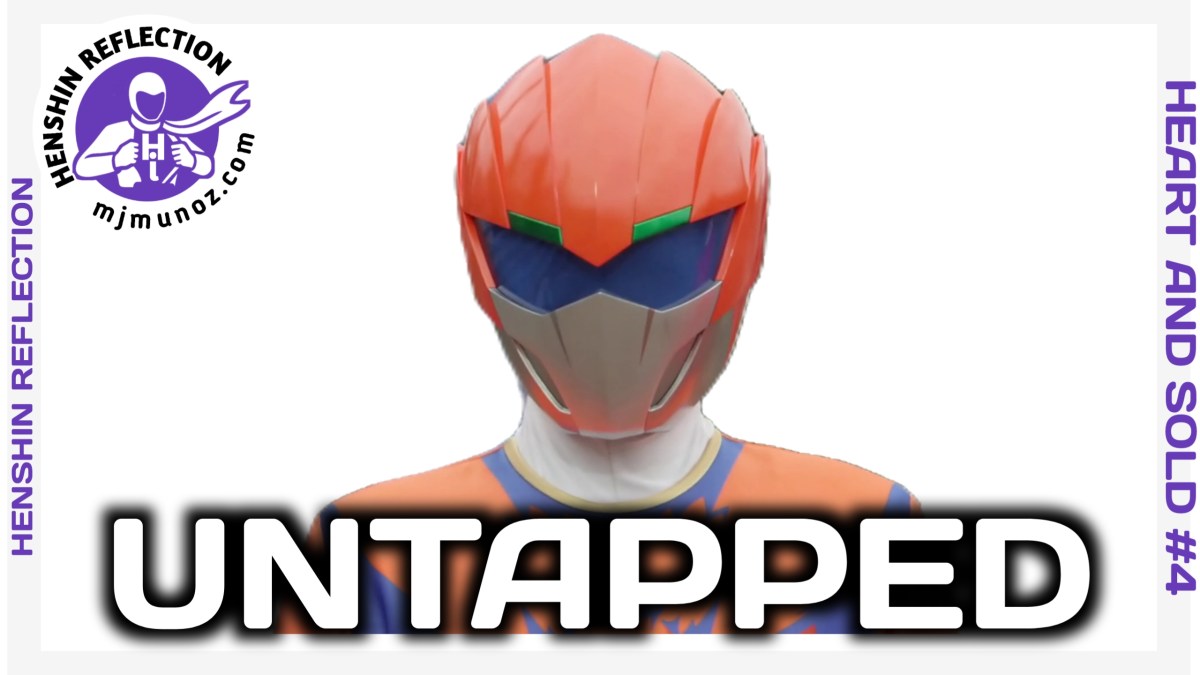
UNTAPPED – HEART AND SOLD – Rider Tears
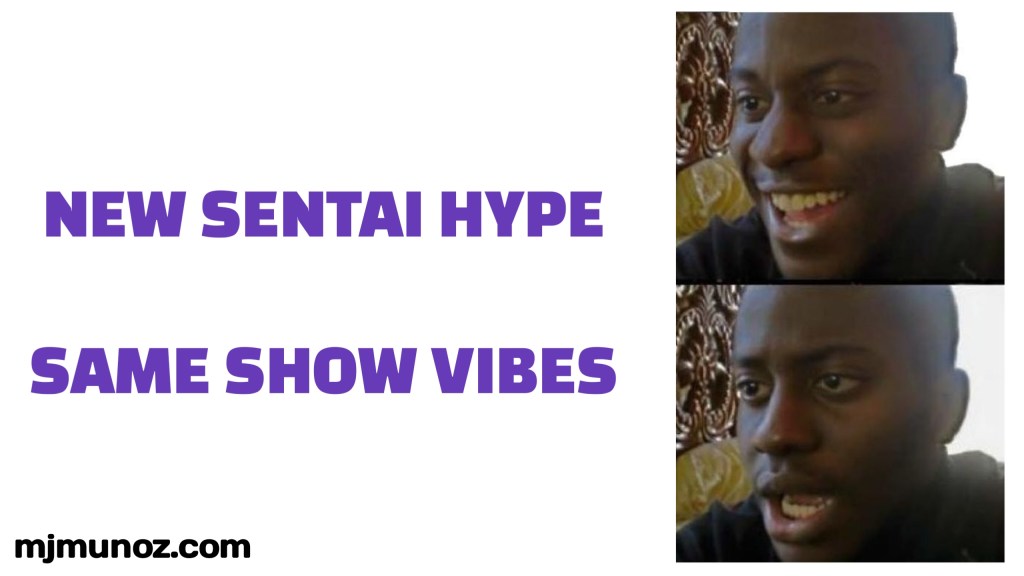
Memes

Super Sentai’s Untapped Potential and Project R.E.D.’s Big Chance
Super Sentai ran for fifty years.
That is not a failure. That is an achievement.
But if it ran for fifty years, what could it have done to survive fifty more?
And now that Project R.E.D. is stepping into that space, here’s the question:
Is it already walking toward the same fate
or can it do what Sentai never did
and actually evolve?
In my last Heart and Sold, I said Super Sentai “deserved to die.”
By the end of that episode, I walked that back.
Sentai didn’t deserve to die. It deserved to be saved.
It just reached a point where saving it didn’t feel possible anymore.
The inertia was too strong.
So when I look at Project R.E.D., I am not celebrating the end of Sentai.
I am hoping Toei finally decided to take a chance
so we can keep getting transforming hero stories that are good
not just familiar.
What Went Wrong With Super Sentai?
So what actually went wrong with Super Sentai?
Why did Sentai stall out while Rider and Ultra kept climbing?
Bigger Teams, Shallower Characters
Sentai got bigger and shallower at the same time.
We had huge casts. Extra rangers on extra rangers on extra rangers.
It felt like every year there were more and more heroes on the team.
But the character writing didn’t grow with the cast.
Red pretty much always got the spotlight. Everybody else got crumbs.
If you do that long enough, the audience stops caring.
The show becomes background noise.
Locked Inside Its Own Formula
Sentai also locked itself inside its own formula.
New team, new robots, new extra ranger, new toy wave every year.
On paper that is great for Bandai.
In practice it bloats costs, locks the story into a fixed shape,
and makes surprises almost impossible.
You might push back and say:
“MJ, Kamen Rider does a yearly reset. Ultraman does a yearly reset. How is that any different?”
The difference is scale.
Ultraman and Kamen Rider are both focused on a single hero
with maybe three to nine forms and some weapons or accessories on top.
That is still a lot of toys but it is all built around one character.
Expand that out and multiply it by five or more for Super Sentai.
Add in all the auxiliary mecha.
Suddenly the cost and complexity explode.
You are looking at something like four or five times the suits and props
for a show that is not pulling in the sales that Rider and Ultra are.
I went over the numbers in my previous Heart and Sold.
The gap is dramatic.
It is no wonder Sentai was the one that got shut down.
Reinventing The Surface, Not The Core
There is another piece too.
Sentai kept reinventing the surface
but never reinvented the core of how it told its stories.
The suits changed, the mecha changed, the motifs changed
but the underlying rhythm stayed almost identical year after year.
We all know the stock episodes.
The fake wedding episode.
The “why aren’t you married yet” grandma episode.
The body swap episode.
Those tropes are not automatically bad.
Honestly, they can be charming.
The problem is that everything around those episodes started to feel just as predictable.
The overall arc of a Sentai season became samey
and the show was not delivering enough real variety or excitement.
Meanwhile modern Ultraman and Kamen Rider were quietly leveling up.
Audiences felt that repetition and that staleness.
And like Shirakura said in that now famous interview
Sentai became something people took for granted.
They assumed it would always be on.
Which meant they also felt they did not have to watch it.
“If I skip a year, what is really going to happen? It’s Sentai.”
How Sentai Could Have Broken That Inertia
If Sentai was crushed by inertia, what could have broken it?
Use The Formula Instead Of Being Trapped By It
Sentai could have redesigned its own formula in a way that served it
instead of hampered it.
Here is an idea I had off the top of my head. Imagine a four year rhythm:
- One season has an extra ranger.
- The next season has no extra ranger at all.
- The third season has a tragic extra ranger.
- The fourth season has a team shake up or some other big structural twist.
You could even play with defection
a core member leaving to become an enemy or rival
as long as you handle it in a way that still works for kids.
Point is, you would be using the same toolbox
but putting the pieces in new combinations.
If you kept a pattern like that going,
most people would not even realize there was a pattern
until you had gone through the whole cycle at least once.
Instead of “here is the yearly extra ranger arc again”
you would have fans saying things like
“this is one of the tragic extra ranger seasons”
or “this is one of the no extra ranger seasons”
and that would give the franchise a fresh way to categorize and compare itself.
The problem was never that Sentai had a formula.
The problem was that it rarely played with it.
Untapped Characters Inside A One Year Season
I do not think the annual reboot is the real issue either.
Kamen Rider reboots yearly.
Ultraman reboots yearly
and its seasons are about half as long as a typical Rider or Sentai run
around 25 episodes instead of 50.
The reset is not the enemy.
The problem is that Sentai’s arcs often did not go deep enough within that year.
Sentai absolutely had characters with real dramatic potential.
Look at Bud – Zyuoh Bird from Doubutsu Sentai Zyuohger.
He has a great setup and great energy.
He is a mentor figure with guilt and mystery.
He has a compelling bond with Yamato.
He is not like the other Zyuman in the cast.
He feels important in a different way.
He feels like a character whose story could have hit hard.
But the structure never gave him the space he needed
to reach the arc his introduction promised.
That pattern shows up across multiple seasons.
The potential was there.
The follow through was not always.
Maybe there were scheduling conflicts with Bud’s actor.
I have heard that.
But from the viewer’s side it almost does not matter.
You could still build story through suit acting, hints, foreshadowing
and then bring the face actor in for a few key episodes or scenes.
Sentai did not always use that kind of creativity
to unlock the potential it already had.
Rider, Ultra, And Sentai’s Missing Lane
All three of the big Toei and Tsuburaya franchises are stories of transforming heroes.
One grows giant to fight kaiju.
One is usually a lone hero fighting monsters born from evil or despair.
One is a color coded team.
They all transform.
They all fight monsters.
They all sell toys.
So what makes each of them distinct in the modern era?
Kamen Rider’s Lane
Kamen Rider’s lane is personal drama and identity.
Rider leans hard into questions like
Who are you
What are you willing to become
What does this power mean for your soul
It plays with trauma, guilt, hope, sacrifice.
It is very character focused and very thematic.
Ultraman’s Lane
Ultraman’s lane is sci fi and conceptual weirdness with a cosmic angle.
Modern New Generation Ultra tends to give us:
- tight, ~25 episode seasons
- strong casts and production
- cool practical and digital effects
- speculative, “what if” episodes
You get things like Fourth Dimensional Capriccio in Ultraman Z
or The Man in the White Mask and The Dream Bird in Ultraman Orb.
There is often interaction between our world and some other world.
There is a sense that Earth is part of a larger cosmic framework.
It feels like junior sci fi in the best way.
Those choices give Ultraman a distinct flavor.
Sentai’s Lane…?
I do not know that Sentai ever nailed down a clear lane of its own
beyond “the colorful team show for kids.”
Yes, it has had high points.
Yes, individual seasons experimented.
But as a brand identity, it never sharpened what made it special
in a modern media landscape.
Rider and Ultra both evolved their creative identities.
Sentai mostly stayed where it was.
It did not fail because the concept of a hero team was outdated.
It failed because it stopped surprising the audience
and never committed to a strong modern identity of its own.
Project R.E.D. – Evolve Or Echo?
So what do we do with all of that when we look at Project R.E.D.?
Will it evolve
or will it just echo the same problems with a different logo?
If R.E.D. is simply Sentai in spirit
it will inherit the same baggage that made Sentai unsustainable.
And I do not think Toei could have just “fixed” Sentai at the end.
After Gokaiger they were supposed to shake things up with Go-Busters.
You could feel the intention
but they never stuck the landing.
There is just too much baggage tied to the name Super Sentai.
So they made a clean break.
It would be a tragedy if Project R.E.D. failed right away
because on paper the pieces look strong.
They have Gavan and the Metal Heroes legacy.
They have Gavan Infinity reimagined as a red hero
which pulls from the Sentai “red lead” tradition.
There is energy and potential there.
So how does Project R.E.D. avoid Sentai’s fate?
What Project R.E.D. Needs To Get Right
I have a few ideas.
1. Stay Lean And Character First
First, keep the cast focused.
Make every suit and ally feel intentional.
Give us clear arcs
not just “who wins fights”
but “who changes and what that costs them.”
If R.E.D. nails character, the toys will follow.
Kids will want those figures desperately.
Older collectors will come along too,
just like they already do for Rider and Ultra.
2. Take Real Risks
Second, use nostalgia as a doorway, not a crutch.
Gavan Infinity and the red hero are great hooks.
The Metal Heroes revival energy is real.
Mixing that with Sentai style “red leader” visuals is smart.
But that cannot be all the show is.
If R.E.D. wants longevity it needs real risks
the kind that make you sit up and say:
“Okay, this show means something. I cannot believe they are doing this.”
Those twists should be meaningful within that particular season
not permanent formula rules that get copied every year.
3. Think Global And Think Weird From Day One
Third, from day one, they should think global and think weird.
Ultraman is a great example here.
It has tighter seasons, a clear identity, a premium tone,
and a willingness to experiment with strange ideas
even inside a short 25 episode run.
Project R.E.D. has the same opportunity.
Sub it. Dub it. Make it export ready.
And lean into the strange side of its own title:
Records of Extraordinary Dimensions.
Really play with that.
Do the episodes that make people say
“This show is weird and I like it.”
That is how you create a sharp identity that can pull in anime fans,
toku fans, and curious newcomers from all over the world.
Closing Thoughts
I do not think Super Sentai failed because it lacked potential.
It failed because it stopped surprising the audience.
Project R.E.D. has the chance to surprise people again.
If it stays lean
if it dares to evolve
and if it chooses to be different
instead of just taking Sentai’s spot in truth and in spirit
then we are not looking at the death of another series.
We are looking at the birth of something new.
A fresh chapter that could delight fans for fifty years or more
just like Super Sentai did at its best.
If you want more deep dives like this,
the Heart and Sold playlist is pinned in the first comment on the video version of this essay.
Now I want to hear from you:
What do you think Sentai could have done to save itself?
And what does Project R.E.D. absolutely need to get right?
Drop a comment below or tag me @MJ_Scribe on Twitter.
Let’s have some fun talking about this.
If you enjoy thoughtful stories for kids and families, check out my book Mockwing Mayhem. It is a heartfelt adventure about magical bugs battling monsters and protecting children.
You can find more of my reviews, reflections, and stories with spine at mjmunoz.com, and join the mailing list there for behind the scenes updates and new releases.
 MJ Muñoz