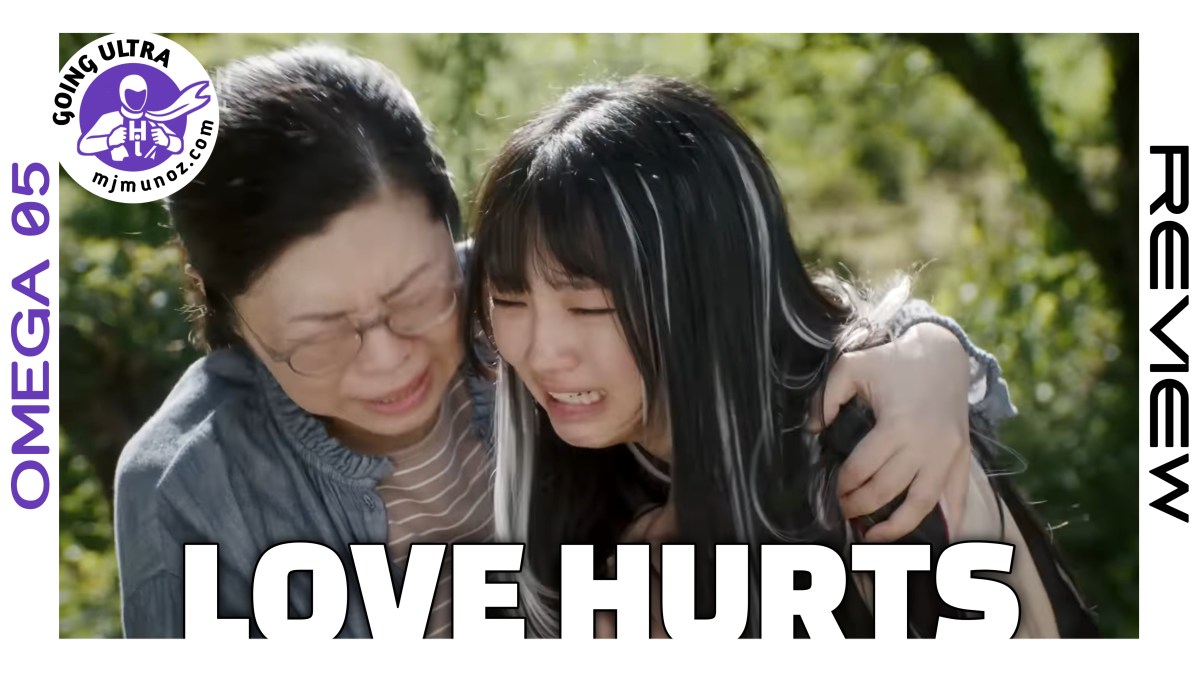
Ultraman Omega 05 DUB Review |Going Ultra – Going Ultra – Presented by Henshin Inspection
Ultraman Omega Episode 5 – Love That Gives Life and Takes It Away
What makes life worth living?
Love might be the answer.
Love hurts us.
Love gives us strength.
Love fuels us.
It lets us do what we need to do. Sometimes it even lets us do what we want to do. And somehow, it makes the smallest, most mundane things feel important.
I still can’t quite believe I’m writing all of this in response to Ultraman Omega Episode 5, an episode about a teenage girl and a metallic snake puppet kaiju whose bond is slowly killing them both.
And yet here we are.
A Mythic Story in a Quiet Place
This episode feels mythic. Not because of scale or spectacle, but because of meaning. Whether the myth referenced in the episode is a genuine Japanese folktale or something invented for the story almost doesn’t matter. What matters is that it works. It operates on a symbolic level that tokusatsu doesn’t always reach.
There’s barely a fight in this episode. No city-wide destruction. No mass panic. The story unfolds in a small countryside town, surrounded by farms and nature, with a much lower population than the cities we’re used to seeing threatened.
But the stakes are exactly the same.
Whether a city is destroyed or a small town suffers loss, the pain is not measured in numbers. It’s measured in connection. Loss hurts because something mattered to someone. A farmhouse, a stable, a shed, a person. The scale doesn’t change the grief.
This episode understands that.
Mikoto, Miko, and a Dangerous Kind of Love
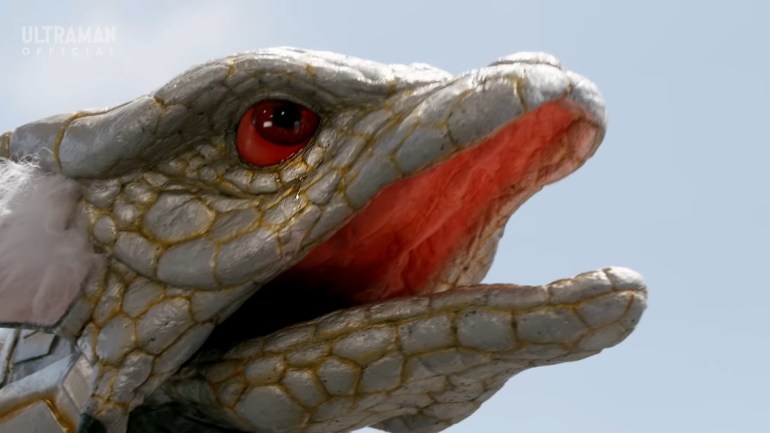
At the center of the story is Mikoto, the kaiju, and Miko, the girl he is bonded to.
Miko has lost her mother to illness. She is living with her aunt, her mother’s sister, in the countryside. The aunt desperately wants to connect with her, to love her, but Miko refuses. She’s still mourning. Still closed off. Still unable to be a daughter again.
And then Mikoto enters her life.
What struck me most is that Mikoto doesn’t replace her mother by becoming another parental figure. He replaces her mother by giving her the chance to be one. Miko can’t handle being a daughter anymore, but she can handle being a caretaker. A protector. A giver.
That realization hit me hard.
Their bond allows Mikoto to grow by drawing on Miko’s life force. She gives willingly. She’s happy to do it. There’s even a moment where she looks pleased that he’s nourished by her. But it’s not sustainable. It’s not healthy. Love can give meaning to life, but when it’s twisted the wrong way, it can consume you from the inside.
Mikoto knows this. And because he knows it, he chooses to die.

He becomes a monster on purpose. He threatens the town so that Omega will be forced to kill him, sparing Miko’s life. There’s something deeply tragic in that choice. He doesn’t want to hurt anyone. He doesn’t want to keep draining her. So he makes himself the villain.
That hurts.
Parenthood, Sacrifice, and the Cost of Doing What’s Right
This episode kept reminding me of parenthood.
A mother can give her life to bring a child into the world. She loses life force to her child during pregnancy, during nursing, during care. Love is literally an act of depletion. It’s beautiful, and it’s dangerous.
Miko is willing to give herself up for Mikoto. Mikoto refuses to allow that to continue.
Sometimes doing the right thing still hurts everyone involved.
There’s a line parents sometimes say: “This is going to hurt me more than it hurts you.” I don’t know if that’s always true. But there is a burden that comes with responsibility, with love, with guiding someone else forward even when it breaks your heart.
This episode understands that burden.
Omega, Mourning
When Omega finally kills Mikoto, it isn’t triumphant. It’s mournful.
Cherry blossoms fall as Mikoto dies. Omega covers his eyes. One blossom drifts down alone, and it feels unmistakably like a tear. It’s a single image that captures the entire story. Beauty. Loss. Necessity. Grief.
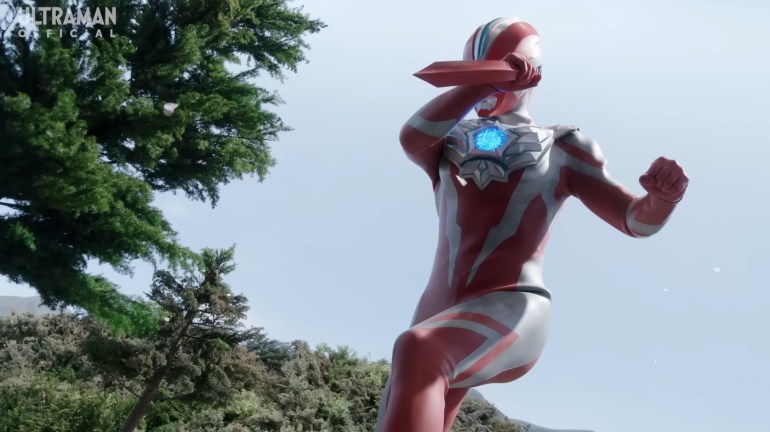
This is tokusatsu at its most powerful. Not because of explosions or choreography, but because it uses its tools to express something human. Something painful. Something real.
What struck me most is that Mikoto is allowed to cry. Kaiju in Omega have often been framed as animals, but here he’s given a deeper, mythic humanity. I don’t fully know what that means yet for the series as a whole, but I think it’s an important question worth exploring.
Why This Episode Matters
This was a beautiful episode of Ultraman. A beautiful episode of television. A beautiful example of what tokusatsu can do when it slows down and trusts emotion instead of spectacle.
Love can give life.
Love can destroy life.
And sometimes the right choice still leaves everyone wounded.
I’m grateful this episode exists. I’m grateful it made me emotional. And I’m grateful that Ultraman Omega is willing to tell stories like this.
If this episode affected you too, I’d love to hear your thoughts. What did you see in it? What did it make you feel?
All Zeztz Analysis | All Omega Analysis | Project R.E.D. Analysis
Drop a comment below or tag me @MJ_Scribe on Twitter. Let’s have some fun talking about this.
If you enjoy thoughtful stories for kids and families, check out my book Mockwing Mayhem. Its a heartfelt adventure about magical bugs battling monsters and protecting children.
You can find more of my reviews, reflections, and stories with spine at mjmunoz.com, and join the mailing list there for behind the scenes updates and new releases.
 MJ Muñoz