Kamen Rider Zeztz 35 – Rider Tears
Watch Analysis
The video and audio above contain the full unfiltered analysis. What follows is the razor focused version of the strongest point(s) I had to make.
Contrast Is the Soul of Engagement
Kamen Rider Zeztz Episode 35 was so thoroughly shocking that I almost do not know how to process it.
Kureha dies again.
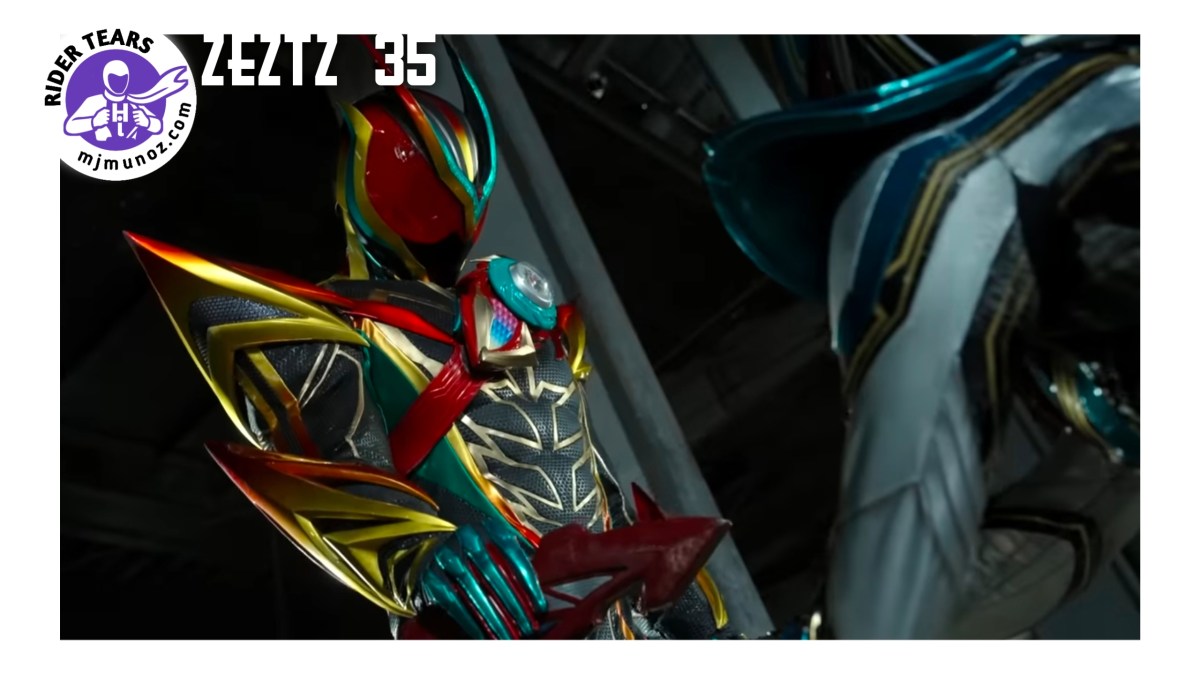
Baku loses the Exdream Driver.
Three pushes CODE: Somnia even further.
And Baku ends the episode standing on the edge of the very premonition he has feared for weeks.
But strangely, the thing that hit me hardest was not the tragedy.
It was the barbecue.
The Barbecue Scene Was the Most Powerful Part of the Episode
The opening dream sequence where everyone is laughing, eating meat, shouting “Niku Niku Niku,” and simply existing together was incredibly effective because of how different it was from the rest of the show.
I am not really a slice of life person. I would not normally ask for a peaceful alternate version of this series where everyone just hangs out together. But when characters go through suffering, torment, horror, and constant conflict, there is something deeply satisfying about seeing them rest.
There is something powerful about watching characters who have suffered finally relax for a moment. Watching them enjoy one another’s company. Watching them do something as simple as have a barbecue.
And I think that is what made the rest of the episode hurt so much more.
Kureha’s death hurts more because we just saw her smiling.
Contrast Is What Makes Zeztz So Effective
I think Episode 35 demonstrates something very important about storytelling: contrast is what creates emotional engagement.
The peaceful moments work because Zeztz is normally so intense.
The horror works because we briefly tasted peace.
The quieter moments matter because the series is usually filled with action, shock, suffering, and dread.
Without contrast, escalation eventually becomes empty.
I mentioned before that Sieg constantly needed stronger and stronger nightmares because shock alone eventually stops working. If a story only tries to shock the audience, eventually it has to keep escalating harder and harder just to get the same reaction.
But Zeztz avoids that trap because it keeps changing the emotional texture of the story.
The show gives us moments to breathe. Moments to reset emotionally. Moments where we can actually appreciate the characters as people instead of only as victims, Riders, or agents trapped in conflict.
And that contrast makes the dramatic moments hit harder.
Takahashi Keeps Resetting the Status Quo
One thing I think Yuya Takahashi is doing extremely well is constantly changing the status quo.
Every time the show reaches stability, something shifts.
There are peaks and plateaus. Twists and resets. Baku barely adapts to one reality before another change forces him to evolve again.
The audience never fully settles.
Baku never fully settles.
And that keeps the show engaging because we are constantly watching Baku struggle to understand and master a changing situation.
Episode 35 may have been the strongest example yet.
CODE: Somnia is no longer just a mysterious project. It is now actively rewriting society itself. People can no longer even perceive Nightmares correctly. Memories and perceptions are being altered on a mass scale.
That is horrifying.
And yet somehow the episode still found time to make me care about grilled meat.
Baku’s Decision Creates a Moral Nightmare
The most shocking moment in the episode may have been Baku surrendering the Exdream Driver to save two civilians.
Not because it was out of character.
Because he actually did it.
On paper, it is arguably irrational. By saving those two people in the moment, he may have endangered far more people long term. CODE is actively manipulating society and rewriting reality itself through CODE: Somnia.
But Baku cannot allow innocent people standing right in front of him to destroy each other.
That is heroic.
But it is also terrifying.
And that tension is what makes the moment work.
The episode forces the audience into a kind of trolley problem. Do you sacrifice the few for the many? Or do you refuse to abandon the people directly in front of you, even if the larger consequences may be catastrophic?
I do not think the episode gives an easy answer.
I am not even sure Takahashi wants to.
Kureha’s Death Changes Zeztz Forever
Kureha’s second death feels different from most Rider deaths because it comes right after the audience briefly experiences a version of the world where everyone could have been happy together.
That dream mattered.
It showed what the characters are fighting for.
And then Three destroys it immediately.
Three calling the agents “defective” and denying their humanity might honestly be one of the coldest moments in the series so far. It turns the entire CODE system into something even uglier than simple authoritarianism. The agents are not merely tools. They are expected to erase themselves completely.
Kureha briefly reached back toward her humanity.
And the system killed her for it.
Final Question
Did Baku make the right choice by surrendering his power to save those two civilians? Or did he endanger far more people by doing so?
And more importantly: is a hero still a hero if he starts thinking purely in terms of outcomes instead of individuals?
Drop a comment and let me know where you stand on this.

