
Kamen Rider Zeztz 50 – Rider Tears
Watch Analysis
The video and audio above contain the full unfiltered analysis. What follows is the razor focused version of the strongest point(s) I had to make.
The Nightmares Persist, and So Do We
As a final episode, I find Kamen Rider Zeztz 50 satisfying. It’s a little funny because there are some things here that should bother me, but they don’t really.
We get a very clean, simple kind of ending. There’s the battle with Oblivion, and then we have the aftermath, showing how the world has changed, or gone back to normal, and how these characters’ lives have been affected. I really enjoyed getting that time with them.
Probably my favorite thing is that, after everything these characters have been through, they get a chance to be happy. They get a chance to move on with their lives and not be haunted by these Nightmares.
Because that’s kind of a big theme of the show:
Dreams overcome nightmares.
And, implicitly, you can face and overcome your nightmares. You can make your dreams come true.
Zeztz 50 Is About a Cycle of Hope
That’s very much embodied by Baku, and he’s been the driving force behind it throughout the show. But Nem’s dream comes true. Then another dream of Nem’s comes true. Finally, Nem, Minami, Fujimi, Nasuka, and Odaka have a dream together that comes true when Baku wakes up and returns to them after the events of Farewell Mission.
That’s kind of the point.
Despite the fact that this has been such a Baku-focused show, I think that’s a strength rather than a weakness for what’s being said here. Focusing so much on him has allowed us to get what we need from him, while the relationships he’s formed with these other characters have grounded the story in a place where it can bear this fruit at the end.
Life goes on even though suffering happens.
We can make things better. We can do things for ourselves and for others. But in order to do that, you have to know, trust, and believe in yourself. You have to care. You have to be connected to who you are and where you are so that you can move forward, make something happen, make something of your life, pursue a dream, whatever.
That’s part of what I take from Baku’s interaction with Eight. She has lived her life to become an agent, but Baku tells her that she isn’t a number. She needs a free heart and a will of her own. Someday, that can become her dream.
There’s almost an implicit promise behind the new ZEZTZ organization: you live your life and pursue what you’re trying to pursue, and someone will be there fighting the Nightmares that threaten your ability to do that.
And that’s where the ending becomes both really interesting and a little frustrating for me.
Why Does Humanity Need ZEZTZ?
When Baku stays behind in the Dream World and establishes the ZEZTZ organization, it initially feels like he’s going to be there forever, protecting everybody’s dreams.
Except he isn’t.
After the events of Kamen Rider Zeztz: Farewell Mission, his friends are somehow able to wake him up. The finale establishes Farewell Mission as taking place during the period between Baku becoming stuck in the Dream World and his eventual return to reality.
I’m happy about that emotionally.
Cosmologically, though, it raises a bunch of questions.
If Baku isn’t permanently living in the Dream World anymore, is somebody else there protecting everybody’s dreams? If so, who? Does Baku just go back every night? Does he train other agents?
More fundamentally, why is this permanently necessary?
If humanity needs somebody guarding us from capital-N Nightmares, does that mean Nightmares were able to run rampant throughout human history until CODE got involved? Was somebody else protecting humanity before CODE? Did something change in the collective unconscious that suddenly caused these Nightmares to become powerful enough to break through Mind’s Doors?
The show doesn’t really clarify that, and the vagueness bothers me.
I can accept that something happened and that we’re now in a new status quo. But that’s me filling in a blank.
And if I accept that premise, the new status quo actually works pretty well.
CODE, which manipulated people and did terrible things in order to create agents capable of fighting Nightmares, can now be supplanted and surpassed by ZEZTZ. The ZEZTZ organization can continue protecting people from the most dangerous Nightmares without recreating what CODE did to its agents.
Eight is especially interesting in that context. Baku is Seven and she’s Eight. Even if nothing more explicit is intended, there’s naturally an idea of succession in those numbers.
Maybe there can simply be a chain of people who continue the mission.
The Nightmares Persist, and So Do We
The part that makes me hesitate about all of this is the message of the show itself.
Oblivion is incredibly nihilistic. Dreams hurt. Nightmares hurt. Failure hurts. So why bother?
Just give up.
That’s not how you live. That’s how you die.
Nem and the Riders reject that. No matter how much it hurts, they’ll remember. They’ll continue. They’ll fight. They’ll surpass the Nightmares.
And if you look at the scale of human history, there have been travesties and tragedies. There have been terrible eras that lasted for long periods of time.
But we’re still here.
Maybe that’s another way of understanding the relationship between humanity and the Nightmares. Human beings grow, Nightmares push back, human beings overcome them, and the cycle continues.
Conflict itself isn’t necessarily meaningless.
Even something as simple as growing food involves disruption and decay. You dig into the earth. The seed breaks down to become a plant. The plant becomes food. Life consumes life. There is this interconnected pressure from every direction that somehow produces flourishing.
Human beings aren’t so different.
If we never endure hardship, we atrophy. Enduring hardship, working with it, and living through pain can enable us to become stronger and better.
It doesn’t guarantee growth.
It enables growth.
I’ve said throughout Zeztz that conflict grows character or shows character, and that’s kind of true in life too.
So when Oblivion calls this a cycle of despair and Baku calls it a cycle of hope, I think Baku is right.
The Nightmares don’t have to disappear for humanity to win.
That actually rhymes with something I love about the original Kamen Rider. You can destroy Shocker, but suffering doesn’t consequently disappear from the world. There will still be tragedy. There will still be another fight.
Kamen Rider can be incredibly dark, but that darkness isn’t necessarily nihilistic.
The Nightmares persist, and so do we.
That’s why I like Takahashi leaving Nightmares available for future stories. It makes sense thematically as well as practically. You can have another Nightmare appear in a crossover years from now because defeating Oblivion didn’t magically eliminate the darkness in human beings.
What I’m less sure about is whether humanity consequently needs Baku or ZEZTZ standing between us and that darkness forever.
ZEZTZ Doesn’t Make Everyone’s Dreams Come True
I think there’s a distinction here that helps me.
Nem isn’t creating a world where everyone’s dreams automatically come true.
Neither is Baku.
They’re creating a world where people have the freedom to pursue their dreams without being overwhelmed by the Nightmares.
Maybe the ordinary nightmares are still ours to deal with. Maybe the capital-N Nightmares, the ones capable of becoming supernatural threats to everybody else, are what ZEZTZ needs to handle.
If that’s the idea, I like it.
I like the possibility of the ZEZTZ organization continuing, recruiting people and establishing some kind of chain of succession. And I like the possibility that Baku can still have a full human life rather than spending eternity trapped inside everybody else’s dreams.
The mechanics are just vague enough that I have to do some of the work myself to get there.
Takahashi’s Soft Worldbuilding Is Both Clever and Frustrating
That’s something I’m conflicted about with Yuya Takahashi’s writing here.
Emotionally, I like what’s happening. Cosmologically and worldbuilding-wise, I have a lot of questions that Zeztz isn’t going to answer.
At the same time, Takahashi has very cleverly written a world where he can get away with that.
The rules surrounding dreams, memories and Oblivion are soft enough that he has enormous flexibility. It’s not quite, “Screw the rules, I’m the writer.” It’s more like:
These are the rules I wrote, and those rules give me enough flexibility to do this other thing later.
I kind of like that, and I kind of don’t.
Sieg is the perfect example. He’s basically stuck somewhere in limbo by himself, waiting for somebody to remember him.
That’s funny.
It’s fun.
And, most importantly for future stories, it means he can come back.
That’s the kind of thing Takahashi’s soft world allows. If somebody decides Sieg needs to appear again, there’s already a mechanism waiting to make that happen. The finale specifically leaves him alone in the Dream World, unable to return because nobody is remembering him.
The same thing happens with Baku.
I’m happy that he pays a big, heavy price for what he does. The Exdream Driver takes an extreme toll on him, and his victory apparently costs him his life in the real world.
But I’m also happy that he eventually comes back.
I want him to have both.
Maybe that’s having my cake and still eating it, but emotionally, it works for me.
Nem and The Lady Get Something Beautiful
I also really appreciate Nem getting to be with her mother again.
I feel like this is really The Lady somehow, rather than simply an illusion of her, possibly because of Nem’s unusual relationship with the Dream World. The episode itself doesn’t establish that metaphysics clearly enough for me to say exactly what is happening, but that’s how the scene feels to me.
Whatever the mechanism is, Nem gets time with her mother.
And I love the reversal in their relationship.
It reminds me of that Ninja Turtles image where Splinter is caring for the four little Turtles when they’re young, and then they’re adults and they’re supporting an elderly Splinter between them.
The Lady had a rough life. She did bad things, and I’m not excusing those things or saying they were okay.
But her daughter loved her.
Her daughter accepted her as her mother.
And now Nem gets to guide her, tend to her and spend this time with her.
It’s really sweet.
Kamen Rider Zeztz 50 Gives These Characters a Happy Ending
That’s ultimately where I land on this finale.
There are things about the cosmology that frustrate me. There are implications of the ZEZTZ organization that I’m not sure completely work. Takahashi has built such a soft system that I can see all the places where future stories can reach back in and pull these characters out again.
But emotionally?
I like it.
After everything these people have been through, they’re allowed to be friends and family. They’re allowed to move forward. They’re allowed to be happy.
And Baku gets to come home.
That last “Good morning” is such a nice place to end.
Zeztz spent an entire series dealing with people’s nightmares, but its ending isn’t about pretending that nightmares can be permanently erased.
They’ll persist.
And so will we.
Inspector’s Notes
—
Loose Thread
Baku Becomes His Father Without Repeating His Mistakes
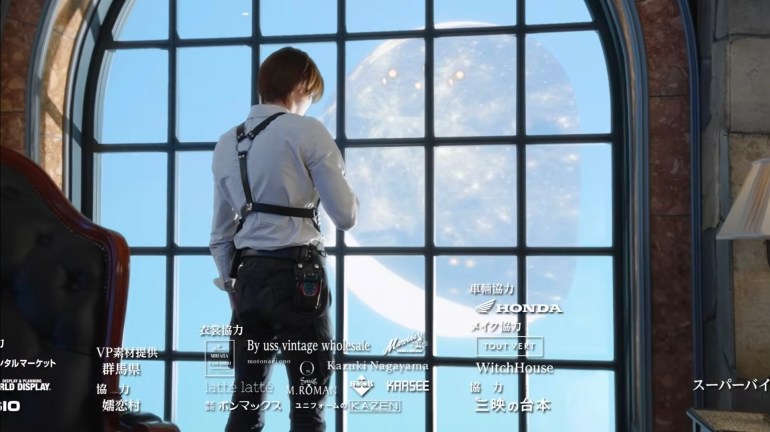
One of the closing images of Kamen Rider Zeztz 50 is Baku standing in front of that huge window in the Zeztz Room, and he instantly reminds me so much of Zero. Both the robot and his dad, really. The position he’s taking, the way the room looks, even the tea he’s holding—it immediately made me think, oh, that’s Zero. Baku is taking Zero’s place.
He’s surrounded by the trappings of his father and CODE, the things his father used when interacting with him. But I find that fascinating because Baku isn’t simply becoming his father or resurrecting CODE.
In fact, Baku stands in pretty stark contrast to the idea that because something hurt you, your answer should be to run away from it, destroy it, or tear everything down. That’s something the entire cast ultimately rejects. They take what they’ve been given and fight to make it better.
Baku has plenty of reasons to be angry about CODE. He has reasons to be angry with his father. He even told Zero that he didn’t trust him. But Baku doesn’t spend the ending worrying about the darkness of CODE or looking to punish everyone for their sins. Instead, he basically says: I’m not going to make the same mistakes CODE made. I’m not going to have their morals. I’m going to have my own.
That’s very rooted in what Baku has actually been doing. When saving Nem threatens to bring Oblivion back and destroy the world, his answer is essentially: I’m bringing her back anyway, and then I’m going to save the world too. He’s not going to accept being put into a no-win situation. He’s going to do it all or die trying.
And I think he’s doing the same thing with CODE.
Nox destroyed CODE, but Baku doesn’t resurrect CODE. He takes the good from it, leaves the bad behind, and continues the mission of fighting Nightmares. He continues operating from within dreams. He continues working with agents. He even uses CODE technology to disguise his voice and trick Eight into believing she’s receiving a mission to recover the Zeztz Driver, when the mission is actually a ruse to bring her to him and introduce her to ZEZTZ.
So Baku is going to do the good things CODE did. He’s just not going to do them with CODE’s philosophy.
And Eight makes that difference incredibly clear.
CODE turned its agents into numbers. Eight has spent her life wanting to become an agent, to the point that when Baku asks about her dreams, that’s basically all she has. Baku’s response is that she isn’t a number. She needs to have her own mind, her own will, and eventually her own dreams. Eight ultimately abandons the numbered ring CODE gave her.
I think there’s something really important there. If you have your own life, your own dreams and your own sense of what’s worthwhile, then the individual person matters to you. You’re less likely to become someone who only sees the bigger picture and ignores the smaller one.
It’s that forest-for-the-trees problem. You can’t claim you’re protecting the forest while deciding it doesn’t matter how many individual trees you destroy. And when we’re talking about people instead of trees, sacrificing innocent people because you’ve decided it’s necessary to safeguard humanity in the aggregate isn’t good or moral. That’s not the kind of operation Baku wants to run.
What’s striking is that he can reject that without raging against the machine. He could be angry and bitter about what CODE and his father put him through, but he isn’t. He’s enduring that pain and trying to do something good with what they left him.
And I don’t know if I would have picked up on how much I like this without listening to a couple of long political and cultural podcasts recently. One of the ideas that stuck with me was this question of what we do with our inheritance from the people who came before us. The argument was that progress doesn’t require pretending the previous generation was perfect, but it also doesn’t require burning everything they gave us to the ground. You can receive something, recognize what was good and what was bad, keep what works, fix what doesn’t, and try to hand the next generation something better.
And that’s what I see Baku doing.
The world isn’t perfect. The people above us and the generations before us aren’t perfect either. They’ve made mistakes, and those mistakes help create whatever situation we’re living in now. But they’ve also done good things. There are wicked things in what we’ve inherited, and there are noble things too.
We can take what we’ve been given, appreciate the good, reject the bad, and endeavor to make things better for the next generation—to give them something better, something stronger, something more human and wholesome than what we received.
I really like that.
And it’s especially funny to me that I got primed to recognize this idea by listening to hours of somebody sitting in a studio talking about politics and culture, only to see basically the same idea expressed through Kamen Rider Zeztz. Baku doesn’t stand in front of the camera and give us a speech about inheritance. He just stands in his father’s place, takes what was worth preserving, rejects what wasn’t, and starts building something better.
It’s a really good message, and because it’s conveyed through a hero story like this, it’s easy to understand and think about applying to your own life.
Baku has become his father. But he hasn’t become his father.
And I think that’s beautiful.

