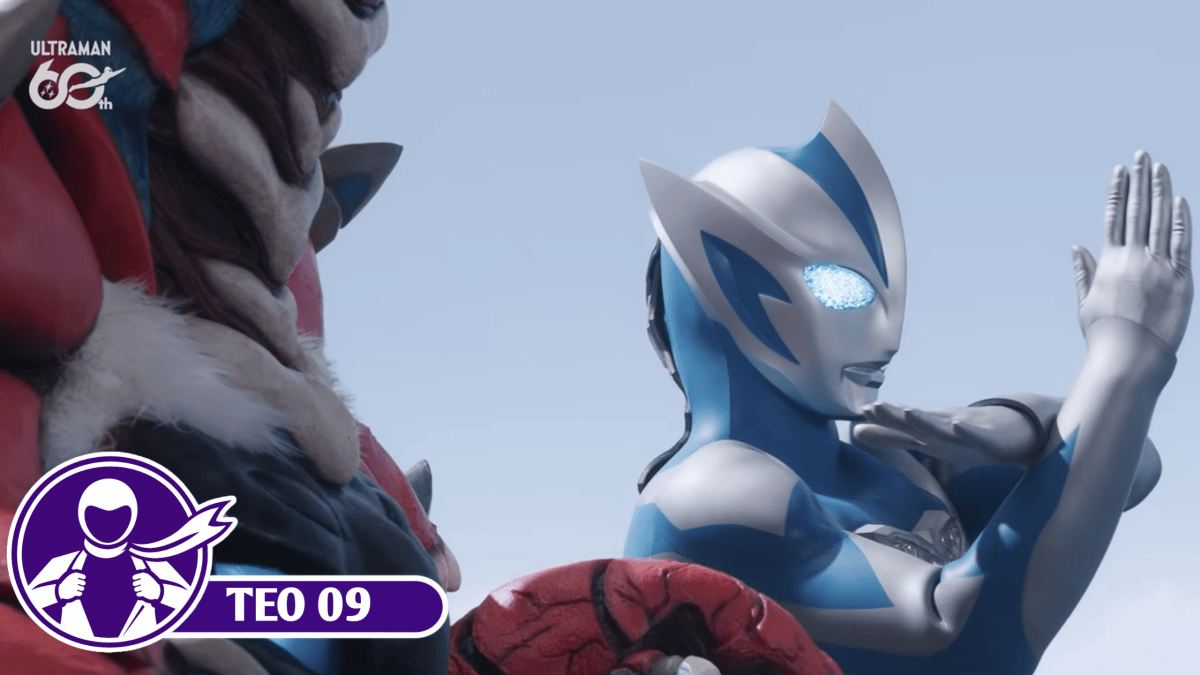
Watch my analysis
Ultraman Teo 08 – Going Ultra – Presented by Henshin Inspection
VIDEO AND AUDIO PENDING – [The video and audio above contain the full unfiltered analysis. What follows is the razor focused version of the strongest point I had to make.]
Ultraman Teo 09: A Smart Kids’ Show with a Soft Sci-Fi Shell
Ultraman Teo 09, “The Static Reach,” was a really good episode. I thoroughly enjoyed it, and I think one of the most interesting things about it is how much it accomplishes with relatively little.
I’ve said before that Ultraman Teo looks a little more juvenile than some other Ultraman series. Of course, all Ultraman shows are for kids to some degree, but there’s something about Teo’s presentation that feels especially gentle and approachable.
And yet there’s this almost hard-science edge to the storytelling that I really appreciate.
It’s a smart kids’ show. Or, more accurately, it’s a kids’ show that treats its audience as if they have intelligence, rather than treating them like they’re dumb.
I think that’s an important distinction.
Rintaro’s Strength Is His Ability to Observe
One of the things I really appreciated about this episode was the guidance Rintaro receives from Professor Junpei Minobe and Professor Takayuki Tsukahara, who had previously banned him and Ibuki from his laboratory.
Tsukahara had been pretty upset with Rintaro, but he cools down, they talk things over, and he offers him some guidance. Minobe does something similar, and I really appreciated both of them.
It’s the kind of knowledge and guidance that good teachers should provide.
I also really enjoyed Ibuki’s conversation with Rintaro about his fear of touching animals.
Ibuki encourages him to accept that weakness, and I think there’s an implied message that Rintaro has strengths of his own, too. He doesn’t necessarily need to overcome every weakness. He can recognize his strengths and focus on those.
And there’s something interesting about Rintaro telling Ibuki how strong he is, because he’s recognizing Ibuki’s kindness and generosity as strengths.
Which they are!
I thought that was really cool.
The episode eventually brings Rintaro’s own strength to the forefront through his ability to observe animals and understand their behavior. He uses that ability to help figure out how Volthog works.
And I liked that. I thought it was pretty clever.
Although I do have a reservation about the execution.
Does Rintaro’s Discovery Actually Make Sense?
The basic idea is that Rintaro realizes Volthog might run out of electrical charge, much like a battery. He connects that possibility with a physical change in the kaiju’s behavior, which helps Teo figure out how to defeat him.
And while I was watching the episode, that worked.
But afterward, I started thinking, well, does that really make sense?
For one thing, how much opportunity did Rintaro really have to observe Volthog?
He’d been stuck in an elevator for much of the encounter. Maybe he was watching videos or looking at footage of Volthog, but I don’t remember the episode clearly establishing that.
I did like the detail that Ibuki had noticed Rintaro watching animal videos on his phone between classes. That’s smart, and it establishes something important about the character.
But I’m not sure there’s enough evidence for the specific conclusion Rintaro reaches.
Animals don’t necessarily behave in predictable ways when they’re frightened or weakened. Some might display obvious signs of submission, but others might act aggressively or try to intimidate a threat even when they’re scared or at a disadvantage.
So the idea that Volthog would necessarily display some obvious physical sign of weakness doesn’t strike me as particularly scientific.
And that’s what bothers me a little, because it almost works against the premise the episode is establishing about observing animals to understand how they behave.
I think the deduction happened a little too quickly, without enough evidence to support it.
But did I really care while I was watching?
Not particularly.
I think that’s a distinction that matters. I noticed something that didn’t entirely convince me, but it didn’t ruin the experience.
It’s fiction, and the storytelling works within the episode. I just think the execution could have been a little stronger, especially because the show is doing something I really appreciate with its approach to observation and problem-solving.
The Natural Science of Ultraman Teo
One of my favorite things about Ultraman Teo is the way the characters actually observe the world around them.
They watch things. They notice patterns. They test assumptions and hypotheses on the fly. They try to understand what’s happening based on what they can see and what they already know.
And I think that’s really cool.
It’s not presented as some formal scientific exercise. It’s simply something the characters do naturally.
And that’s something I appreciate because scientific observation is actually a very natural human activity.
People have been observing their environments, learning from experience, and adapting to the world around them for as long as people have existed.
Think about people in the ancient world. They weren’t necessarily scientists in the modern sense, but they were observing nature and figuring things out. There’s something of the scientific method in that, even if it isn’t formalized.
We’re naturally curious. We watch, we see, we learn, and we try to understand things.
I believe we’ve been created with those qualities, and I think Teo does a really good job of showing how naturally they operate.
It doesn’t need somebody to announce that they’re going to use scientific observation to solve a problem.
They just do it.
And that feels good because it’s so naturally folded into the narrative.
It reminds me a little of the class pets at my children’s school.
Having a small animal in the classroom creates opportunities for learning that are different from the usual academic structure.
Children are naturally curious about animals. They’re drawn to them. They want to watch them, interact with them, and help care for them.
And putting children and animals together in that environment creates some really interesting dynamics. Hopefully the animal is safe, of course, but the children can learn an awful lot from interacting with another living creature.
It’s almost like two living systems interacting, each affecting the other in interesting ways.
There’s something about that which runs contrary to the rigidity of a conventional classroom structure, and I think that’s a good thing.
And I see something similar happening in Ultraman Teo.
The characters’ relationship with Pucchi isn’t just about having a cute little animal around. They’re learning about him, observing his behavior, and trying to understand what he is and how he works.
And they’re doing something similar with the kaiju they encounter.
It’s a natural, organic expression of scientific curiosity, and I really appreciate that.
A Soft Shell Around the Sci-Fi Crunch
I keep coming back to the contrast between Teo’s presentation and the way it approaches storytelling.
There’s a little bit of that crunchiness you associate with hard science fiction, but it’s surrounded by these softer edges.
It’s almost like there’s a soft shell around the sci-fi crunch.
That’s probably the best way I can describe it.
There’s this smoothness to the presentation that makes everything feel approachable, but underneath it there’s a genuine interest in how things work.
The characters observe, they experiment, they learn, and sometimes they get things wrong.
And I like that.
The show isn’t necessarily hard science fiction, and as Rintaro’s deduction demonstrates, the science doesn’t always hold up perfectly when you think about it afterward.
But the underlying approach is something I really appreciate.
Even the mystery surrounding Pucchi’s emotional synchronization fits into that. We still don’t fully understand why he syncs with particular people or what determines when he can transform.
The rules are pretty opaque.
And for somebody like me, who wants to think about these things and figure out the answers, that’s a little frustrating. Although frustrating isn’t quite the right word.
I’m curious about it.
I want to know how it works, and the show is encouraging me to observe what’s happening and try to figure it out.
Which is exactly what the characters are doing!
I think that’s a really nice quality for a children’s show to have.
It respects the audience. It assumes viewers are capable of thinking about what they’re seeing without having everything explained to them.
And it manages to do that while maintaining this very gentle, almost juvenile presentation.
It’s a smart kids’ show, not because everything it does is scientifically perfect, but because it treats curiosity, observation, and learning as natural and worthwhile things.
And I think that’s the right way to go about it.
Ultraman Teo 09 does a lot with a little, and even when the execution isn’t quite perfect, I’m really enjoying what this show is doing.
All Zeztz Analysis | All Omega Analysis
Drop a comment below or tag me @MJ_Scribe on Twitter. Let’s have some fun talking about this.
If you enjoy thoughtful stories for kids and families, check out my book Mockwing Mayhem. Its a heartfelt adventure about magical bugs battling monsters and protecting children.
You can find more of my reviews, reflections, and stories with spine at mjmunoz.com, and join the mailing list there for behind the scenes updates and new releases.
Dive Deeper
Ultraman Teo 09: What Is the UTTF Really Capable Of?
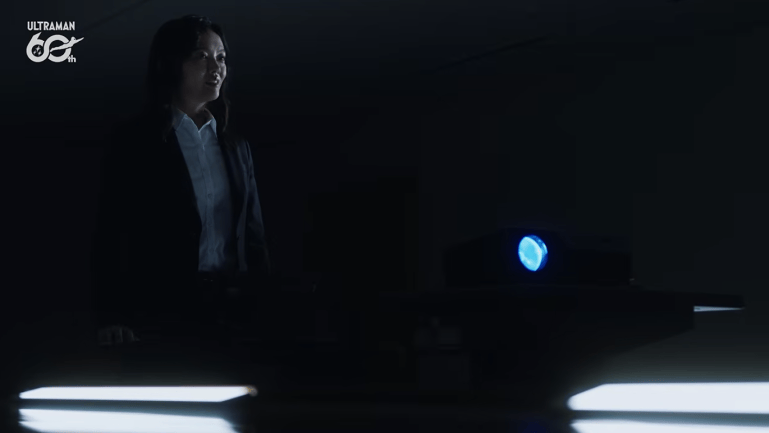
Something about the UTTF is genuinely scary to me, and Ultraman Teo keeps giving me more reasons to be suspicious of this organization.
Remember that conspiracy theorist who talked about how the UTTF makes people disappear and does all sorts of questionable things?
Now, I’m not saying we should take everything he said as fact. He’s a conspiracy theorist, after all.
But then we find out that the UTTF apparently has the ability to control a kaiju.
Think about that!
They have Volthog, which they got from somewhere, and they’re apparently sophisticated enough to manipulate this creature and use it for their own purposes.
And those purposes are particularly interesting because they don’t seem especially concerned with Volthog himself.
They’re using him to draw out Ultraman Teo.
They’re moving up the chain, so to speak.
And that’s a little disturbing because it raises all sorts of questions about who these people actually are and what they’re capable of.
Where did they get Volthog? How are they controlling him? What kind of technology do they possess? How long have they had these capabilities?
And what else can they do that we haven’t seen yet?
That’s what I find spooky about the UTTF. We don’t really know the limits of their capabilities, but every time we learn something new, the possibilities become a little more unsettling.
I also find Kyoko Shiga’s reaction very interesting.
She seems genuinely upset by the recklessness of using a kaiju to draw Teo out, and I think that’s an important distinction.
She’s part of the UTTF, but she doesn’t necessarily agree with what they’re doing.
So who is making these decisions? How much authority do they have? And what are they ultimately trying to accomplish?
I don’t necessarily think the UTTF is evil, or that everybody working for the organization is involved in something sinister.
But when you combine what the conspiracy theorist said with what we’re actually seeing the UTTF do, it makes the whole organization increasingly suspicious.
They have access to dangerous creatures. They apparently have the technology to control them. And they’re willing to use those capabilities in ways that even some of their own people consider reckless.
And the ultimate target of all this seems to be Ultraman Teo.
Why?
Who are these people, what are they capable of, and how long have they been operating like this?
I don’t have the answers, but I find the whole thing very spooky.
And very interesting.
Ultraman Teo 09: Pucchi’s Bloodlust and Teo’s Mercy
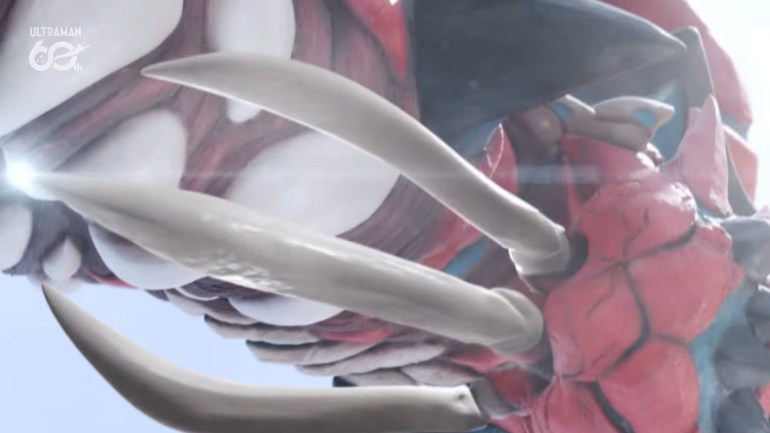
There was a moment during the second fight with Volthog in Ultraman Teo 09 that I found fascinating.
After Teo weakens Volthog with his beam, he looks over at Pucchi, who’s apparently having a great time.
And I mean, Pucchi seems positively joyful about the battle. Almost bloodthirsty!
Which is interesting because Ibuki had already talked about how he doesn’t like fighting or confrontation. He tries to avoid conflict, and he sees that as one of his weaknesses.
But Pucchi? Pucchi looks like he wants to finish this kaiju off!
Now, I don’t know what that means.
Maybe he’s just excited because he’s finally able to do something he ordinarily can’t.
He’s normally this tiny, soft, gentle little creature, but when he becomes giant, he’s combat-ready. He’s incredibly powerful, and he can actually protect his friends.
Maybe that’s exciting for him, and maybe he doesn’t fully understand the consequences of what he’s doing.
We don’t really know how sentient Pucchi is, or what kind of perspective he has. He’s a kaiju, or an alien, or a little bit of both. I don’t know exactly how he understands the world.
But there’s another possibility that I find interesting, and a little scary.
What if Pucchi actually likes fighting because that’s what he was made to do?
I’ve had this strange suspicion for a while that Pucchi might be some sort of bioweapon.
I don’t really know why. Maybe it’s the pod he arrived in. He looks like a creature that could have been sent somewhere for a particular purpose.
What if he was bred or conditioned to fight? What if that excitement is something instinctive that he can’t really help?
I don’t know. This is all speculation, but it’s based on some observations.
See what I’m doing there?
And then the episode does something really interesting.
Teo looks toward this apparently bloodthirsty, joyful Pucchi, and then he chooses not to kill Volthog.
Instead, he somehow shrinks Volthog down, puts him in a little ball, and flies away with him.
He shows mercy when he doesn’t necessarily have to.
And I feel like there’s a purposeful contrast there.
Pucchi is excited about the battle, while Teo chooses to end it peacefully. Those moments are juxtaposed, and Teo looks toward Pucchi for a reason.
At least, I think he does.
I don’t know exactly what the show is trying to communicate, but I find that contrast fascinating.
Is Pucchi simply enjoying his newfound abilities without understanding the consequences? Is there something more dangerous about his nature? And does Teo recognize something that Pucchi doesn’t?
Then there’s the whole question of Volthog himself.
Did Teo somehow recognize that Volthog was being manipulated by the UTTF? Did he understand something about the creature that we didn’t? Or did he simply decide that killing him wasn’t necessary?
And where exactly did he take him?
For all I know, he dropped Volthog off on some uncharted island where there’s a Pigmon waiting for a new friend. Now that Volthog is human-sized, maybe they can hang out together!
But seriously, how did Teo even know he could do that? Is shrinking and transporting kaiju something all people from H12 can do, or is it a particular ability of his?
There are a lot of interesting questions here.
I thought the second fight was fantastic, high-octane action, and honestly, I’m almost here for Pucchi as much as I am for Teo at this point.
I love the variety Pucchi brings to the action.
But what interests me even more is this possible contrast between a creature who seems delighted by combat and an Ultra Hero who chooses to show mercy.
I don’t know whether that contrast is going to develop into something more significant, but it certainly caught my attention.
And I’m very curious to see where they’re going with it.

