Ultraman Teo 10 – Going Ultra – Presented by Henshin Inspection
The video and audio above contain unfiltered analysis. The following blog is more structured.
Ultraman Teo 10: Can Compassion Become Dangerous?
Something interesting struck me about Ultraman Teo 10, and I’m wondering if the series is setting up a thematic contrast between the people of H12 and the UTTF.
On H12, Teo’s people were apparently reluctant to eradicate the kaiju attacking their planet. They were trying to understand these creatures, considering whether they might have been displaced from their natural habitat or driven to attack by circumstances beyond their control.
That’s a compassionate approach, and there’s something admirable about it. But their hesitation may also have contributed to the destruction of their entire planet.
What if they were simply too hesitant to act?
And then, on the opposite end of the spectrum, we have the UTTF.
We’ve already seen the UTTF experimenting with kaiju, manipulating them, and using their abilities for its own purposes. Their handling of Volthog in the previous episodes is particularly interesting because it suggests an organization that’s becoming increasingly confident in its ability to control these incredibly dangerous creatures.
What if they’re too eager to exercise that power?
I think there’s a fascinating potential parallel here. The people of H12 may have been so unwilling to harm the kaiju that they failed to protect themselves. Meanwhile, the UTTF may be so eager to exploit kaiju power that it could ultimately put Earth in the same kind of danger.
One civilization might have been destroyed because it was too reluctant to act, while another could potentially destroy itself by acting too aggressively.
And somewhere between those extremes is Teo.
What’s interesting is that Teo didn’t necessarily start out as that balanced hero. On H12, he was overwhelmed by fear and uncertainty. He couldn’t make a decision when his people needed him to, and he ultimately fled as his world was destroyed.
But on Earth, he’s learning to make those decisions for himself.
He’s fought and destroyed kaiju when necessary, but he’s also protected them, cared for them, and refused to fight when fighting wasn’t the appropriate response.
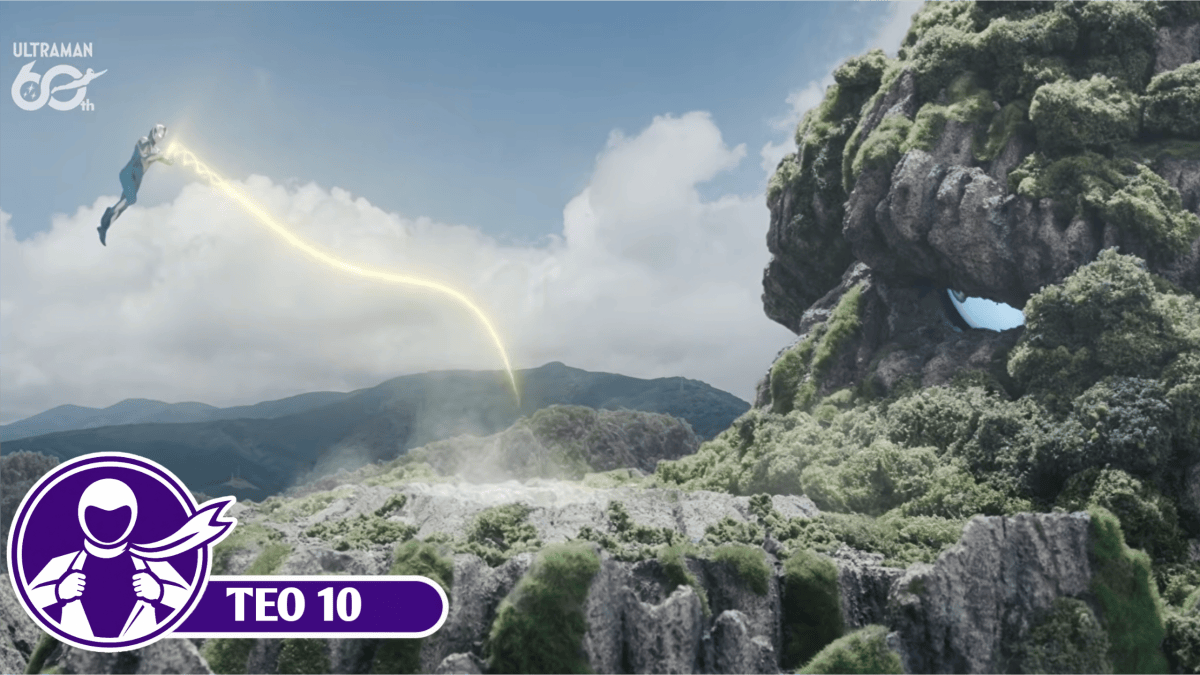
That’s what makes his encounter with Ozuyanushi in Episode 10 so interesting.
The giant mountain kaiju isn’t trying to harm anybody. It’s suffering because of pollution, and Teo is exactly the right person to deal with that situation. His instinct is to help rather than attack, and that works beautifully.
Even when he uses his beam attack, he reduces it to this tiny little finger-crossing version, using just enough power to tickle the creature’s nostrils and make it sneeze out the trash.
He’s exercising restraint, but he’s also exercising his power. He’s not refusing to act.
I think that’s a sign he’s on the right track.
But I don’t think he’s actually learned the full lesson yet, because Ozuyanushi isn’t presenting him with a particularly difficult moral decision. The kaiju isn’t malicious, and helping it doesn’t require Teo to hurt anybody.
What happens when that isn’t an option?
It’s kind of like rescuing somebody who’s drowning. A panicking person can become dangerous to the person trying to save them, and a rescuer may need to take decisive action to prevent both people from drowning.
The broader point is that sometimes helping somebody requires doing something they might resist, and avoiding a difficult action can ultimately put more people in danger.
Teo can’t allow his desire to avoid hurting one individual to become so absolute that other people suffer as a consequence.
And maybe there’s another interesting connection here with Pucchi.
In the previous episode, I was struck by how much Pucchi seemed to enjoy fighting. There’s almost a bloodlust to the way he throws himself into combat.
But maybe that doesn’t necessarily mean there’s something wrong with him.
Maybe fighting is fun. Maybe exercising your abilities and expressing your power can be genuinely enjoyable. There’s nothing inherently wrong with being powerful or even enjoying that power, provided you’re not abusing it or using it for the wrong reasons.
That’s another distinction Teo may need to learn.
He doesn’t have to be afraid of his own strength. He doesn’t have to become somebody who enjoys hurting others, either. He just needs to understand that power is a tool, and that using it responsibly sometimes means holding back and sometimes means acting decisively.
Which brings me back to H12 and the UTTF.
Maybe Teo’s experience with the destruction of his home world is teaching him not to be too hesitant, while his encounters with the UTTF will teach him the dangers of being too eager.
Maybe he’s going to have to push back against both extremes.
I don’t know whether the series is deliberately constructing that parallel, but I find the possibility really compelling.
Because ultimately, compassion isn’t simply about refusing to hurt anybody. Sometimes compassion requires making a difficult decision, taking responsibility for the consequences, and using the power you have to prevent something worse from happening.
And I think that’s the balance Teo is still learning to find.
All Zeztz Analysis | All Omega Analysis
Drop a comment below or tag me @MJ_Scribe on Twitter. Let’s have some fun talking about this.
If you enjoy thoughtful stories for kids and families, check out my book Mockwing Mayhem. Its a heartfelt adventure about magical bugs battling monsters and protecting children.
You can find more of my reviews, reflections, and stories with spine at mjmunoz.com, and join the mailing list there for behind the scenes updates and new releases.
Dive Deeper
Ultraman Teo 10: Can Compassion Become Dangerous?
Something interesting struck me about Ultraman Teo 10, and I’m wondering if the series is setting up a thematic contrast between the people of H12 and the UTTF.
On H12, Teo’s people were apparently reluctant to eradicate the kaiju attacking their planet. They were trying to understand these creatures, considering whether they might have been displaced from their natural habitat or driven to attack by circumstances beyond their control.
That’s a compassionate approach, and there’s something admirable about it. But their hesitation may also have contributed to the destruction of their entire planet.
What if they were simply too hesitant to act?
And then, on the opposite end of the spectrum, we have the UTTF.
We’ve already seen the UTTF experimenting with kaiju, manipulating them, and using their abilities for its own purposes. Their handling of Volthog in the previous episodes is particularly interesting because it suggests an organization that’s becoming increasingly confident in its ability to control these incredibly dangerous creatures.
What if they’re too eager to exercise that power?
I think there’s a fascinating potential parallel here. The people of H12 may have been so unwilling to harm the kaiju that they failed to protect themselves. Meanwhile, the UTTF may be so eager to exploit kaiju power that it could ultimately put Earth in the same kind of danger.
One civilization might have been destroyed because it was too reluctant to act, while another could potentially destroy itself by acting too aggressively.
And somewhere between those extremes is Teo.
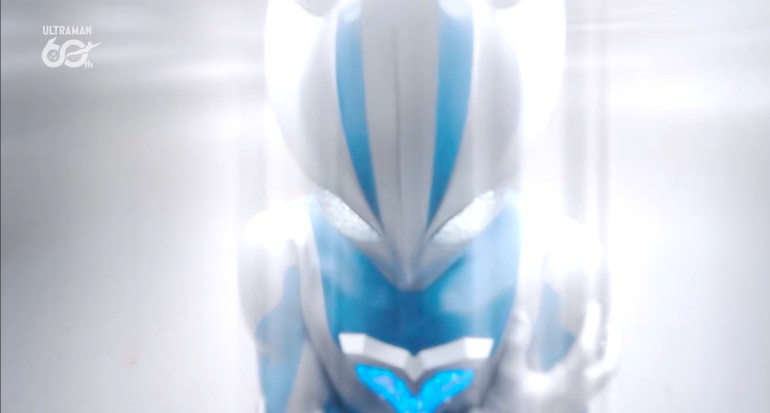
What’s interesting is that Teo didn’t necessarily start out as that balanced hero. On H12, he was overwhelmed by fear and uncertainty. He couldn’t make a decision when his people needed him to, and he ultimately fled as his world was destroyed.
But on Earth, he’s learning to make those decisions for himself.
He’s fought and destroyed kaiju when necessary, but he’s also protected them, cared for them, and refused to fight when fighting wasn’t the appropriate response.
That’s what makes his encounter with Ozuyanushi in Episode 10 so interesting.
The giant mountain kaiju isn’t trying to harm anybody. It’s suffering because of pollution, and Teo is exactly the right person to deal with that situation. His instinct is to help rather than attack, and that works beautifully.
Even when he uses his beam attack, he reduces it to this tiny little finger-crossing version, using just enough power to tickle the creature’s nostrils and make it sneeze out the trash.
He’s exercising restraint, but he’s also exercising his power. He’s not refusing to act.
I think that’s a sign he’s on the right track.
But I don’t think he’s actually learned the full lesson yet, because Ozuyanushi isn’t presenting him with a particularly difficult moral decision. The kaiju isn’t malicious, and helping it doesn’t require Teo to hurt anybody.
What happens when that isn’t an option?
It’s kind of like rescuing somebody who’s drowning. A panicking person can become dangerous to the person trying to save them, and a rescuer may need to take decisive action to prevent both people from drowning.
The broader point is that sometimes helping somebody requires doing something they might resist, and avoiding a difficult action can ultimately put more people in danger.
Teo can’t allow his desire to avoid hurting one individual to become so absolute that other people suffer as a consequence.
And maybe there’s another interesting connection here with Pucchi.
In the previous episode, I was struck by how much Pucchi seemed to enjoy fighting. There’s almost a bloodlust to the way he throws himself into combat.
But maybe that doesn’t necessarily mean there’s something wrong with him.
Maybe fighting is fun. Maybe exercising your abilities and expressing your power can be genuinely enjoyable. There’s nothing inherently wrong with being powerful or even enjoying that power, provided you’re not abusing it or using it for the wrong reasons.
That’s another distinction Teo may need to learn.
He doesn’t have to be afraid of his own strength. He doesn’t have to become somebody who enjoys hurting others, either. He just needs to understand that power is a tool, and that using it responsibly sometimes means holding back and sometimes means acting decisively.
Which brings me back to H12 and the UTTF.
Maybe Teo’s experience with the destruction of his home world is teaching him not to be too hesitant, while his encounters with the UTTF will teach him the dangers of being too eager.
Maybe he’s going to have to push back against both extremes.
I don’t know whether the series is deliberately constructing that parallel, but I find the possibility really compelling.
Because ultimately, compassion isn’t simply about refusing to hurt anybody. Sometimes compassion requires making a difficult decision, taking responsibility for the consequences, and using the power you have to prevent something worse from happening.
And I think that’s the balance Teo is still learning to find.
Rintaro Should Have Named Ultraman Teo
I really like how Ultraman Teo has established Rintaro as a very observant, clever, and intelligent character. That’s one of his defining traits, and I think Episode 10 missed a really good opportunity to use it.
In the previous episode, Rintaro figured out that Volthog was basically like a battery. It could absorb electricity, but eventually that charge would drain, and it would need to replenish itself.
He observed that when Volthog’s ears were down, it was in a vulnerable state, like a drained battery. But when its ears were up, it was fully charged and confident.
That’s what he used to give Ultraman information that helped him defeat Volthog.
I have a little quibble with how that was handled. I think the observation could have been set up more clearly earlier in the episode, but overall it was good. It showed us that Rintaro pays attention to things and can put pieces of information together to figure out what’s going on.
Then, in Episode 10, we see that same intelligence expressed in a different way.
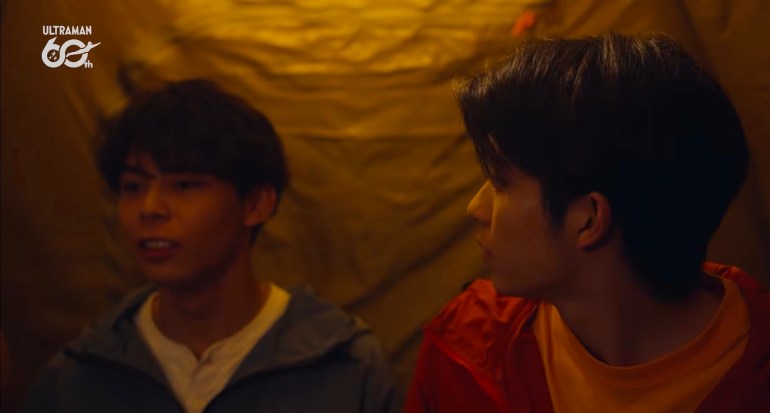
Professor Minobe confronts the Astronomy Club about Pucchi, and Rintaro has to come up with a lie to keep him from joining them.
You can actually see Rintaro pause for a moment, look off to the side, and get an idea.
Then he invents this story about a championship they’re supposedly going to attend. But the clever part is how he uses the information he gives Minobe to make the professor decide for himself that he should stay behind.
Minobe wants to investigate Pucchi, and Rintaro’s lie gives him a reason to believe staying behind is the better way to accomplish that.
That’s really smart.
He’s not just making something up to get out of trouble. He’s thinking about what the other person wants and giving him the pieces to reach the conclusion Rintaro wants him to reach.
So the show has already established that Rintaro is observant, clever, and capable of thinking through a situation.
Which brings me to the naming scene.
Later, the Astronomy Club is sitting around trying to decide what to call the giant. Everybody suggests different names, and eventually Ibuki suggests “Teo.”
It’s a sweet, funny scene, and I like that Ibuki is getting to speak up for himself, especially after we saw how he couldn’t bring himself to make a decision during the council meeting on H12.
But I think there’s a much better way they could have handled it.
Rintaro should have been the one to suggest “Teo.”
We’ve heard Ultraman shout his own name during fights. He does it when he’s knocked around, and he does it when he’s performing certain attacks.
I would think Rintaro, being as observant as he is, should have heard that at least once by now.
He could have said something like, “Hey, I’ve heard the giant say ‘Teo’ a few times. Maybe that’s what we should call him.”
Kind of like a Pokémon!
And Ibuki could have enthusiastically agreed.
“Oh, yeah! I’ve heard him say that, too! That would make a great name for him!”
That’s it. That’s all you need.
Rintaro gets to demonstrate the observational intelligence the show has already established as one of his traits, and Ibuki gets to enthusiastically embrace his own name.
We preserve both characters’ personalities and the characterization we’ve seen up to this point.
I still think the original scene is sweet and enjoyable. I like what they’re doing with Ibuki, and I appreciate the contrast with his inability to speak up on H12.
I just think this could have been executed a little better.
It’s a good idea, but a missed opportunity to bring together two things the show has already established.
And that’s what makes it a little disappointing to me. The ingredients were already there. They just needed to put them together.
What Does Professor Minobe Know?
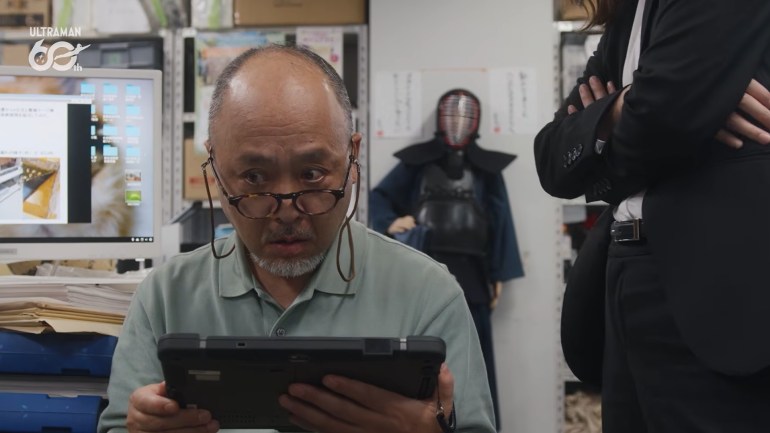
I was really impressed at the end of Ultraman Teo 10 when Shiga confronts Professor Minobe about that photograph uploaded to social media of something that looks like Pucchi, a kaiju flying with the moon behind it.
She mentions that there were college students camping in the area and asks what he knows about that.
And he doesn’t say anything!
I’m so impressed that he didn’t sell them out, especially because the whole episode started with him having seen Pucchi at the dog park. He confronts the Astronomy Club about it, and Rintaro comes up with this really clever lie to keep him from joining them on their camping trip.
But now Shiga is asking questions, and Minobe isn’t giving her anything.
I feel like he’s trying to protect the students of the Astronomy Club, but he could just be cautious about letting Shiga know what he knows.
He’s seen the UTTF doing different things, but I don’t know that he knows the full extent of everything they do.
He might be wary of them because he knows they’re capable, but he doesn’t necessarily know what they’re willing to do.
And maybe that’s his concern.
That could apply to Pucchi, the students, and even Minobe himself.
I don’t know that the episode gives us enough to determine exactly what he’s thinking, and maybe he just doesn’t want to look like he’s lying.
But that’s definitely the face of somebody who just found out Shiga discovered his secret My Little Pony fan page.
He knows something, Shiga suspects something, and he’s clearly uncomfortable.
I don’t know why he’s keeping quiet, but I’m really interested in the fact that he is.

