Ultraman Teo 11 – Going Ultra – Presented by Henshin Inspection
The video and audio above contain unfiltered analysis. The following blog is more structured.
Ultraman Teo 11: Ultraman Zero Reveals the Danger Behind Pucchi’s Powers
I really enjoyed Ultraman Teo 11, especially because I was genuinely surprised to see Ultraman Zero show up! I didn’t think the mysterious kid was going to be Zero at all. I actually suspected he might be the hunter who was looking for Pucchi.
But Zero’s appearance brings something really interesting to the show, especially when he reveals the truth about Pucchi and why his powers could be so dangerous.
Pucchi Is a Living Weapon, and My Guyver Comparison Is Looking Better Than Ever
I’ve been talking about the Guyver vibes I’ve been getting from Ultraman Teo for practically the entire series, and I feel a little vindicated now!
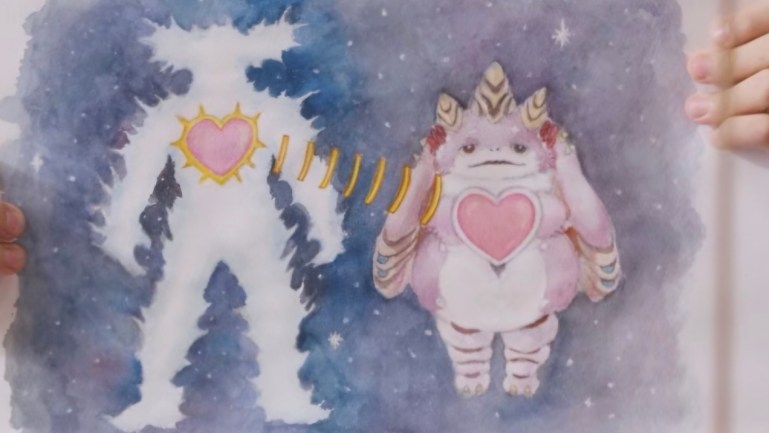
Zero explains that Pucchi belongs to a species called Pigterus, whose ability to resonate with emotions makes them extraordinarily dangerous when exploited by malicious individuals. In fact, Pigterus have been called the “ultimate living weapons,” and their exploitation in repeated conflicts has contributed to their dwindling numbers.
That’s a fascinating revelation because I’ve suspected there was something more to Pucchi’s origins for a while.
We still don’t know whether somebody engineered these creatures or whether their natural abilities simply make them valuable as weapons. But either possibility raises some interesting questions.
Just last episode, I mentioned that the timing of Pucchi’s arrival on Earth, alongside Ibuki’s, felt meaningful. Now I’m wondering whether their respective arrivals might be connected to the show’s overarching plot.
Zero even warns that whoever brought Pucchi to Earth will likely want him back.
There’s an interesting parallel here with Vermilios, the giant bird whose former caretaker abandoned him when things got out of control.
Could someone connected to Pucchi’s past eventually show up to reclaim or control him? Zero’s warning certainly makes that possibility more credible, and I think it could create some compelling conflict, especially given the wonderfully innocent people currently looking after him.
Ultraman Zero Exposes Ibuki’s Naivete
One of my favorite things about Zero’s appearance is how dramatically he contrasts with Ibuki.
Ibuki immediately wants to protect the people around him, using his barrier and looking for ways to resolve the situation peacefully. Unfortunately, that trusting nature gets taken advantage of when Black Doglf bites him after pretending to become docile.
We also discover that Bodyroba, the creature pursuing Pigterus, is somehow operating from within Black Doglf. It emerges when Pucchi becomes vulnerable and later retreats back inside the creature.
Zero, meanwhile, understands the danger immediately. He’s experienced, battle-hardened, and has absolutely no chill about it.
That creates a hilarious reversal. Ibuki appears to be an adult but approaches the world with childlike innocence, while Zero looks like a kid but possesses the perspective of a seasoned warrior.
It’s a fun dynamic, but it’s also an effective way of examining Ibuki’s character. His compassion is one of his greatest strengths. Can he maintain it while learning to recognize the dangers of misplaced trust?
The Danger Depends on Who Holds the Weapon
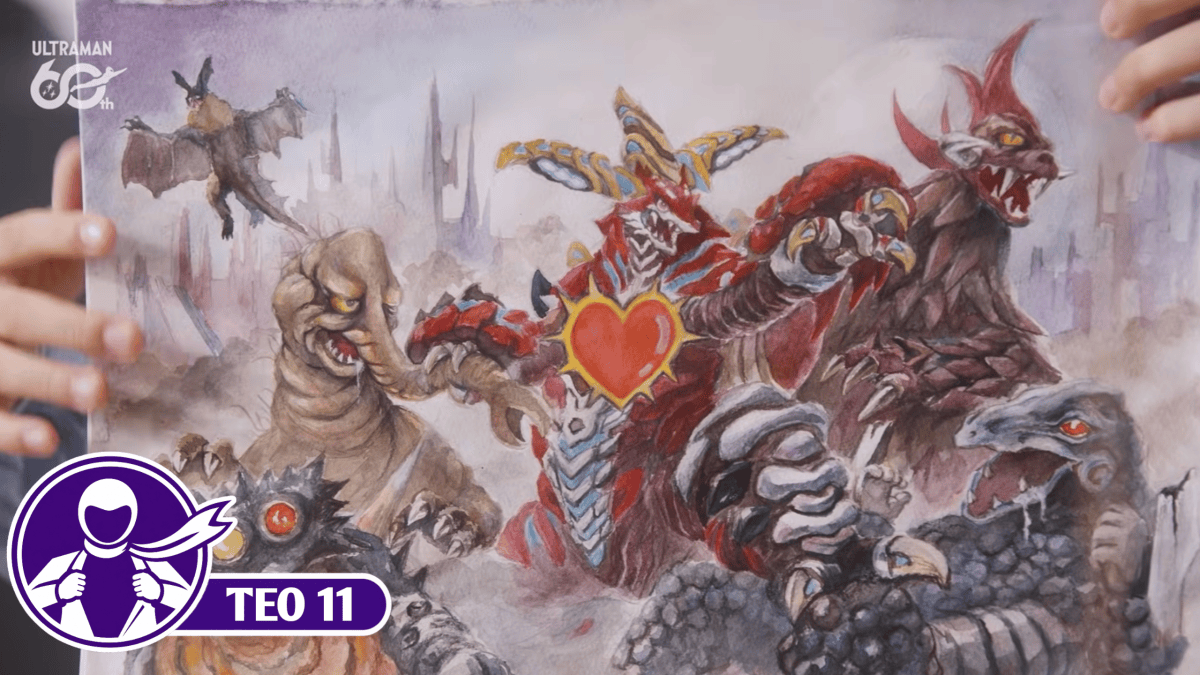
I loved the sequence where Kid Zero uses a sketchbook to explain Pigterus to Ibuki. The illustrations are amazing, and they’re a wonderful way to communicate the threat these creatures can represent.
Zero explains how Pigterus can become incredibly dangerous weapons when their emotion-resonating abilities are exploited by someone with malicious intentions.
And that’s particularly interesting because Pucchi has ended up with such sweet, good-natured kids.
I’ve talked repeatedly about the Astronomy Club’s innocence, and I think it matters more than ever. They aren’t trying to exploit Pucchi. They love him, care for him, and want to protect him.
Kanna has even modified an existing translation app to work with Pucchi, using a badge attached beneath his chin to transmit information about his emotions to a phone.
I appreciate that detail because they’re not simply taking care of Pucchi. They’re making an effort to understand him.
In a sense, their relationship has neutralized some of the threat he might otherwise represent.
That raises a fascinating question: Does possessing tremendous destructive potential make a creature inherently dangerous, or does the danger depend on the intentions of whoever controls or influences it?
I’m not saying Ultraman Teo has reached a definitive conclusion yet. But I really enjoy seeing it explore that question, particularly because it connects to observations I’ve been making throughout the series.
The Astronomy Club Can’t Keep Its Secrets Forever
Meanwhile, Kyoko Shiga finally obtains concrete evidence of the Astronomy Club’s involvement with Pucchi. Security footage captures Pucchi shrinking back to his normal size and the club members escorting him away.
That’s a significant development because she’s no longer merely suspicious. She has evidence.
I assume she’s going to report what she’s learned to the UTTF, and that could create serious problems for the Astronomy Club.
What happens when an organization responsible for extraordinary threats discovers that some university students are protecting a potentially dangerous living weapon?
Some kind of shift feels unavoidable.
I also appreciated Emma and the other club members calling out Ibuki for his constant disappearances and the things he’s obviously keeping from everyone.
They’ve noticed his behavior, even if they don’t understand it. I like that the show acknowledges how suspicious Ibuki’s activities must look to the people around him rather than allowing his secret identity to exist without consequences.
Between Pucchi’s newly revealed abilities, Shiga’s investigation, and Ibuki’s increasingly conspicuous behavior, the Astronomy Club may soon have some difficult decisions to make.
Dogzilla, Kid Zero, and the Joy of Monster Design
On a lighter note, I think it’s hilarious that Ultraman Teo effectively introduced Dogzilla.
Black Doglf is this big, black, dog-wolf-hybrid kaiju, and I just think that’s a fun concept. I like the design, and I’d happily see more creatures like it.
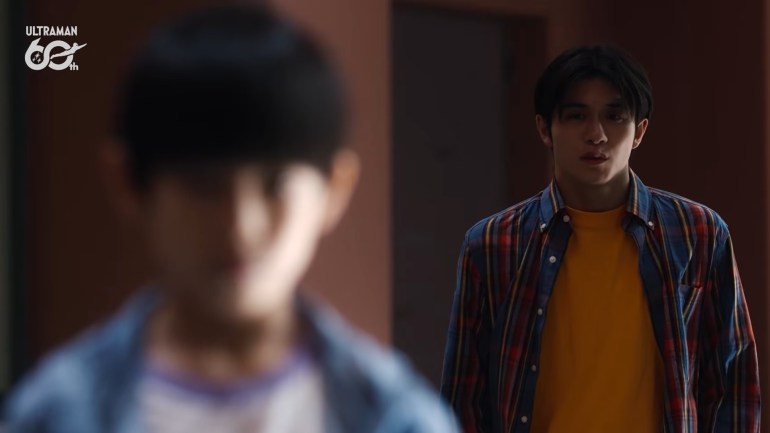
I’m also curious about Zero’s current situation. The mysterious boy saves Kurumi from falling rubble and ends up buried himself, but after a mysterious flash of light, he’s somehow unharmed.
Did Zero save the child’s life by merging with him, as we’ve seen Ultras do with human hosts before? Or is something else happening here?
Whatever the explanation, I really enjoyed Kid Zero. His attitude and experience make him a great foil for Ibuki.
And those sketchbook illustrations deserve some appreciation, too. The artwork was created by Yasumasa Watanabe and includes classic Ultra monsters like Sartan, Beacon, and Alien Tsuruk.
I love that someone went to the trouble of creating such elaborate monster artwork for the episode. It’s a lovely bit of tokusatsu craftsmanship.
Ultraman Teo’s Bigger Story Is Coming Into Focus
What excites me most about Ultraman Teo 11 is how its different ideas are beginning to connect.
Pucchi’s potential as a living weapon, Ibuki’s compassion becoming a vulnerability, Zero’s more experienced perspective, and the Astronomy Club’s increasingly precarious secrets all seem to be pushing the story toward something larger.
I’ve enjoyed Ultraman Teo for its gentle, good-natured approach to kaiju and its characters. Now the show is beginning to explore what happens when that kindness encounters something genuinely dangerous.
And I’m really interested in seeing how it handles that conflict.
All Zeztz Analysis | All Omega Analysis
Drop a comment below or tag me @MJ_Scribe on Twitter. Let’s have some fun talking about this.
If you enjoy thoughtful stories for kids and families, check out my book Mockwing Mayhem. Its a heartfelt adventure about magical bugs battling monsters and protecting children.
You can find more of my reviews, reflections, and stories with spine at mjmunoz.com, and join the mailing list there for behind the scenes updates and new releases.
Dive Deeper
The Guyver Connections I’ve Been Noticing All Along
For anyone unfamiliar with Bio Booster Armor Guyver, it’s a Japanese science-fiction manga created by Yoshiki Takaya that began in 1985. The story follows Sho Fukamachi, a teenager who encounters an alien device that transforms him into the Guyver, a powerful warrior equipped with biological armor and built-in weapons.
The series combines alien biotechnology, genetically engineered monsters called Zoanoids, and a shadowy organization known as Chronos. It has inspired several adaptations, including the 1994 live-action film Guyver 2: Dark Hero, which features an archaeological expedition investigating an alien spacecraft.
That combination of biological weaponry, alien technology, and creature design is what keeps bringing Guyver to mind as I watch Ultraman Teo.
I’ve been getting some serious Guyver vibes from Ultraman Teo since practically the beginning of the series, and Episode 11 has me feeling a little vindicated!
When Ultraman Zero reveals that Pucchi belongs to a species known as the “ultimate living weapons,” it feels like another piece of a puzzle I’ve been putting together for weeks.
And it isn’t just the idea of biological weapons. There are some surprisingly specific similarities I’ve noticed.
First, there’s the way Pucchi’s body works.
He has this little compressed form, but when he grows, all these biological weapons become available to him. His claws extend, he has beam attacks associated with the structures on his head, and those spikes on his shoulders remind me specifically of Gaster, one of the Hyper Zoanoid Five.
I’ve already called out that Gaster resemblance in an earlier Short or Dive Deeper, so this isn’t something I’m only noticing after Zero’s revelation.
Then there’s Pucchi’s pod, which reminds me of the alien spacecraft featured in Guyver, particularly Guyver 2: Dark Hero.
And the similarities go beyond the designs.
College students investigating the site of an alien spacecraft is a significant part of Dark Hero, and we get a remarkably similar setup in Ultraman Teo.
There have also been individual shots throughout the series that remind me of Dark Hero. It’s difficult to point to any one element as definitive evidence of an intentional homage, but the similarities have been accumulating.
That’s why Zero’s explanation of Pigterus is so satisfying.
It doesn’t prove that Guyver influenced the production, and we still don’t know whether Pigterus were deliberately engineered as biological weapons.
But between Pucchi’s expandable biological weaponry, his shoulder spikes, the alien pod, and the parallels in how the story begins, I think there’s a genuinely interesting case for a possible Guyver influence.
I’ve been seeing these connections for ten episodes. Now that the series has explicitly identified Pigterus as living weapons, I’m even more interested in whether those similarities are intentional.
Ultraman Teo 11: What Ultraman Zero Can Teach Ibuki About Compassion
Something I’ve been wondering about since Ultraman Teo 10 is whether Ibuki’s compassion might eventually become dangerous.
And Episode 11 gives us a pretty interesting demonstration of exactly how that could happen.
Last episode, we saw Ibuki handle Ozuyanushi beautifully. He recognized that the giant mountain kaiju wasn’t malicious. It was suffering because of pollution, and rather than attacking it, Teo used his power to help.
He even reduced his beam attack to this tiny little finger-crossing version, using just enough energy to tickle the creature’s nostrils and make it sneeze out the trash.
It was a wonderful example of exercising both compassion and restraint.
But Ozuyanushi wasn’t actually trying to hurt anyone.
What happens when a kaiju takes advantage of that compassion?
That’s exactly what we see in Episode 11 when Black Doglf pretends to become docile, exploiting Teo’s willingness to trust it before attacking him.
And that’s what makes Ultraman Zero’s appearance so interesting.
Zero looks like a little kid, but he’s actually a seasoned warrior who understands just how dangerous the universe can be. Meanwhile, Ibuki looks like an adult but still approaches the world with this almost childlike innocence.
Zero has absolutely no chill, and I love the contrast between them!
But I also think there’s something more substantial happening here.
I’ve been wondering whether the series is establishing two dangerous extremes through the people of H12 and the UTTF.
On H12, Ibuki’s people apparently hesitated to eradicate the kaiju attacking their planet. They wanted to understand the creatures and consider whether something had driven them to behave that way.
That compassion was admirable, but their hesitation may have contributed to the destruction of their world.
Meanwhile, the UTTF seems increasingly willing to experiment with kaiju and exploit their abilities. We saw that particularly clearly with Volthog.
One civilization may have been too reluctant to exercise its power, while another might eventually suffer because it’s too eager to do so.
And Ibuki seems to be caught somewhere between those extremes.
His experiences on Earth have already taught him that not every kaiju needs to be destroyed. He’s protected them, cared for them, and even refused to fight when fighting wasn’t the appropriate response.
But he’s also had to fight and destroy kaiju when necessary.
What I don’t think he’s fully learned yet is how to recognize when compassion requires decisive action.
That’s where Zero might have something valuable to teach him.
Zero doesn’t hesitate when he recognizes a genuine threat. He’s experienced enough to understand when an enemy is exploiting someone else’s good intentions, and he acts accordingly.
But I don’t think Ibuki necessarily needs to become more like Zero in every respect.
His compassion is one of his greatest strengths. He shouldn’t lose that. He just needs to develop the judgment to recognize when his good intentions are putting himself or others in danger.
It’s something I was thinking about in Episode 10 with the example of rescuing a drowning person. Someone who’s panicking can become dangerous to the person trying to save them. Sometimes helping someone requires taking decisive action, even when they might resist it.
Compassion doesn’t always mean being gentle or avoiding conflict. Sometimes it means doing something difficult to prevent an even worse outcome.
And maybe that’s part of what Ibuki is learning.
I don’t know whether the series is deliberately using Zero to advance this particular aspect of Ibuki’s development, but I find the possibility compelling.
The experienced warrior looks like a child, while the adult hero still has some growing up to do.
It’s a fun reversal, but it also raises a much bigger question about the kind of hero Ibuki is becoming.
Can he learn to act decisively without losing the compassion that makes him special?
I think that’s one of the most interesting questions Ultraman Teo is exploring right now.

