
How to Defeat a Demon King in Ten Easy Steps Book Chat – Fortress Fiction
This is just one of the books from my 2026 BOOK COMPLETED list. Check out the others!
I Usually Hate First Person… But I Love This Book
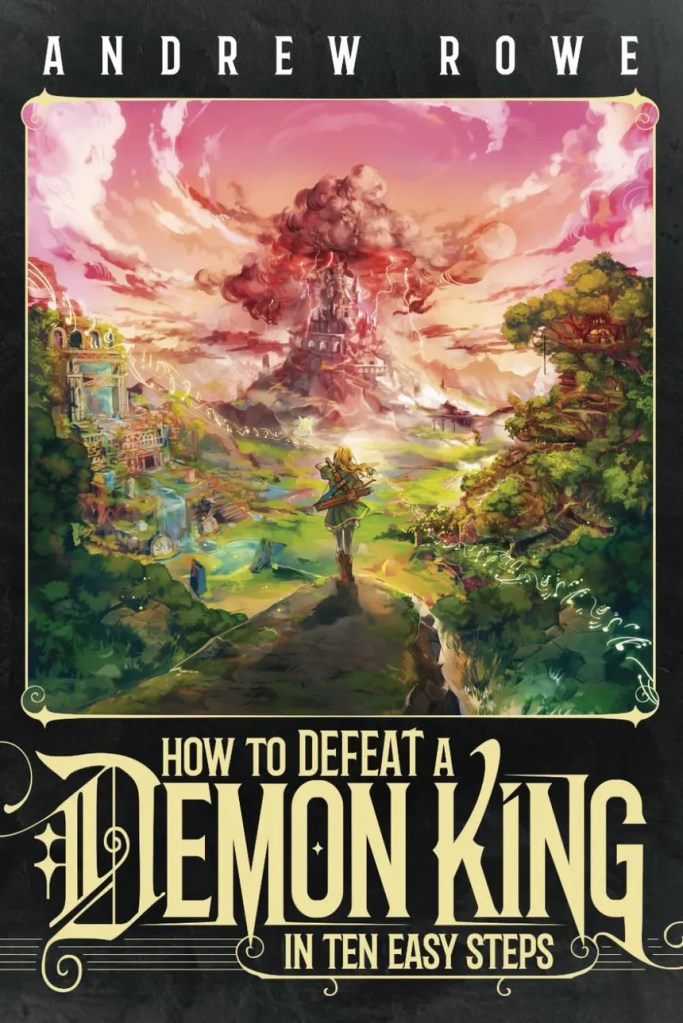
How to Defeat a Demon King in Ten Easy Steps – Andrew Rowe Review
Fortress Fiction Verdict: Recommended
I usually hate first person writing.
But Andrew Rowe’s How to Defeat a Demon King in Ten Easy Steps is one of my favorite books, and it’s written entirely in first person. That raises an obvious question: how does that happen?
Figuring out why this book works actually helped me understand something about first person narration that I hadn’t realized before.
Recently I read another fantasy novel written in first person. The premise was decent, but the narration dragged it down for me. It reminded me why I usually bounce off first person books.
For a long time I had a pretty firm stance: third person storytelling is simply better.
But Andrew Rowe’s book made me rethink that.
Because it turns out not all first person narration works the same way.
But first, a quick premise.
In this world, history follows a cycle. A Demon King rises, conquers the world, and a legendary Hero is reborn a hundred years later to defeat him. The problem this time is that it’s only been twenty-three years since the Demon King appeared, and he’s already conquered more than half the world.
Waiting for the Hero could mean waiting for extinction.
So Yui Shaw comes up with a different plan: if the real Hero hasn’t arrived yet, she’ll fake it.
Two Kinds of First Person Storytelling
While preparing this review I realized something. There seem to be two broad styles of first person narration.
The first is what I would call confessional first person.
This style tries to put you inside the character’s head constantly. The narration focuses heavily on internal thoughts, emotions, and sensations. The reader experiences everything through the character’s immediate perspective.
This is the style I usually dislike. It often feels claustrophobic to me, like I’m trapped inside someone’s head rather than experiencing the story.
The second style is closer to adventure storytelling.
Instead of living moment by moment inside the character’s thoughts, it feels like someone recounting an adventure that already happened. The narrator still uses “I,” but the focus is on what happened rather than endless internal processing.
It feels less like mind-reading and more like someone sitting at a tavern telling you the story of an adventure.
And that’s exactly what Andrew Rowe’s book feels like.
Why This Book Works
How to Defeat a Demon King in Ten Easy Steps feels less like you’re trapped inside the protagonist’s head and more like Yui Shaw is telling you about the adventure she went on.
That difference makes all the difference.
The narration focuses on events, plans, discoveries, and clever solutions. Yui is constantly figuring things out, finding ways around the rules of the world, and explaining how she solved problems.
That style fits the premise perfectly.
The book is essentially a fantasy adventure that plays with the logic of classic Zelda-style games.
There are dungeons designed for a specific hero. Legendary weapons meant for a chosen champion. Levels, classes, and strange rules that govern the world.
But Yui isn’t the Hero.
So the entire story becomes about figuring out how to work around the system.
And that’s where the book becomes really fun.
A Clever Use of First Person
There’s a moment later in the book where Yui enters a sacred location connected to the Hero’s legendary sword.
She goes in alone.
She doesn’t tell her companion what she’s doing.
And she doesn’t tell the reader either.
Instead she simply says that you’ll find out later.
It’s a clever use of first person narration. The narrator is intentionally withholding information from the audience, which creates suspense and payoff when the truth is revealed later.
Even the final confrontation works beautifully.
There’s a major fight near the end of the book, and despite the fact that we know Yui must survive to tell the story, the scene still feels exciting and tense.
The pacing stays sharp. The narration keeps moving. And the story never gets bogged down in endless internal reflection.
At several points I actually forgot the book was written in first person at all. I was just enjoying the adventure.
So Do I Actually Hate First Person?
Apparently not.
What I discovered while thinking about this book is that I don’t hate first person narration in general.
What I dislike is a particular style of it.
There’s the confessional style, which focuses heavily on internal thoughts and emotions.
And there’s the storytelling style, where the narrator recounts an adventure and guides you through what happened.
Andrew Rowe’s book uses that second approach, and it works extremely well.
What Do You Think?
So now I’m curious what other readers think.
Do you like first person books, or do you usually avoid them?
And what are some great first person fantasy or adventure novels that you would recommend?
If there are more books like this one, I’d love to hear about them.
Drop a comment below or tag me @MJ_Scribe on Twitter.
Let’s have some fun talking about this.
If you enjoy thoughtful stories for kids and families, check out my book Mockwing Mayhem. It is a heartfelt adventure about magical bugs battling monsters and protecting children.
You can find more of my reviews, reflections, and stories with spine at mjmunoz.com, and join the mailing list there for behind the scenes updates and new releases.
Check out Review of Shotaro Ishinomri’s THE LEGEND OF ZEDLA: A LINK TO THE PAST
 MJ Muñoz