
Kamen Rider Zeztz 33 – Rider Tears
Watch Analysis
The video and audio above contain the full unfiltered analysis. What follows is the razor focused version of the strongest point(s) I had to make.
Why Fiction Matters
Kamen Rider Zeztz Episode 33 makes the case for why we need fiction. Why we need tokusatsu, maybe. Why we need Henshin Heroes. Why we need Kamen Rider.
More than anything else, though, I think this episode makes the case for why stories matter at all.
I was even thinking while watching it that maybe this is specifically the kind of thing children’s media is meant to do. Not because adults cannot appreciate it, but because children are still open to believing the impossible.
And Zeztz 33 leans fully into that idea.
Fiction Teaches Us Not To Give Up
There is something magical and beautiful about the idea of persistence.
The idea that if you keep trying, if you continue fighting, if you refuse to surrender, then eventually you can overcome impossible odds.
Last episode, Sieg told Zero that bad dreams overcome good dreams. Zero responded that good dreams overcome bad dreams. Maybe I have the order reversed, but the interesting thing is that either version works depending on your perspective.
So what is the truth?
I do not know if there is a clean answer to that question.
But this episode clearly wants to seed a particular perspective into the audience. It wants us to believe that good can triumph over evil, that dreams matter, and that persistence has value.
More importantly, it argues that if you truly believe in your dreams and continue working toward them, then you can achieve them.
I think that is beautiful.
Children should hear messages like that. They should be told that hard work matters, that striving matters, and that refusing to give up matters. It is hopeful. It is positive. It is foundational.
Honestly, it feels like bedrock for civilization itself.
If people stop believing they can accomplish meaningful things, eventually they stop striving altogether.
And when people stop striving, they slowly begin to die inside even if they continue surviving physically.
There is a difference between surviving and thriving.
Why Stories Like This Matter
One of the reasons this episode struck me so strongly is because it connects persistence directly to human flourishing.
If someone fundamentally believes they cannot succeed, why would they pursue anything meaningful?
Why would they build relationships?
Why would they marry?
Why would they have children?
Why would they sacrifice for a future?
Eventually, apathy consumes everything.
That might sound extreme, but I genuinely think stories help protect people from falling into that kind of despair.
Stories inspire people to continue moving forward.
That is part of why fiction matters.
Baku’s Persistence Is Mythic
Baku spends this episode losing.
His Driver is broken.
His powers are fading.
The Capsems are failing.
The Nightmares overwhelm him.
Eventually, he dies.
And yet the story refuses to end there.
As Baku lays dying, he falls into that dreamlike limbo state where he begins rebuilding the Zeztz Driver himself.
That sequence was incredible.
Fujimi appears.
Then Nasuka.
Then Minami.
Finally, Zero.
And despite everything, Baku continues working.
He refuses to stop.
The most interesting thing to me is that the final thing sustaining Baku is Zero’s message:
If you can dream it, you can realize it.
I have spoken very critically about Zero throughout this series, and I still have many unresolved feelings about him as a father. But there is something genuinely beautiful about the fact that this message of persistence and hope is what ultimately keeps Baku alive.
Whether Zero deserves that role or not, his words become the thing that carries his son through death itself.
That is mythic.
Not realistic.
Not logical.
Mythic.
And I think stories are uniquely capable of communicating truths through that kind of hyperbolic symbolism.
Twenty Years In Limbo
One detail I absolutely loved was the implication that Baku spends twenty years rebuilding the Driver inside limbo.
The clock flashes forward to 2045. If the series is taking place around 2025 or 2026, then Baku effectively spends two decades struggling toward this goal.
Twenty years of persistence.
Twenty years of refusing surrender.
Twenty years of continuing to believe.
And the episode condenses all of that effort into just a few minutes of screen time.
That is one of the powers of storytelling.
Stories can compress time and emotion into symbolic moments that hit us with incredible force.
The result is Exdream.
Not just a new form, but the physical manifestation of perseverance itself.
Why Zeztz 33 Worked For Me
The two biggest messages I took from this episode were simple:
- If you dream, you can achieve.
- If you want your dream to become reality, you must dedicate yourself completely and refuse to give up.
That process may involve suffering.
It may involve grief.
It may take years.
But the dream can still become real.
I think that is a valuable message.
I think it is a hopeful message.
And I think stories like Kamen Rider are uniquely equipped to communicate ideas like this in powerful ways.
Zeztz 33 was an absolutely gorgeous episode.
Final Question
If Kamen Rider Zeztz is arguing that dreams can become reality through persistence, then what exactly is the show saying about fiction itself?
Is fiction merely escapism?
Or is it actually a necessary part of human life?
Because Episode 33 seems to argue that stories teach people how to endure suffering, how to continue striving, and how to believe that tomorrow can still exist even when reality feels impossible.
And honestly, I think there is something deeply important about that.
But maybe I am reading too much into it.
Maybe this is simply a really cool power up episode about Baku unlocking Exdream after refusing to give up.
Or maybe Zeztz genuinely believes that mythic stories and hopeful fiction are part of what keep human beings moving forward.
Right now, I lean toward the second interpretation.
But I genuinely want to hear where other people stand on this.
Do you think Zeztz 33 is intentionally making the case for why fiction matters?
Or am I projecting that meaning onto the episode?
Drop a comment and let me know where you stand on this.
Inspector’s Notes
Is The Lady Also a Mother Figure to Odaka?
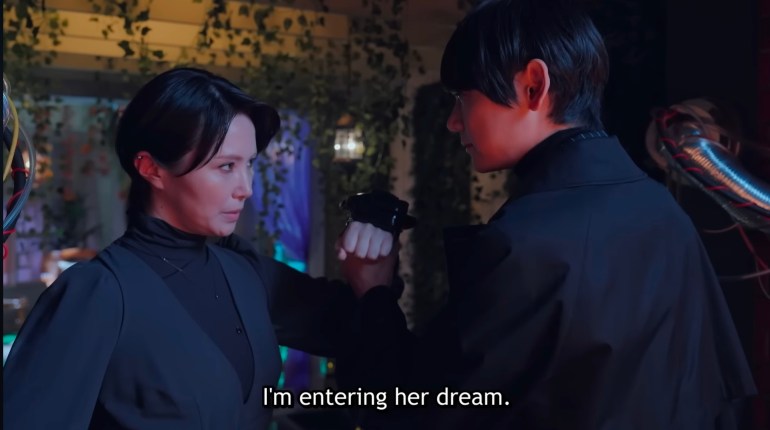
One thing I found really interesting in this episode was Odaka trying to stop The Lady from entering Nem’s dream.
Originally, their relationship felt almost purely functional to me. It felt like The Lady was valuable to him because she was useful. Because she was connected to CODE. Because she was part of his revenge.
But this scene felt different.
There was caution in the way he stopped her. Concern. It genuinely felt like he cared what happened to her.
And that made me start wondering if The Lady has slowly become something almost maternal to Odaka as well.
We know she watched over him while he was trapped in dreams for all those years. And now that he’s awake, it almost feels like their roles may reverse, like he’s becoming the one who watches over her.
What makes the relationship interesting is that I still cannot fully tell what it is built on.
Did she persuade him through emotion?
Through justice?
Through revenge?
Was it all three?
And what makes this scene work for me is that Odaka’s hesitation does not feel strategic. It does not feel like:
“I cannot lose this asset.”
It feels personal.
Like he does not want her to suffer.
That is a very different kind of relationship than the one I thought the show was presenting earlier on.
What Is The Lady Doing?
This episode has me softening my stance against The Lady a little bit.
Not completely. She has still been a very severe person. She has done terrible things. And I still think the distinction someone made last week is compelling:
Maybe she is a good mom, but not a good person.
Because she really does seem willing to do crazy things and hurt innocent people if that is what it takes to save her daughter.
But this episode makes that harder to sit with cleanly.
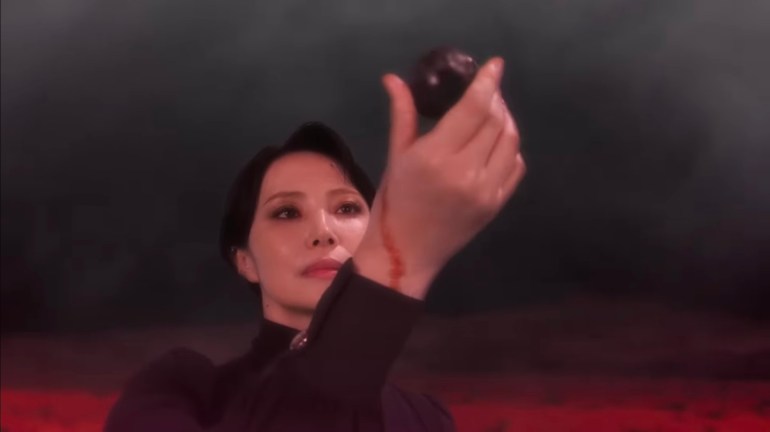
Because the level of sacrifice she makes for Nem here is fascinating. She puts herself in danger. She puts herself on the line. She bonds herself to this powerful Nightmare, this Phantom, all to save and protect the girl she clearly sees as her daughter.
And emotionally, that matters.
Whatever else The Lady is, this scene shows her stepping up as a mother figure. She is willing to suffer for Nem. She is willing to risk herself for Nem. She is willing to cross a line she clearly understands in order to reach her.
That does not erase everything else.
But it does make her more complicated.
I am fascinated to see what this means going forward. Is she going to reach the level of Baku and Sieg? Is she going to become even more powerful? How does this affect the endgame?
I do not know yet.
But I do know this scene made The Lady feel more human to me than she has in a long time.
Nem is Kinda Metal
One thing I really loved in this episode is that Sieg and Nem are basically fighting over the meaning of dreams themselves.
Sieg looks at Nem’s dream and thinks it is boring. Too soft. Too safe. He wants dreams to be dangerous, painful, exciting. He wants people confronted, punished, broken.
Nem wants the opposite.
Her entire dream is built around encouraging people. She wants her fans to pursue happiness, pursue their dreams, and become stronger versions of themselves.
And what makes the episode work is that the show immediately tests whether she actually believes that.
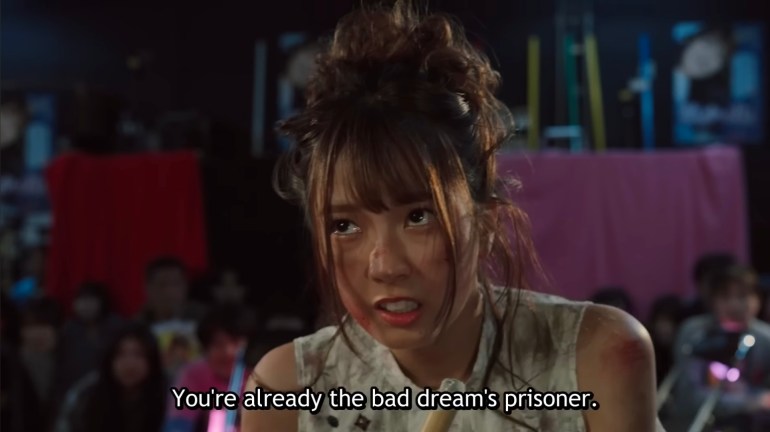
She becomes the dreamer.
Then her dream turns against her.
The Baby Nightmares start attacking her fans, and suddenly the people she wanted to encourage become victims she has to protect. And I love that she is still trying to defend them even though she is basically powerless. She is fighting off Nightmares with a mop.
That is such a good tokusatsu image.
Because Nem is this “Nightmare Messiah” figure with all this implied importance and hidden power, yet what reveals her character is not overwhelming strength. It is grit.
She keeps fighting anyway.
And I really love the way the episode handles her lucid dreaming powers. She turns a normal phone into a Zeztz Phone and manages to call Baku from inside the dream while he is awake. For a moment, I honestly thought she might transform herself.
But I almost think the scene works better because she does not.
She remains vulnerable the entire time.
And that vulnerability reveals who she actually is.
Sieg wants dreams to expose weakness and punish people.
Nem wants dreams to encourage people and help them move forward.
That feels like the real conflict between them more than simple hero versus villain stuff.
Ryutaro Imai Makes Baku Feel Heroic Even Without Transforming
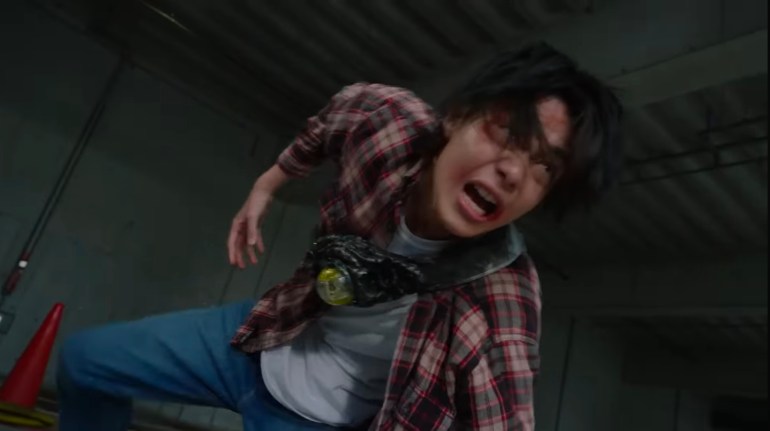
One thing this episode really reinforced for me is how good Ryutaro Imai is as Baku.
Some of my favorite moments in Zeztz are actually when Baku cannot transform.
Back in the early episodes when the Driver was away from him, and now again here in Episode 33, we get to watch him fight as just a normal guy. No armor. No transformation. No power fantasy safety net.
And honestly, I think that is when the character feels the most heroic.
He is running around desperately trying to force the Driver to work. He is using Capsems however he can. He is getting completely wrecked physically. And he just keeps getting back up.
That only works if the actor sells it.
And Ryutaro Imai absolutely sells it.
There is this really strong, energetic sincerity to his performance that makes Baku’s persistence believable instead of annoying. He never feels invincible. He feels determined.
That is a very important distinction.
Even the scene where Baku finally collapses on the ground works incredibly well. The bloody handprint on the floor is such a perfect visual touch. I do not know if that came from the direction, the staging, the actor, or some combination of all three, but it lands emotionally.
The whole performance has great energy to it.
And I think a huge reason Episode 33 works emotionally is because Ryutaro Imai fully commits to Baku’s desperation, grit, and refusal to give up.
Fujimi, Nasuka, and Minami All Get To Be Heroes
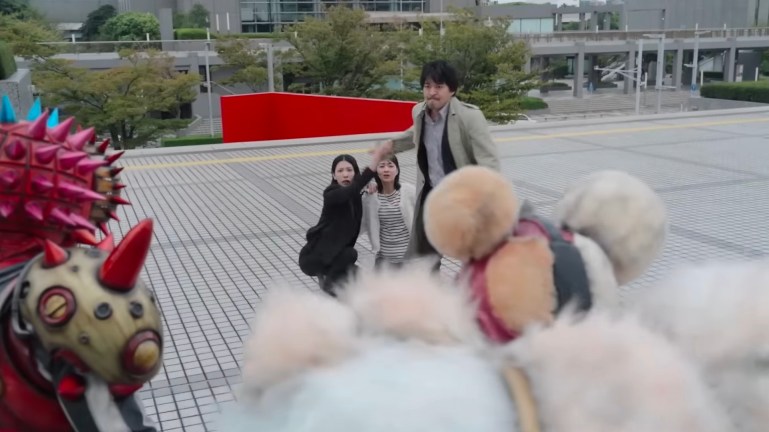
Fujimi gets a really cool moment in this episode where he flips the Nightmare, and honestly, it rules. It is just a super satisfying tokusatsu moment.
But what I ended up loving even more was the entire sequence of Fujimi, Nasuka, and Minami trying to stand against the Nightmares without powers.
That whole scene has great energy.
There is this small moment where Nasuka grabs Fujimi as he is thrown and literally breaks his fall with her body. It is quick, but it tells you everything about her determination.
Then later, as the Nightmares close in, Fujimi refuses to crouch down or retreat. Nasuka is trying to pull him back, and he pushes her hand away and stands his ground anyway.
And I love that because I cannot fully tell what is going through his head there.
Is he preparing to die standing up?
Is he trying to protect the others?
Is he just refusing to submit out of pride?
Probably some combination of all three.
Then Minami grabs Nasuka’s gun and unloads on the Nightmare herself.
And again, the important thing is not that it works.
It is that they try.
That is what makes the sequence feel so refreshing. None of them have special powers here. They are not transformed. They are just human beings standing in front of monsters anyway because somebody has to.
That is very Kamen Rider.
And honestly, I think the episode does a really good job making all three of them feel brave in different ways.
Zeztz 33 Lets Us Sit Inside Baku’s Doubt
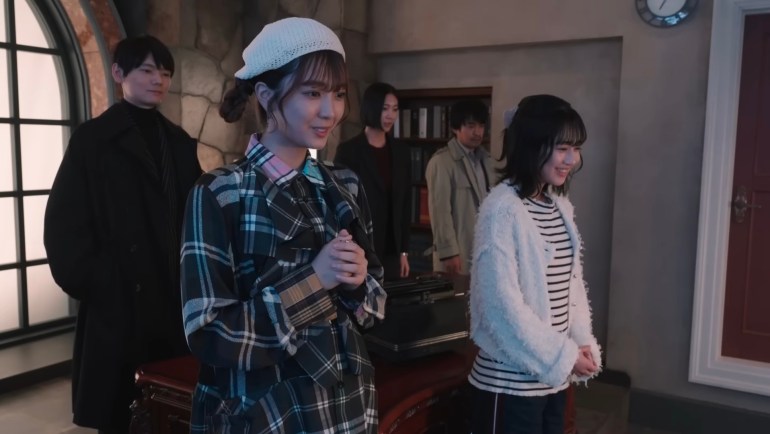
One thing I really appreciated about this episode is how long it lets us stay with Baku in limbo.
The show slows down completely.
For what feels like almost eight minutes, we are just sitting in Zeztz Room watching Baku work, struggle, fail, persist, and continue building the Exdream Driver while he is effectively dying.
And the whole sequence is incredibly restrained.
A lesser version of this episode probably rushes through it to get to the power up. But Zeztz actually trusts the audience enough to sit in the silence and repetition of Baku refusing to give up.
What I especially loved was the shot composition.
At first, Fujimi, Nasuka, and Minami appear partially obscured. Out of focus. We barely see their faces. Sometimes we only see them from the nose down. Zero is even more obscured. We mostly see him from behind.
And because of that, the entire sequence starts feeling psychologically ambiguous.
Are these real people?
Memories?
Nagging doubts?
Manifestations of Baku’s fear?
The way the scene is framed makes them feel uncertain and ghostlike.
But then something really beautiful happens.
As Baku continues refusing surrender, the “doubters” slowly stop doubting him.
The scene progresses from resistance to encouragement.
Eventually we fully see their faces. They smile. They support him. They become witnesses to his persistence instead of obstacles to it.
And I think that progression says something really powerful about the scene.
Baku is not overcoming his doubts by destroying them.
He is enduring long enough that even the voices telling him to stop eventually begin cheering him on.
That is such a quiet idea.
But it is an incredibly potent one.
The Zeztz Room Feels Lived In Across Twenty Years
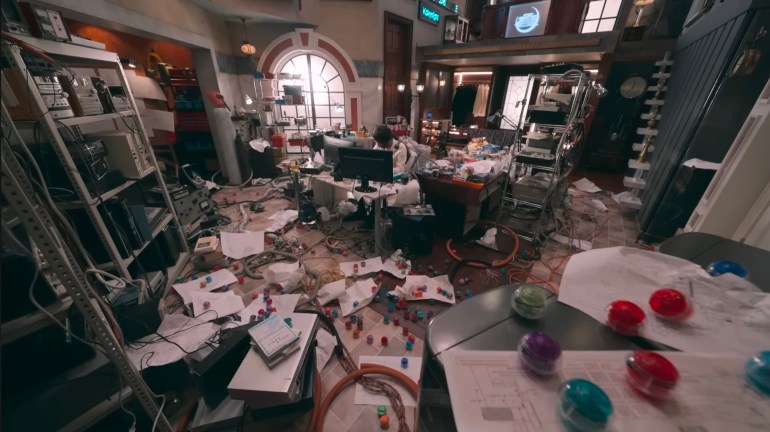
One thing I absolutely loved in this episode was the way Zeztz Room slowly changes over those twenty years Baku spends in limbo.
The set just keeps getting messier and messier and messier.
At first, Baku cannot even get the Capsem machine to work. Nothing comes out. Then eventually the capsules start appearing, and he starts tearing things apart, rebuilding things, cannibalizing parts, surrounding himself with scraps and papers and tools.
And the whole thing starts feeling less like a superhero workshop and more like something out of Studio Ghibli.
It honestly reminded me a little of The Boy and the Heron. Like a desperate inventor or dreamer trying to force reality itself to bend through sheer persistence.
What makes the sequence work so well is how physical it feels.
Every Capsem on the floor was placed there intentionally.
Every piece of paper.
Every stain.
Every bit of clutter.
The room gradually becomes crusty, old, exhausted, and lived in.
It feels like a place where somebody has spent decades obsessing over one impossible goal while everything else around them slowly decays.
And I think that physical decay is important.
Because while the room deteriorates, Baku improves.
Out of all that mess and exhaustion and repetition comes this new power, this transformation, this “butterfly” emerging from the wreckage of persistence.
It is really beautiful visual storytelling.
And I think the episode deserves a lot of credit for how restrained and purposeful the entire sequence feels.
Baku Looks Heroic Precisely Because He Is Afraid
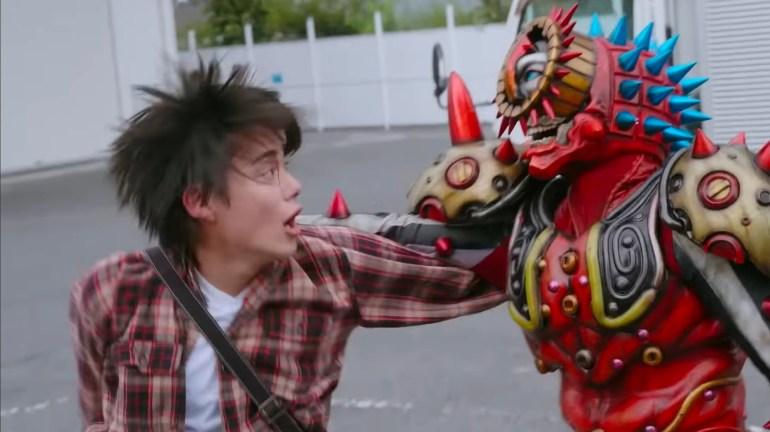
One thing I really love about this episode is that Baku cannot become Zeztz for most of it.
The belt is failing.
The powers are failing.
The transformation is gone.
And yet he still runs toward danger anyway.
We have actually seen this before in the series. Even back in the early episodes, Baku was already putting himself in danger to help people before he had real power. The little girl trafficking situation is probably the clearest example of that.
That is just who he is.
And I think that is why this image of him fighting the Death Game Nightmare without powers works so well.
Because Baku looks terrified.
He does not look cool.
He does not look invincible.
He looks overwhelmed and scared and completely outmatched.
And honestly, I think that is what makes the moment feel heroic.
This is what people actually have to do in life sometimes. Naked of armor, naked of power, you still have to face darkness, suffering, evil, tragedy, whatever form it takes, and try to stand against it anyway.
That is the symbolic power of the scene.
The Nightmares are monstrous and overwhelming, but Baku still commits himself to the fight because helping people matters more to him than his own safety.
Even knowing he will probably lose.
And yes, technically he does lose the fight.
He dies.
But I almost think that strengthens the scene rather than weakening it.
Because the point is not:
“The hero always wins easily.”
The point is:
courage still matters even when victory is uncertain.
That is what makes Baku feel noble here.
Not power.
Not confidence.
Not destiny.
Courage while afraid.

