Kamen Rider Zeztz 37 – Rider Tears
Watch Analysis
The video and audio above contain the full unfiltered analysis. What follows is the razor focused version of the strongest point(s) I had to make.
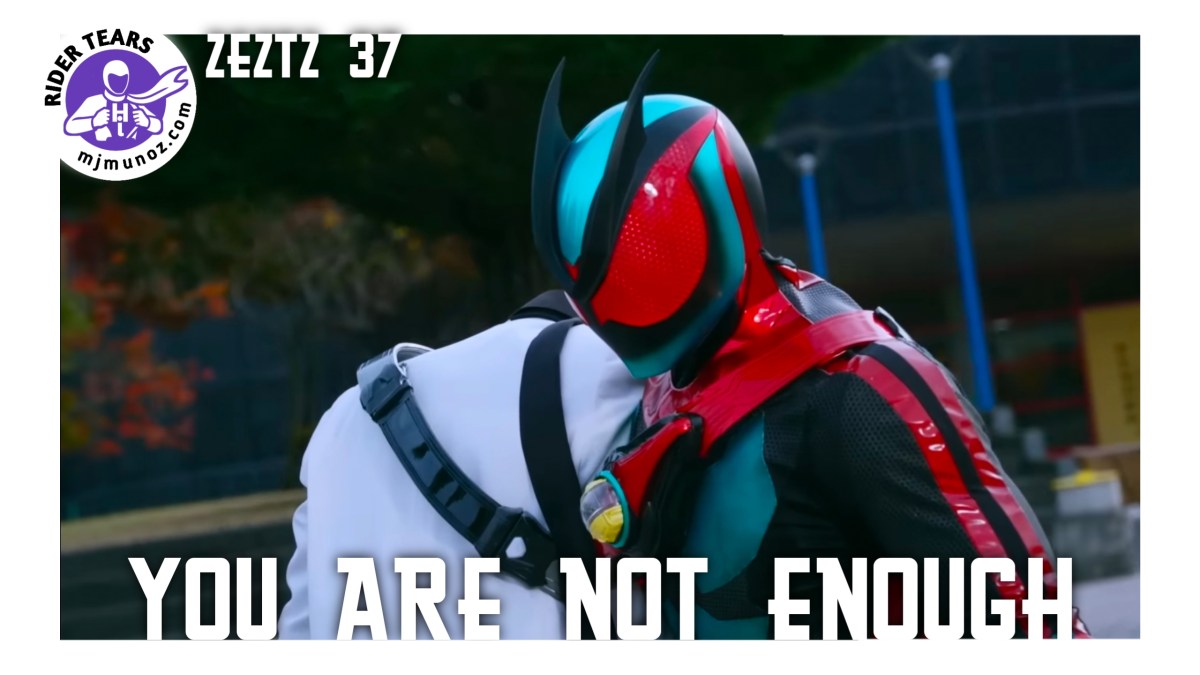
Kamen Rider Zeztz Episode 37 Analysis: You Are Not Enough
The Power of Friendship Done Right
Kamen Rider Zeztz Episode 37 might be the slickest presentation of the power of friendship I’ve seen in Kamen Rider.
That may sound strange because Zeztz has not been a particularly team focused show. Most of the series has revolved around Baku. Even when other Riders and Agents are present, the story usually comes back to him.
Yet Episode 37 quietly makes a compelling argument: no one can do this alone.
Baku Fails When He Tries To Act Alone
At the start of the episode, Baku wants to rush in and save Fujimi and Odaka. He doesn’t want to wait for the Zeztz Driver. He doesn’t want to wait for help. He wants to solve the problem himself.
The problem is that he can’t.
Baku’s intentions are noble, but good intentions are not enough. He needs help. He needs the Driver. He needs Zero. He needs the people around him.
The episode repeatedly demonstrates this idea. Every time someone tries to carry the burden alone, they come up short.
The Driver Exists Because Of Cooperation
One of the most interesting things about Episode 37 is how many people contribute to the creation of the Zeztz Driver.
Minami helps.
Nem helps.
Zero helps.
Even Sieg ends up contributing in his own bizarre way.
Nobody completes the mission by themselves. The Driver exists because multiple people bring different strengths to the table.
The episode is not celebrating individual greatness. It is celebrating cooperation.
Saving Odaka Takes Everyone
The redemption of Odaka is where the theme comes together.
Baku wants to save him.
Zero delivers what Baku needs.
Five provides the Shock Capsum.
The Driver reaches Baku.
Odaka is finally freed from Code’s control.
Every step depends on somebody else.
The episode creates a chain of relationships that stretches across nearly the entire cast. Nobody solves the problem alone. Everybody contributes something.
That is what makes the redemption feel satisfying.
The Real Theme Of Episode 37
Going into this episode, I wondered if Zeztz was building toward a theme of order versus chaos.
After Episode 37, I think the answer might be something different.
I think the episode is about cooperation.
More specifically, I think the episode is arguing that you are not enough.
That sounds harsh, but I don’t mean it negatively.
You are not enough to accomplish most meaningful things by yourself. You need other people. You need allies. You need friendships. You need partnerships. You need people who can do things you cannot.
That idea is woven throughout the entire episode.
Why The Episode Works
The reason the power of friendship works here is because it never feels forced.
The episode doesn’t stop and announce its theme. Instead, it builds a series of interconnected events where every character contributes something important.
By the end, Baku and Odaka are no longer enemies. They are allies united against CODE.
That payoff feels earned because the episode has spent its entire runtime demonstrating the same idea:
People are stronger together than they are apart.
What are your thoughts?
Drop a comment and let me know where you stand on this.
Inspector’s Notes
Courage Without Power
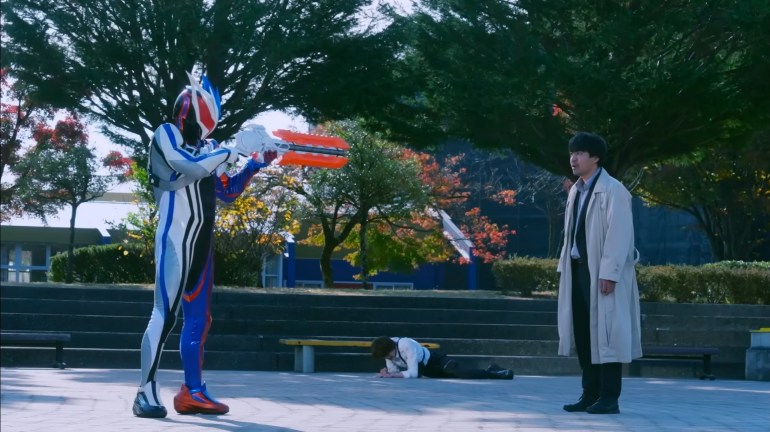
Fujimi standing up to Nox is such an epic moment.
Nox has all the power in that scene. Fujimi knows it. He has watched Nox beat up Baku. He understands exactly how dangerous he is. If Nox wanted to kill him, there would be very little Fujimi could do to stop it.
Yet he stands up to him anyway.
That is what makes the moment work.
It’s always powerful when a character with no special abilities, no secret weapon, and no chance of winning physically chooses to stand their ground. It shows us what courage looks like. Not confidence. Not strength. Courage.
Fujimi cannot overpower Nox, but he can refuse to back down. He can put himself at risk for someone else. He can choose to do what is right even when he is afraid.
Moments like this remind me that heroism is not always about having power. Sometimes it is about what a person is willing to face when they have none.
Bringing the Impossible to Life
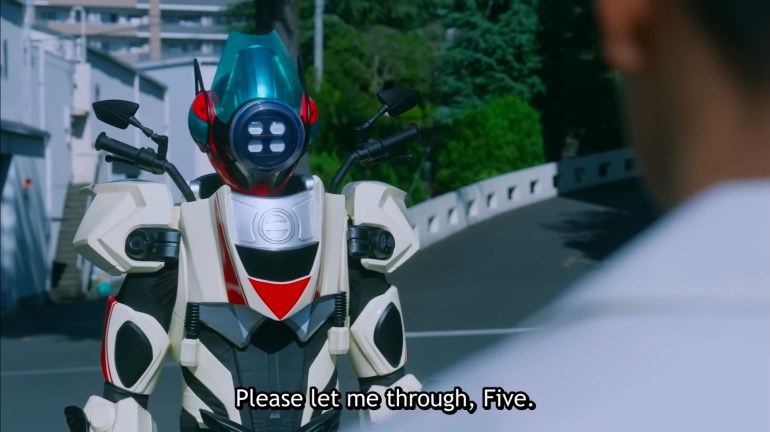
One of the things I love about tokusatsu is its ability to make the impossible feel real.
In this episode, I found myself having a genuine emotional reaction to a conversation involving a robot motorcycle man. When you stop and think about it, that is kind of ridiculous. Yet it works.
Part of that comes from the suit performance. A good suit actor can communicate personality and emotion through movement alone. Part of it comes from the voice actor, whose performance has to match what the suit actor is doing. Then there are all the little character details, like serving tea or other small mannerisms that make the character feel alive.
None of these things are especially impressive by themselves. Put them together, however, and something magical happens. A suit, a voice, and a collection of small creative decisions become a believable character.
To me, that is one of the enduring strengths of tokusatsu. It takes something obviously artificial and, through craftsmanship and performance, breathes life into it.
CGI as a Flourish
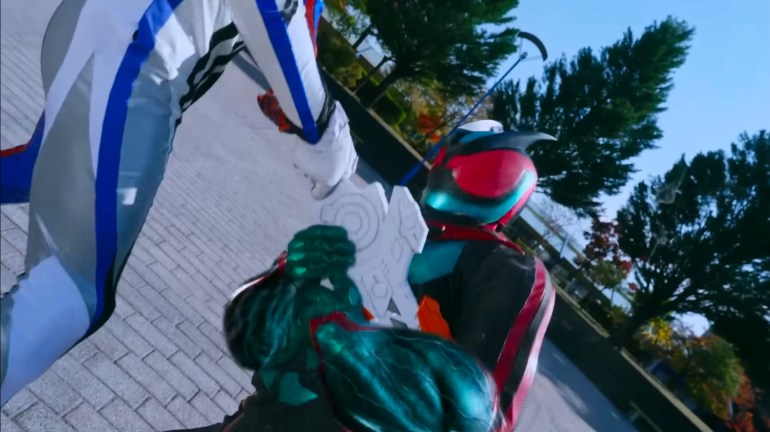
I generally prefer the practical effects side of tokusatsu. Suits, props, miniatures, and physical performances are a huge part of what gives the genre its charm.
That is why the CGI shot of Impact’s muscles bulging and straining in this episode stood out to me.
The effect only lasts a moment. It is not trying to replace the suit. It is not trying to carry the entire scene. Instead, it adds a small visual flourish that helps sell the force and tension of the moment as Baku struggles against Odaka’s weapon.
To me, that is CGI at its best. Not as a replacement for practical effects, but as an enhancement to them.
The scene still depends on the suit actors, the choreography, and the physical action. The computer effect simply adds an extra layer that would be difficult to achieve otherwise. Small touches like that can be surprisingly effective, and this may be one of my favorite uses of CGI in recent Kamen Rider.
Baku’s Shadow
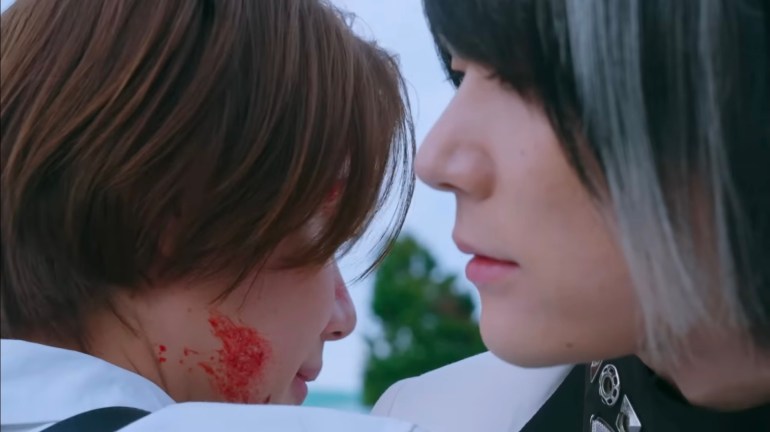
Long before Odaka became Nox, he felt like a dark mirror of Baku.
Even in the early episodes, the series kept finding ways to connect them. They showed mutual respect. They helped each other. They repeated each other’s words. Sometimes Odaka saved Baku. Sometimes Baku returned the favor. They were becoming equals, but they were also becoming opposites.
That is what makes Odaka’s redemption work for me.
When we see them standing side by side, dressed similarly and framed together, the visual connection becomes impossible to ignore. They feel less like hero and villain and more like reflections of each other. Two people walking different paths while sharing many of the same qualities.
The redemption is satisfying because Baku is not simply defeating an enemy. He is saving someone who has always been connected to him. The series has spent a long time establishing that connection, and Episode 37 finally pays it off.
Odaka is Baku’s foil, his rival, and in many ways his shadow. That is why seeing him become an ally feels less like a twist and more like the natural conclusion of a relationship the show has been building from the beginning.

