

Kamen Rider My-Th 03 – Rider Tears
Watch Analysis
The video and audio above contain the full unfiltered analysis. What follows is the razor focused version of the strongest point(s) I had to make.
Baku Proves He Doesn’t Need to Transform
One of the coolest things about Kamen Rider Zeztz Episode 36 is that Baku never transforms at all.
Honestly, I forgot he even gave up the belt for a while because there was so much going on. There was action, movement, conflict, and agency from Baku himself. I kept thinking, “Why hasn’t he transformed yet?” before remembering that he literally can’t.
And yet the episode still works.
Baku Is Still Heroic Without Becoming Zeztz
Baku cannot turn into Zeztz in this episode, but he still retains power and still does everything the story needs him to do.
He fights Agent Five. He survives. He manipulates dreams. He saves Nox. He challenges CODE. He tries to pull people onto his side. He keeps pushing forward even without the suit.
You could easily argue that this makes him more heroic.
The important thing is that the story never treats him like he is helpless just because he cannot transform. That is what makes this episode feel refreshing.
Zeztz Finally Makes the Capsems Work
I have been pretty negative about the Capsems since the beginning of the show.
The little animations feel silly to me. The toyetic presentation clashes with the tone of the series. A lot of the gimmick material feels like merchandising first and storytelling second.
But Episode 36 finally made the capsules feel meaningful.
What matters is not the sounds they make or the collectible gimmick. What matters is what they allow Baku to do.
The capsules suddenly feel flexible and useful. They affect the story itself. They create possibilities. They let Baku continue acting even without transforming.
That is the difference between a gimmick and a storytelling tool.
Why Episode 36 Reminded Me of Iron Man 3
One thing I actually like about Iron Man 3 is that Tony Stark still feels capable without the suit.
The suit makes him stronger, but the man himself still matters.
That is what Zeztz Episode 36 does with Baku.
The transformation is gone, but the character is still active. He is still solving problems. He is still influencing people. He is still dangerous to CODE.
The suit amplifies the hero. It does not create the hero.
That distinction matters.
The Real Problem With Toyetic Storytelling
Kamen Rider and Super Sentai survived for decades without needing every gimmick item to be this loud or complicated.
You can sell cool suits. You can sell vehicles. You can sell roleplay toys. Kids like cool characters and cool powers.
What hurts modern tokusatsu sometimes is when the gimmicks start interrupting the drama instead of supporting it.
Episode 36 works because the capsules finally stop feeling like distractions and start functioning as actual story mechanics.
That is why this episode impressed me.
Baku Finally Gains Moral Clarity
Another satisfying thing in this episode is that Baku finally reaches moral clarity.
He realizes he has to oppose both the Nightmares and CODE.
That sounds simple, but the series took time getting here. Now it finally feels like the story understands what Baku’s role actually is.
And interestingly, the episode reaches that point without needing a big transformation sequence or a flashy final form.
Baku simply acts like a hero.
That is enough.
Kamen Rider Zeztz Episode 36 proves that sometimes the most interesting thing you can do with a Henshin hero is take the transformation away.
Final Thoughts
Did you like this turn of events? Does it cheapen the sacrifice because Zero can rebuild Zeztz Driver? Why doesn’t Baku just rebuild it in the Zeztz Room?
Drop a comment and let me know where you stand on this.
Notes On Toys
Changed | Henshin Reflection: Heart and Sold
Untapped | Henshin Reflection: Heart and Sold
Inspector’s Notes
I Forgot Baku Couldn’t Transform
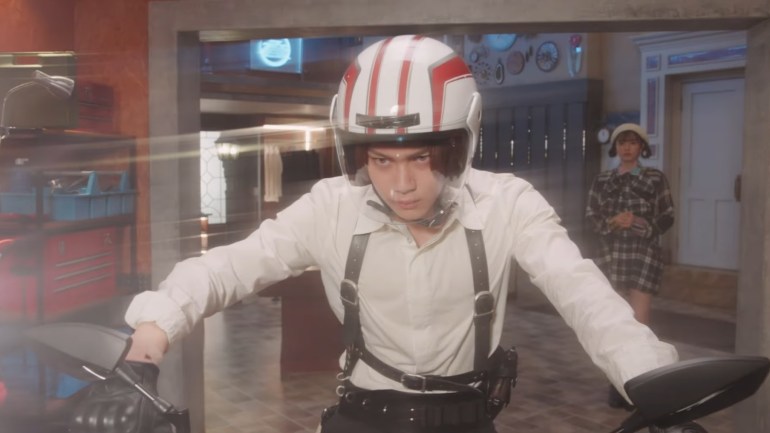
My favorite thing about this episode is that I genuinely forgot Baku was unable to transform.
I forgot he gave up Extreme. I forgot the Driver was gone. It completely slipped my mind because Baku himself was so cool, calm, collected, and willing to put himself in danger to do what was right.
He was fighting people in civilian form while still using the Capsums he had on him, and somehow it just worked. Even in the real world, he can still pull these things out of nowhere and use them naturally. I honestly do not even think we need a detailed explanation for it because the emotional logic already works.
What really matters is how far Baku has come.
That long premonition dream essentially became a six month training period for him. It shaped him into somebody willing to sacrifice himself, put himself on the line, and keep moving forward even when he may die trying.
That is what makes him feel heroic.
Not the suit. Not the transformation. Not Extreme.
Baku himself.
Honestly, he has become one of my favorite Rider protagonists. He is probably top three for me at this point, which is kind of shocking to realize. But the more I think about it, the more deserved it feels.
Kareaha’s Death Becomes a Scar on the World
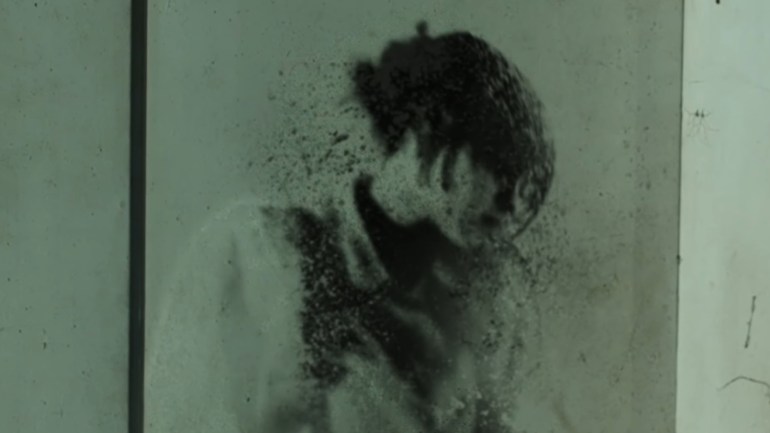
One of the most striking things in this episode is the way Kareaha’s death lingers.
The show keeps returning to this image of her blasted onto the wall like a stain. I honestly do not even care whether this is technically the real world or a dream anymore because emotionally it works either way. She died, and now her death has become part of the environment itself.
It is such a dark image.
Not just because she died, but because of what she was struggling toward before she died.
Kareaha wanted to be human again. She wanted to be noble. She wanted to connect with people instead of simply existing as another disposable monster working for CODE. That is why Agent Five mocking her humanity matters so much. He basically tells her:
“You are just a monster like me.”
And then after all that struggle, all that uncertainty about who she was, she ends up reduced to this black mark burned into the wall.
It feels dystopian. Depressing. Almost awe inspiring.
The image itself looks like graffiti or stencil art, but emotionally it functions like a scar left behind by CODE and everything it destroys.
I understand why some people are upset that Kareaha died because there was definitely more story potential there. But honestly, I think the death was meaningful. The emotional damage it leaves behind on the characters and the world gives the story more weight.
And visually, it is one of the strongest images Zeztz has given us so far.
Is Zeztz Really About Order Versus Chaos?
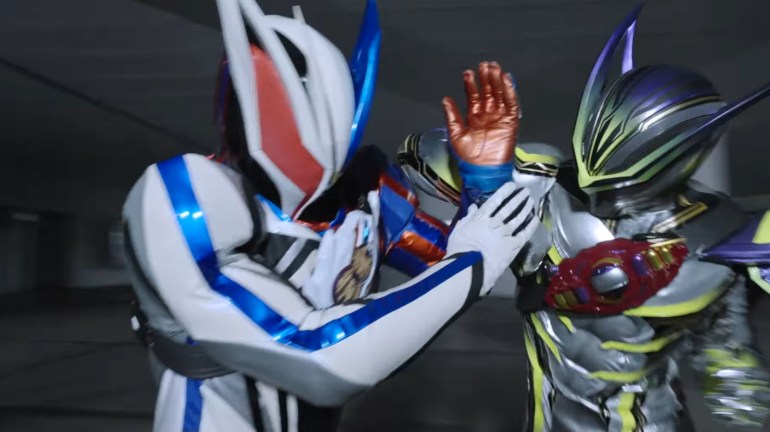
This shot feels like it captures one of the central struggles of Zeztz.
On one side is Three. He is literally a Lord. The title matters. He represents authority, hierarchy, control, and CODE’s vision of an ordered world.
On the other side is Nox, a much more chaotic visual design. His powers come from Nightmares. His colors spill across the suit. Everything about him feels less controlled and more unpredictable.
At first glance, it looks like a simple conflict between order and chaos.
But I am not convinced that is actually what the show is trying to say.
The Lady talks about freedom. CODE talks about control. Yet the Nightmares are often destructive, while CODE’s order comes at the cost of human freedom and individuality.
Neither side seems entirely right.
That is what makes Nox so interesting right now. By being forced under the control of Three and CODE, he may become the perfect character to explore what freedom actually means.
Not freedom as chaos.
Not freedom as destruction.
But freedom that allows people to choose what is right.
I do not think Zeztz has fully articulated this idea yet, but I wonder if that is where the story is heading. If so, the conflict is not really order versus chaos.
It is a search for a righteous kind of freedom that avoids the dangers of both.
“I Am Not a Number”
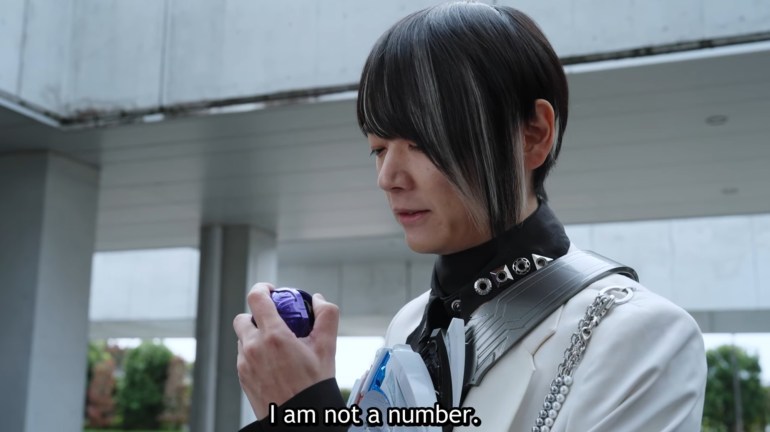
One of the most wicked storytelling choices in Episode 36 is the timing.
Nox makes a stand against Three and against everything CODE represents. He insists that he is not a number. He is not just another asset. He is not another disposable piece in CODE’s machine.
That declaration matters because becoming Nox was itself an act of rebellion. He left CODE behind after realizing what it truly was and chose to become his own person.
And then the episode immediately takes that away from him.
Not only is he defeated, he is brainwashed and turned back into an instrument of CODE completely against his will.
That is what makes the moment hurt.
Nox finally gets a chance to step forward, fight for something he believes in, and assert his identity. Then the story strips that identity away almost as soon as he claims it.
The irony is brutal.
What makes it work so well is that this did not have to happen immediately after his declaration. The story could have waited. Instead, Takahashi places the two moments right next to each other.
First:
“I am not a number.”
Then:
CODE turns him into one.
Now the question is whether Nox can reclaim that identity. If he eventually breaks free of Three’s control, this moment will become the beginning of a very satisfying arc. The declaration has already been made. Now he has to prove it.

