
Ultraman Teo 02 – Going Ultra – Presented by Henshin Inspection
The video and audio above contain the full unfiltered analysis. What follows is the razor focused version of the strongest point I had to make.
Ultraman Teo Dares to Be Dorky
One of the things I appreciate most about Ultraman Teo Episode 2 is that it dares to be dorky.
I don’t mean that as an insult. Quite the opposite. It feels like it’s almost cool to be uncool based on how things are being shown in this show.
You have Kanna, Rintaro, Emma, Ibuki, and now Pucchi, and they’re all shown in different ways to be dorks and doofuses. That’s especially funny for Kanna and Rintaro because they both have this cool, aloof, “I don’t care, I’m a loner” exterior that they put on. And yet, each of them ends up protecting Pucchi and trying to keep him from getting into trouble.
They’re actively trying to help this cute little baby kaiju.
Even though they’re all scared.
Even though there was just a giant kaiju attack.
Even though they don’t know anything about this creature.
I really appreciated that.
Everybody Has Their Own Brand of Goofiness
One thing I like is that everybody gets to be a dork in their own way.
Kanna has her own flavor of awkwardness.
Rintaro has his.
Emma has hers.
Ibuki definitely has his.
They’re not all goofy in the same way, and that’s important because it makes everybody distinct.
You can tell who these people are simply by watching how they react to Pucchi.
That’s good character writing.
Emma immediately says they should report him because they don’t know whether he’s dangerous. That’s completely reasonable.
The others want to hide him because they can’t bear the thought of something happening to him.
That’s also completely reasonable.
Nobody feels like they’re making bad decisions just because the plot needs conflict. Everybody is reacting according to who they are, and that’s exactly what character writing is supposed to do.
They Have a Sweet Core
What I really appreciated is that all of them have this sweet core.
They’re frightened.
They’re overreacting.
They’re screaming.
They’re making fools of themselves.
But underneath all of that, they want to help.
That’s a really nice quality to build a cast around.
It would have been very easy to make everyone cool.
It would have been very easy to make everyone cynical.
Instead, Ultraman Teo gives us people who are awkward, emotional, and compassionate.
I honestly find that refreshing.
Ibuki Fits Right In
Ibuki is just as much of a dork as everybody else.
He doesn’t like conflict.
He doesn’t want to fight.
When he becomes Ultraman Teo, he isn’t giving off the vibe of somebody who’s looking for a fight.
It’s almost the opposite.
It’s less Jackie Chan saying, “I don’t want any trouble,” and more, “Please… can we not have to do this?”
Oddly enough, I find that really endearing.
He’s still brave.
He’s still going out there.
He’s still doing what needs to be done.
He’s just uncomfortable doing it.
I’ve been in situations where I’ve had to do things I’d never done before, or things I’d only done a handful of times. You approach those moments cautiously because you don’t have the confidence that experience brings yet. Over time, you develop the skill, you develop the confidence, and eventually you just say, “Okay. I’ve got to do this.”
I wonder if that’s where Ibuki is right now.
He’s afraid.
He doesn’t like fighting.
But he still goes.
Dorky Doesn’t Mean Weak
One thing I hope the series explores is the difference between gentleness and passivity.
I don’t think it’s a character flaw to be meek.
I do think it’s a character flaw to let your discomfort with something harm you or other people.
Those aren’t the same thing.
Being compassionate is a strength.
Being reluctant to fight can be admirable.
But when the situation demands action, you still have to bring the appropriate response to the situation.
Episode 2 feels like it’s beginning that conversation, and I’m interested to see where it goes.
It’s Cool to Be Dorky
I think it’s really weird and offbeat that Ultraman Teo decided to make everybody just a little bit dorky.
But I also think that’s exactly why I already like this cast.
They’re not trying to be the coolest people in the room.
They’re awkward.
They’re emotional.
They panic.
They care.
They all have their own brands of goofiness.
And somehow, all of that makes them more charming instead of less.
That’s not something you see very often anymore, and I hope Ultraman Teo keeps leaning into it. I think it has the potential to make this one of the most endearing casts in the Ultra Series.
What do you think of Teo episode 2? Did you like the cast? Are they adorkable or are you too cool for them?
All Zeztz Analysis | All Omega Analysis
Drop a comment below or tag me @MJ_Scribe on Twitter. Let’s have some fun talking about this.
If you enjoy thoughtful stories for kids and families, check out my book Mockwing Mayhem. Its a heartfelt adventure about magical bugs battling monsters and protecting children.
You can find more of my reviews, reflections, and stories with spine at mjmunoz.com, and join the mailing list there for behind the scenes updates and new releases.
Inspector’s Notes
Ultraman Teo Episode 2’s Title Card Tells a Story Before the Episode Begins
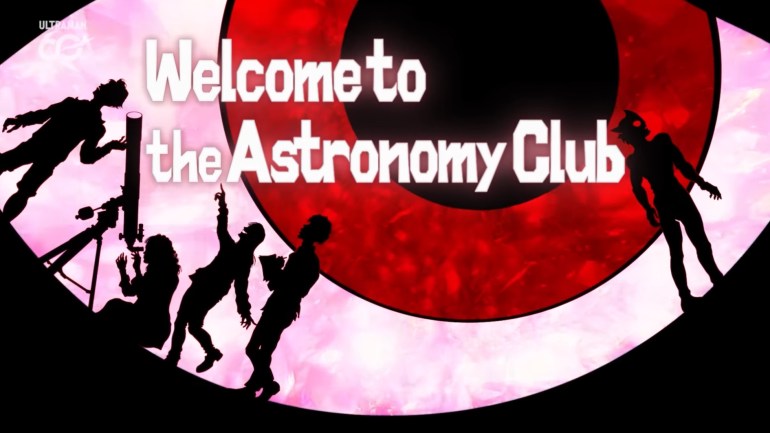
The style of this title card really hit me in Ultraman Teo Episode 2.
I had to stop and really look at it.
First of all, I was struck by the giant eye. It’s super cool. It’s Pucchi’s eye, and all of the members of the Astronomy Club are contained within it. That’s interesting by itself because Pucchi is really the glue that binds the Astronomy Club together. You could absolutely make that argument.
But what’s even more interesting to me is the way they use that idea to build the entire image.
You’ve got Pucchi’s eye.
You’ve got the silhouettes of the different characters.
And somehow, I already get the sense that I know who all of them are, even though I can’t actually see them.
I can tell Emma is crouching beside the telescope.
I can pick out Kanna.
I can recognize Rintaro.
Wataru is there.
Ibuki is there.
They’re all just silhouettes, but they already feel like distinct people.
That’s really impressive.
Shape Language Does a Lot of Heavy Lifting
One of the reasons this artwork works so well is its shape language.
These are brand-new characters to me, and yet their appearances already feel iconic.
Even the way they’re posed feels like it represents their personalities.
Nobody is standing the same way.
Nobody has the same silhouette.
Nobody blends into anybody else.
Whether that was intentional from the costume designers, the artists who composed this title card, or both, it absolutely works.
Good silhouettes communicate character before anyone says a single word.
This title card does exactly that.
It Doesn’t Feel Like Anime
Another thing I kept thinking while looking at this image is that it doesn’t feel strictly like anime or manga.
It also doesn’t feel like an American comic book.
I honestly don’t know exactly what style they’re drawing from.
It reminds me of older Japanese storytelling traditions, particularly kamishibai, where a storyteller would narrate while advancing illustrated picture cards. I’m not saying that’s definitely the inspiration, but that’s where my mind immediately went. The bold silhouettes, dramatic compositions, and emphasis on instantly readable images all have that kind of feeling to me.
Whatever the influence, the result is striking.
The Artwork Introduces the Cast
What’s really clever is that this title card isn’t just a pretty picture.
It’s introducing the Astronomy Club before the story even gets going.
By the time the episode starts, I already have a sense that these characters are different from one another.
I already have a sense that they each have their own personality.
I already recognize them by their shapes alone.
That’s efficient visual storytelling.
It’s easy to overlook title cards because they’re only on screen for a few seconds, but this one is doing real storytelling work.
It isn’t just announcing the episode.
It’s introducing the cast.
And I think that’s fantastic.
If you happen to know what artistic tradition this title card is drawing from, I’d genuinely love to know. Whether it’s kamishibai, another form of Japanese visual storytelling, or something entirely different, I think it’s one of the most striking title cards I’ve seen in the Ultra Series in quite a while.
Ultraman Teo Finally Helped Me Understand Why People Love Kaiju
I always thought it was a little weird that fans of the Ultra Series had favorite kaiju.
Not favorite Ultras.
Favorite kaiju.
People collect their figures.
They hope they come back in future series.
They rank them.
They get excited when a particular monster returns.
And I never quite understood it.
After all, the kaiju exist for Ultraman to defeat them… right?
Then I watched Ultraman Teo Episode 2.
Now I get it.
Sodera Bridged the Gap
I don’t know what it is about Sodera.
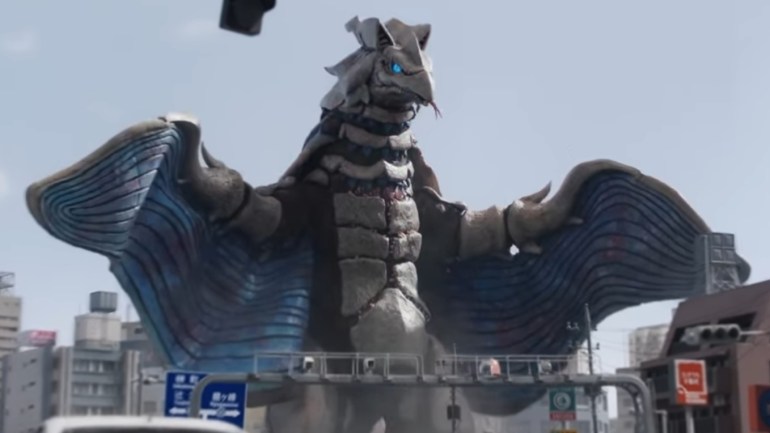
He’s this weird moth-dinosaur-looking kaiju with these enormous wings and his tongue constantly sticking out.
I just…
…like him.
I’d actually like to see him come back.
I’d like to see him become one of those recurring Ultra monsters that keeps showing up every few years.
And if Ultraman eventually defeats him again?
Great.
Just make it awesome.
That’s such a strange realization for me because I’ve never really loved a kaiju before.
It’s More Than Just Being the Villain
There have absolutely been monster designs I’ve thought were cool.
There were several standouts in Ultraman Blazar.
I love Alien Barossa’s design.
Juggler has an amazing design too, although I’m not sure he really counts as a kaiju.
But Sodera feels different.
I’m actually rooting for the design itself.
Not because I want him to win.
Just because I want to see more of him.
That’s a feeling I hadn’t really experienced before.
Why Do Certain Designs Just Click?
I honestly don’t know why I like this guy so much.
Maybe it’s the silhouette.
Maybe it’s the color palette.
Maybe it’s the tongue.
Maybe it’s just the way he carries himself.
Whatever it is, there’s some quality that certain kaiju have that immediately makes you want to see them again.
It’s the same reason people can have favorite dragons, favorite dinosaurs, or favorite movie monsters.
Eventually you stop thinking of them as obstacles for the hero.
They become memorable creations in their own right.
Now I Understand
Ultraman Teo didn’t just introduce me to another monster.
It helped me understand something about Ultra fans that I’d never quite understood before.
I finally understand why somebody would buy the figure.
Why they’d hope the monster returns.
Why they’d say, “That’s my favorite kaiju.”
I still want Ultraman to win.
I still want the hero to save the day.
But now…
…I kind of want Sodera to come back first.
That’s a new feeling for me.
And honestly, I think that’s one of the highest compliments I can give the people who designed him.

