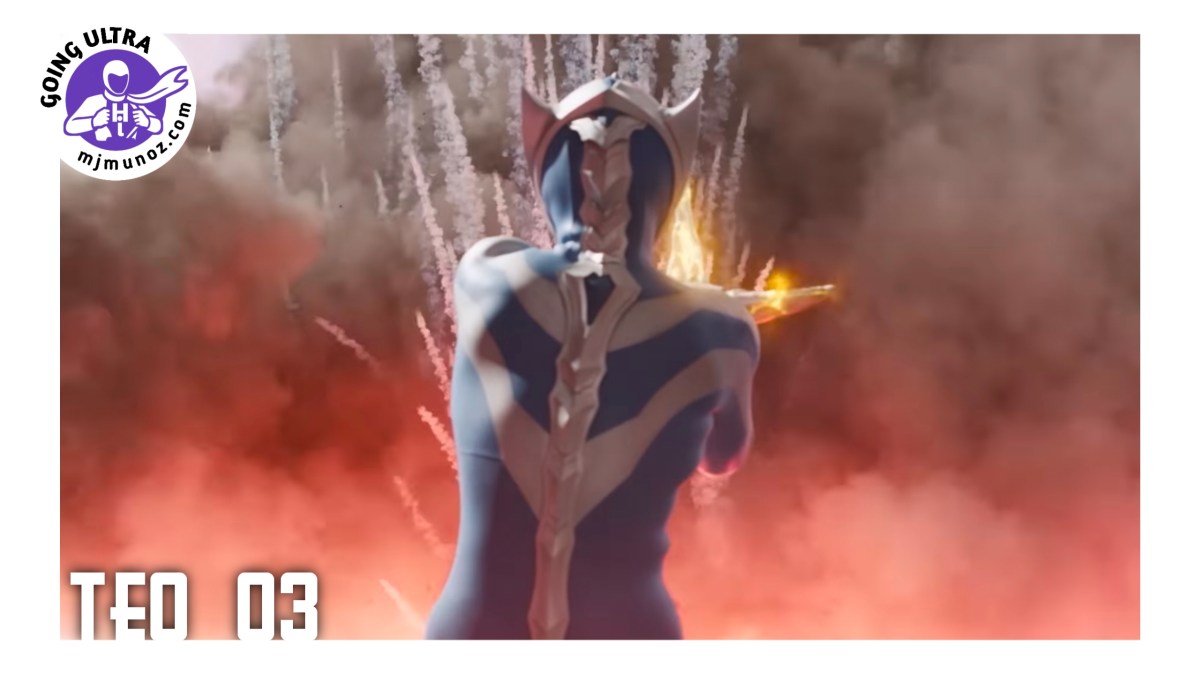
Ultraman Teo 03 – Going Ultra – Presented by Henshin Inspection
The video and audio above contain the full unfiltered analysis. What follows is the razor focused version of the strongest point I had to make.
Conflict Reveals Who You Really Are
Ultraman Teo Episode 3 continues developing one of the series’ most compelling ideas: conflict isn’t simply something to overcome. It’s something that reveals the truth. Under pressure, people discover who they really are, where their weaknesses lie, and what they’re actually capable of. Every major character experiences that revelation in this episode, but nowhere is it clearer than in Ibuki himself.
Because Ibuki has spent his life avoiding conflict, he has never truly tested himself. Now that he has become Ultraman Teo’s human form, that lack of experience is becoming impossible to ignore.
Conflict Reveals the Weaknesses You Never Knew You Had
One of my favorite moments in the episode comes after Ibuki regains consciousness. His first instinct is to transform back into Ultraman Teo and continue the fight.
He can’t.
His transformation device refuses to respond, and Ibuki immediately realizes something important: he can’t transform twice in rapid succession.
The fascinating part isn’t that this limitation exists. It’s that he never knew it existed.
That tells us a tremendous amount about his character.
Ibuki was born as an Ultra. Becoming human is his alternate form, not the other way around. Yet despite living as an Ultra, he never pushed himself hard enough to discover where his limits actually were. Because he avoided conflict, he never had any reason to test those limits.
That becomes dangerous the moment lives depend on him.
Weaknesses don’t disappear simply because we don’t know about them. They remain there until circumstances expose them. If you’ve never tested yourself, you never discover what needs improvement. And if you never discover your weaknesses, you can’t prepare for them or learn how to compensate for them.
Conflict doesn’t create Ibuki’s weakness.
It reveals the weakness that was already there.
The Astronomy Club Grows Through Conflict
The same pattern appears with the Astronomy Club.
When Sodera threatens the university, the group doesn’t simply run away. They argue about what should be done. Different ideas are proposed, challenged, and refined until they arrive at the obvious conclusion: they need to save Pucchi.
Their disagreement isn’t destructive.
It’s productive.
Without that back-and-forth, they never arrive at the right plan. The pressure of the situation forces everyone to think more carefully, discard weaker ideas, and commit to the best course of action.
Conflict becomes the process through which truth is uncovered.
That same idea appears throughout the entire episode. Difficult situations don’t merely create drama—they reveal reality.
Even Pucchi Reveals His Character
Pucchi could have remained nothing more than the adorable mascot.
Instead, the episode gives him a genuinely heroic moment.
When Ultraman Teo begins losing the fight against Sodera, Pucchi deliberately draws the monster’s attention to himself. It’s a dangerous decision, but it creates the opening Teo needs to counterattack.
It’s a surprisingly meaningful moment.
The smallest character in the cast demonstrates genuine courage precisely because conflict demands it.
Without danger, we’d never know what Pucchi was capable of.
Ibuki Still Doesn’t Understand His Own Power
The episode also continues building one of Teo’s most intriguing mysteries.
During the final battle, Ibuki unleashes an incredibly powerful finishing attack. His body glows with golden energy. Debris rises around him. The energy visibly strains his body as he struggles to keep the attack under control before finally releasing it.
Afterward, he’s completely exhausted.
The sequence doesn’t present Teo as someone effortlessly wielding overwhelming power. Instead, it presents someone whose power exceeds his current ability to control it.
That’s an important distinction.
Earlier in the episode, Ibuki discovers he doesn’t understand his own limitations.
By the end of the episode, he also demonstrates that he doesn’t yet understand the full extent of his own strength.
Those two ideas perfectly complement one another.
Conflict exposes both weakness and potential.
Ibuki isn’t simply learning what he can’t do.
He’s also beginning to discover what he can do.
Accepting Conflict Is Becoming Ibuki’s True Battle
Looking back across the first three episodes, a clear character arc is beginning to emerge.
Ibuki dislikes conflict. He would rather avoid violence whenever possible. That’s an admirable quality in many situations, but the series is showing that avoiding conflict altogether comes with its own cost.
Problems don’t disappear because we refuse to confront them.
Responsibilities don’t vanish because we’d rather not carry them.
Eventually, conflict finds us whether we’re ready or not.
Episode 3 demonstrates that Ibuki’s greatest obstacle isn’t Sodera.
It’s his own reluctance to embrace the role that has been placed before him.
Only by accepting conflict can he discover his true limits, learn to overcome them, and eventually master the incredible power that already exists within him as Ultraman Teo.
Final Thoughts
On the surface, Episode 3 is another enjoyable kaiju adventure featuring the wonderfully charming Astronomy Club and the increasingly lovable Pucchi.
Underneath that, though, the episode is quietly building a thoughtful message about personal growth.
Conflict reveals weakness.
Conflict reveals character.
Conflict reveals potential.
Ibuki learns that he doesn’t know himself nearly as well as he believed. The Astronomy Club becomes stronger by working through disagreement instead of avoiding it. Even Pucchi discovers unexpected courage when someone else’s life is at stake.
By the end of the episode, the real battle isn’t simply against Sodera. It’s against the illusion that we can grow without ever being tested.
If the first three episodes are any indication, Ultraman Teo isn’t just telling the story of an Ultra fighting kaiju. It’s telling the story of a man learning that the only way to understand himself is to stop running from conflict and face it head-on.
All Zeztz Analysis | All Omega Analysis
Drop a comment below or tag me @MJ_Scribe on Twitter. Let’s have some fun talking about this.
If you enjoy thoughtful stories for kids and families, check out my book Mockwing Mayhem. Its a heartfelt adventure about magical bugs battling monsters and protecting children.
You can find more of my reviews, reflections, and stories with spine at mjmunoz.com, and join the mailing list there for behind the scenes updates and new releases.
Inspector’s Notes
Ultraman Teo Episode 3 Fooled Me—and I Should Have Seen It Coming
Sometimes a show surprises you because it pulls a twist out of nowhere.
Sometimes it surprises you because all the clues were sitting right in front of you, and you somehow never put them together.
That’s exactly what happened to me with Ultraman Teo Episode 3.
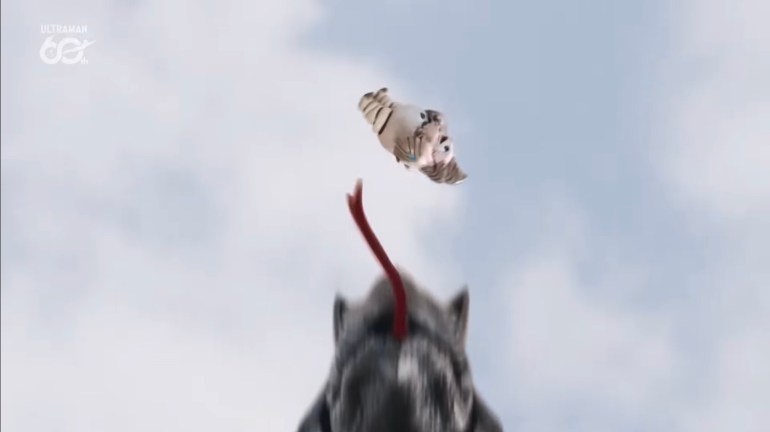
When Sodera showed up—the giant kaiju that eats other kaiju—I never once thought Pucchi was in danger.
Looking back, I feel kind of dumb.
Of course Sodera would go after the tiny mini kaiju.
That’s the whole premise.
The funny part is that Ibuki figures it out immediately. The moment he realizes what’s happening, he heads straight for the university because he understands exactly what Sodera’s next target is going to be.
Meanwhile, I’m sitting there thinking, “Well, the big guy already ate. He’s probably done.”
Nope.
The show had all the pieces on the board. I just never connected them.
That’s actually something I appreciate about the episode.
It doesn’t stop to explain everything to the audience or wave a giant flag saying, “Pucchi is the next target!” It trusts you to make the same logical connection that Ibuki does.
This time, I failed the test.
And honestly, I’m glad I did.
It’s fun when a story earns its surprises instead of manufacturing them. The reveal works because the information was there all along. The audience simply has to recognize it before the characters do.
Sometimes you do.
Sometimes you don’t.
This time, Ultraman Teo got me.
Is Pucchi the Real Hero of Ultraman Teo?
It’s a funny question, but after watching Episode 3, I think it’s worth asking.
Is Pucchi the real hero?
Obviously, Ultraman Teo defeats Sodera. He’s the one who wins the battle. But heroes don’t always save the day by throwing the final punch. Sometimes they create the opportunity for someone else to succeed.
That’s exactly what Pucchi does.
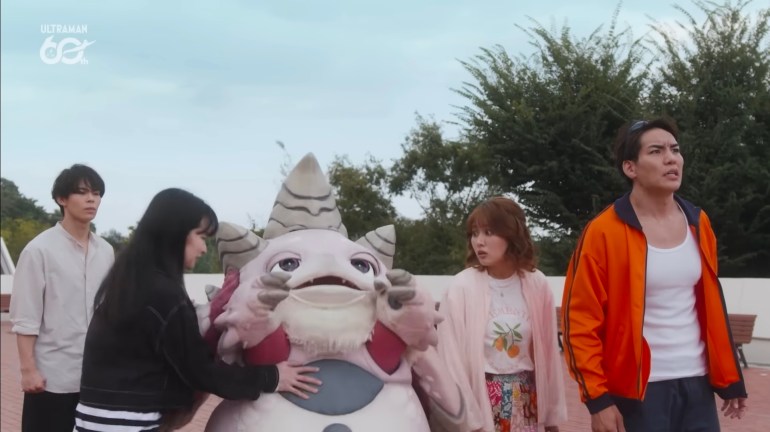
After barely escaping Sodera’s tongue, Pucchi is finally safe. Teo has the monster’s attention, and the danger has passed.
He could stay quiet.
He could hide.
Instead, he deliberately starts making noise.
Immediately, Sodera remembers the little kaiju it wanted to eat in the first place and turns away from Teo.
That single decision gives Teo the opening he needs to launch his counterattack and finish the fight.
That’s remarkably brave.
Up until now, Pucchi has mostly been the adorable mascot. He can’t speak Japanese. He can’t explain himself to the Astronomy Club. He’s small, harmless, and constantly needs protection.
Episode 3 quietly reveals that he understands much more than we’ve given him credit for.
Whether he fully understands the conversation or simply recognizes what’s happening around him, he realizes Teo is losing and instinctively knows how he can help.
His contribution isn’t strength.
It’s courage.
That’s what makes the moment so satisfying.
The strongest character doesn’t save the weakest.
Instead, the weakest character risks everything to save the strongest.
It’s a wonderful reversal that gives Pucchi real agency instead of treating him like a cute sidekick who simply waits to be rescued.
The more I think about it, the more I appreciate that choice.
Pucchi may not be the hero of Ultraman Teo.
But Episode 3 proves he’s absolutely one of its heroes.
Why Can’t Ultraman Teo Control His Own Power?
Episode 3 continues building one of Ultraman Teo‘s most intriguing mysteries, and it isn’t about Sodera. It’s about Teo himself.
The more of his powers we see, the more questions I have.
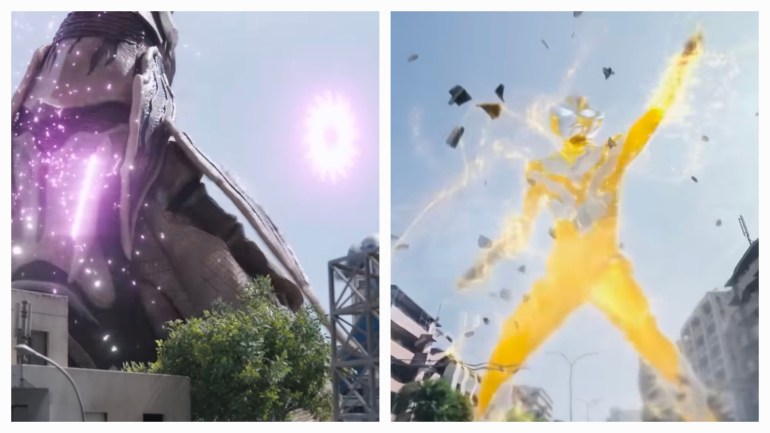
This episode introduces a new attack where Teo briefly turns purple and throws a spinning energy blade. Instead of behaving like a normal projectile, it continues flying around the battlefield after missing its initial target. It eventually slices through Sodera’s wing, flies past Teo, and keeps circling. The attack doesn’t look clean or deliberate. It almost feels like Teo unleashed something that was difficult to rein in.
On its own, that might not mean much.
But then I started thinking about Teo’s finishing attack.
We’ve already seen the golden aura and finishing beam before, but Episode 3 made me look at them differently. As Teo gathers that tremendous golden energy, debris begins levitating around him before the power condenses into his arm. Rather than effortlessly aiming the attack, he visibly struggles to contain it before finally releasing the beam.
Neither moment, by itself, necessarily means anything.
Together, though, they create a pattern.
Teo’s attacks don’t simply look powerful—they look difficult to wield.
That fits surprisingly well with what Episode 3 reveals about Ibuki.
Earlier in the episode, he discovers he can’t transform repeatedly because he’s never pushed himself enough to learn his own limits. If he’s spent his life avoiding conflict, it makes sense that he may not fully understand his own abilities either.
The problem may not be how much power Teo possesses.
It may be how little experience Ibuki has using it.
That’s what makes this idea so interesting.
Episode 3 didn’t convince me that Teo is stronger than I originally thought.
It convinced me that he understands his own powers less than I originally thought.
If that’s where the series is heading, then every battle isn’t simply about defeating the next kaiju. It’s also about Ibuki slowly learning what he’s truly capable of—and how to control power he’s never had a reason to master before.
Inspector’s Notes
Why Professor Minobe Works
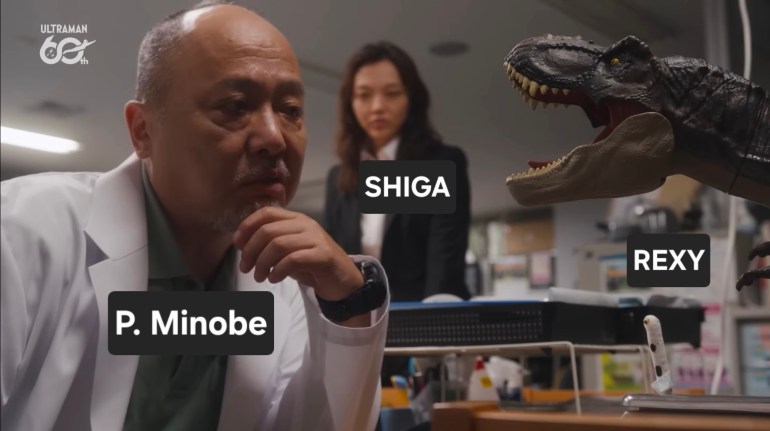
One of my favorite additions to Ultraman Teo so far is Professor Minobe.
When I talked about Episode 2, I said the show was “brave enough to be dorky.” Episode 3 doubles down on that idea, and Professor Minobe is a perfect example. He’s awkward, eccentric, and completely absorbed in whatever scientific mystery is in front of him. Instead of feeling out of place, that weirdness gives the series a surprising amount of charm.
After watching the episode, I looked him up and discovered that the actor performs under the stage name Makita Tools. I laughed out loud when I saw that. Knowing he’s a comedian suddenly made everything click. His timing, his strange little mannerisms, and the way he throws himself into every scene all make much more sense. I’m even starting to get a little bit of Jack Black energy from his performance.
The character himself is full of memorable quirks. He has that sharp inhale whenever something exciting occurs to him, he talks himself through his ideas without realizing anyone else is in the room, and at one point he becomes so engrossed in his own thoughts that Shiga quietly gives up trying to talk to him and simply walks away.
He never notices.
Instead, he starts asking the toy T. rex on his desk for its opinion.
I’ve decided its name is Rexy.
That scene made me laugh, but it also made me realize something important about why Professor Minobe works.
He’s excited for exactly the right reasons.
It would have been easy to write him as a kaiju fanboy who’s simply thrilled that giant monsters exist. Instead, the show presents him as a scientist who’s living through what may be the single greatest biological discovery in human history.
Of course he’s excited.
Imagine being a biologist and suddenly discovering that creatures once thought impossible are not only real, but alive in your own world. That’s the opportunity of a lifetime.
There’s a difference between studying something dangerous and idolizing it.
People study sharks because sharks are fascinating. That doesn’t mean they’re rooting for shark attacks.
Professor Minobe’s fascination feels much closer to that. He’s driven by curiosity, not by admiration for the destruction kaiju leave behind. That makes his enthusiasm believable instead of unsettling.
Shiga also plays a huge role in making him work.
Every comedy duo needs a straight man, and she’s the perfect foil for Minobe’s chaotic enthusiasm. While he’s chasing theories and talking to dinosaurs, she’s grounded, practical, and focused on the mission. Their personalities bounce off each other naturally, and I hope the series keeps putting them together because I think they’ll only become more entertaining as they spend more time together.
I’m also hoping the show doesn’t waste one of the more interesting ideas introduced in this episode.
Minobe manages to recover a tiny kaiju sample and immediately wants to begin studying it. Shiga ultimately tells him to forget about it, but I hope that’s not the end of the story. I’d love to see the UTTF quietly take possession of that sample and use it for future research.
I’m not looking for hard science fiction from Ultraman Teo, but I do enjoy seeing the series acknowledge that humanity would naturally want to study these creatures. Those kinds of details make the world feel richer and make organizations like the UTTF feel like they’re actually learning from each encounter rather than simply reacting to the next monster attack.
Episode 3 introduces Professor Minobe as a lovable oddball, but I hope that’s only the beginning. His curiosity is one of his greatest strengths, and I’d like to see it mature over time. Let him keep his excitement, his humor, and his eccentric personality—but let him also grapple with the reality that these incredible discoveries come with real human cost.
If Ultraman Teo follows through on that, I think Professor Minobe could become one of the series’ most enjoyable supporting characters.
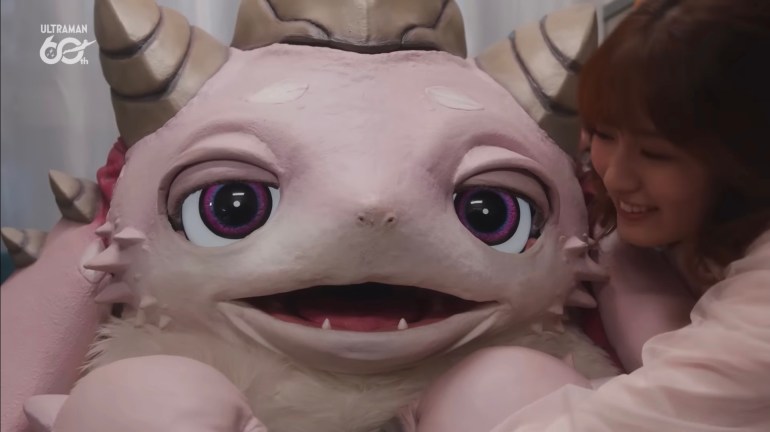
One thing I wasn’t sure about after watching Episode 3 was Pucchi’s name.
Did I miss something, or did Emma just… name him on the spot?
When Pucchi was in danger, she suddenly cried out, “Pucchi!” I kept waiting for someone to ask, “Wait… when did we decide to call him Pucchi?” But nobody ever did.
I assumed the explanation was coming later.
It never did.
It’s not a big deal—I actually think it’s kind of cute—but it made me laugh because everyone just immediately accepted the name.
That led me to something I found much more interesting.
Pucchi is this adorable little kaiju from another world, and the Astronomy Club immediately starts taking care of him. They’re hiding him, protecting him, feeding him, and trying to keep him safe.
The more I watched, the more the Astronomy Club started feeling like a family.
Emma feels like the sweet older sister.
Kanna is more like the stricter, no-nonsense older sister.
Becchi has that fun, goofy sibling energy.
Rintaro is quieter and more reserved.
Then there’s Ibuki, who’s trying to find his place somewhere in the middle of all of them.
That’s especially meaningful because Ibuki doesn’t really have a family anymore. He fled his home world and now spends his life fighting the very monsters that destroyed it.
Watching him slowly find a place among these people gives the group a warmth I wasn’t expecting.
Oddly enough, it reminded me of Masked Rider.
Prince Dex and Ferbus had a similar basic setup: an alien hero living on Earth while hiding a cute little creature from another world.
The difference is that Masked Rider never really worked for me.
I wanted to love that show. I genuinely enjoyed A Friend in Need, the Mighty Morphin Power Rangers crossover that introduced Prince Dex. It had a lot of promise.
But once the actual Masked Rider series began, it leaned heavily into sitcom comedy that just didn’t land for me. I watched several episodes hoping it would improve, but it never quite came together.
That’s why Pucchi interests me.
He feels like an opportunity to do the “cute alien companion” idea better.
Instead of existing just for slapstick comedy, Pucchi already feels like he’s becoming part of the group. His relationship with the Astronomy Club feels genuine, and because this is a Japanese production rather than an American adaptation, the writers have complete freedom to involve him directly in the story.
We’ve already seen him become important during the fight with Sodera.
I hope that’s only the beginning.
It’s funny because Ferbus has almost become a meme over the years. People jokingly celebrate him because he’s such a strange part of Masked Rider‘s legacy.
Pucchi feels different.
I don’t think I’m going to like him ironically.
I think I’m actually going to like him.
And if the show keeps developing both Pucchi and the Astronomy Club as this unconventional little family, I could see him becoming one of my favorite supporting characters in Ultraman Teo.

