

Kamen Rider Zeztz 44 – Rider Tears
Watch Analysis
The video and audio above contain the full unfiltered analysis. What follows is the razor focused version of the strongest point(s) I had to make.
A Good Idea That Didn’t Need an Entire Episode
Kamen Rider Zeztz Episode 44 is basically a glorified clip episode.
I don’t feel bad saying that, and I don’t feel the need to defend it. That doesn’t mean I’m suddenly down on Zeztz as a whole. Quite the opposite. I’ve really enjoyed this series, and I think Yuya Takahashi has done a lot of excellent work throughout its run.
What surprises me is that this is probably one of the classier, more tasteful ways to do a clip episode.
The problem isn’t the idea.
The problem is the execution.
Everything Episode 44 needed to accomplish could have been done in five minutes or less.
The Premise Is Strong
The core concept is genuinely compelling.
Nem isn’t simply remembering old adventures because the audience needs a recap. She’s losing them. One by one, the people closest to her disappear as her memories are erased.
That’s a frightening idea.
Watching her speak to someone for the last time before suddenly asking, “Who are you?” is unsettling. Every time it happened, it reinforced how completely her memories were being stripped away.
The acting sells those moments well.
In fact, those scenes are some of the strongest parts of the episode.
Unfortunately, they don’t require an entire episode to work.
This Could Have Been Five Minutes
That’s really my biggest criticism.
Imagine the story like this:
Nem encounters each of the important people in her life.
Their faces begin to glitch.
She realizes something is wrong.
They disappear.
Fade to white.
She wakes up in her new reality.
Nothing important is lost.
The audience still understands exactly what happened.
The emotional destination stays exactly the same.
The difference is that the story keeps moving instead of spending most of its runtime replaying scenes we’ve already watched.
The Preview Makes This Even Stranger
The preview for Episode 45 makes this choice feel even more unusual.
It looks like everyone Nem forgot is still going to exist in her world, just in different roles.
If that’s true, then the story we’re actually waiting to see doesn’t begin until Episode 45.
Episode 44 spends an entire episode getting us to the starting line.
That’s why it feels like setup instead of a complete story.
I Didn’t Feel What the Episode Wanted Me to Feel
I usually get emotional watching television.
I’m the kind of viewer who tears up pretty easily.
So it’s interesting that this episode didn’t leave much of an emotional impact on me.
It’s not that I felt nothing.
It’s that I don’t think I felt everything the episode wanted me to feel.
The scenes where Nem forgets people work.
Watching their faces distort in her memory works.
Her confusion works.
But replaying extended clips from earlier episodes didn’t deepen those emotions for me.
It just reminded me that I’d already experienced them.
We’ve Already Done This Recently
Part of the problem may simply be timing.
We just spent time revisiting Dawn’s past.
Now we’re revisiting much of the series again through Nem’s memories.
Instead of building toward the finale, the narrative pauses twice in only a handful of episodes.
That makes this recap feel even more noticeable than it otherwise would have.
Kamen Rider Usually Handles Emotional Victims Better
One thing I appreciate about modern Kamen Rider is how well it usually handles its victims.
Whether it’s the single-episode stories from older series or the two-part cases that became common throughout much of the Heisei era, Rider generally earns its emotional payoff.
It introduces someone new.
It lets us get to know them.
Then it asks us to care when tragedy strikes.
Episode 44 works differently.
Instead of creating new emotional investment, it mostly asks earlier episodes to carry the emotional weight.
That’s a much harder thing to pull off.
Final Thoughts
I still like Kamen Rider Zeztz.
One episode doesn’t change that.
I also don’t think Episode 44 is a lazy clip show.
There’s real thought behind its premise, and I appreciate what it was trying to do.
I just don’t think it needed an entire episode to do it.
In fact, I think the exact same story could have been told in the first three to five minutes of this episode before transitioning directly into Nem’s rewritten reality.
If Episode 45 begins with a recap of these events anyway, that’ll only reinforce that feeling.
For me, that’s what makes Episode 44 disappointing.
Not because the idea was bad.
Because the idea deserved a stronger execution.
Drop a comment and let me know where you stand on this.
Inspector’s Notes
The Order Matters: Why Baku Had to Be the Last Memory Nem Lost
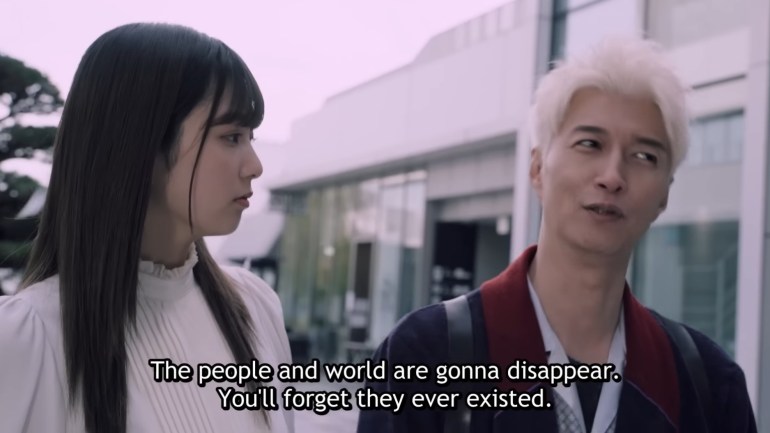
I didn’t enjoy Kamen Rider Zeztz Episode 44 very much.
I still think the story it tells could have been told in five minutes instead of an entire clip episode.
But there’s one storytelling decision I genuinely love.
Nem doesn’t lose her memories at random.
She loses them in order of emotional importance.
Each Character Is Closer to Nem Than the Last
The episode begins with Nox.
Early in the series, I actually wondered if Nox and Nem shared some deeper connection. They both move through dreams, so I expected there to be something bigger tying them together. That never really turned out to be the case, but there is still a connection between them.
Then comes Sieg.
Sieg isn’t just another Rider. He’s one of Nem’s clearest foils. Nem wants everyone to have good dreams. Sieg wants everyone to have bad dreams. They’re opposites in almost every way, so it makes sense that forgetting him carries more emotional weight than forgetting Nox.
Then comes Baku.
Baku Was Always Going to Be Last
Baku isn’t just another important character.
He’s been beside Nem throughout the entire series.
They’ve helped each other.
They’ve saved each other.
He’s the Dream Agent. She’s the Dream Girl. Their relationship has quietly become one of the emotional foundations of Zeztz.
So of course he’s the hardest person to forget.
In fact, I wonder if that’s the point.
Maybe the strongest emotional bond is the hardest one to break. Every weaker relationship has to disappear before the deepest one finally gives way.
The episode never says that’s how memory erasure works.
It doesn’t have to.
Emotionally, it feels right.
That’s why, even in an episode I didn’t care for overall, this sequence really worked for me.
It’s a small storytelling choice, but it’s one that shows the writers understood exactly which relationship mattered most.
Is This What Love Looks Like? The Lady’s Twisted Idea of Love in Kamen Rider Zeztz

One of the most interesting things about Kamen Rider Zeztz Episode 44 isn’t the memory loss itself.
It’s the reason behind it.
The Lady genuinely seems to believe she’s doing something loving.
And that’s what I can’t wrap my head around.
Love Doesn’t Erase Someone’s Life
The Lady doesn’t just want Nem to stay with her.
She wants to erase everyone else.
Every friendship.
Every memory.
Every connection.
Every piece of Nem’s identity that existed before the two of them met.
By the end of Episode 44, her ideal world is one where only the two of them matter.
That’s… not love.
At least, I don’t think it is.
Love doesn’t erase who someone is.
It doesn’t cut every tie they have to the rest of the world so they’ll only depend on you.
That’s possession.
So Why Does the Lady Think This Is Love?
That’s the question I keep coming back to.
What happened to her?
What made her believe that the only way to be loved is to remove everything and everyone else?
Why erase Nem’s past instead of simply giving her a happier future?
Why not create an illusion where they’ve always been mother and daughter?
Why does everyone else have to disappear?
There has to be something deeper going on here, because on its face, it doesn’t make emotional sense to me.
Maybe that’s intentional.
Maybe the Lady is so broken that she genuinely can’t tell the difference between love and possession anymore.
If that’s what the writers are going for, that’s a fascinating character study.
If not, I’m hoping the series gives us a little more insight before it ends.
Because right now, I understand what she’s trying to do.
I’m just not convinced I understand why she thinks this is love.
Loose Threads

I really appreciate one thing from the Episode 44 recap.
As Nem goes through her memories before losing them, they show this image of her supporting Baku—Zeztz. It’s such a strong shot. I can’t remember exactly which episode it’s from. I want to say somewhere around Episode 16. I remember seriously considering using it as the thumbnail for my analysis back then because it’s just that good.
She’s caring for him. She’s trying to help him.
It’s that classic image of someone holding another person up as they’re passing out, collapsing, or otherwise completely spent. Baku is slumped over in the suit in such a convincing way that you can tell he’s exhausted. He’s almost completely out of it. Almost powerless.
And Nem, at that point in the story, was pretty powerless herself.
Seeing her show him that compassion, that concern, and willingly put herself in danger to help him while there’s a monster attacking or whatever else is going on… I just love the nobility of it. I love the sweetness of it.
The fact that this is one of the shots they chose for the memory montage got me wondering.
When they filmed that scene originally, were they already planning to use it here? Or did it simply turn out to be such a good shot that they decided later it deserved to come back in the memory episode?
That also makes me wonder how far in advance Yuya Takahashi planned this episode.
Were certain shots framed specifically so they’d make powerful callbacks later?
I honestly don’t know what the production schedule looks like. I don’t know how far in advance these shows are written. Writing a year-long television series week after week sounds insane to me.
If it were me, I’d want at least a year of buffer if possible. Maybe six months.
Then again, if this is your full-time profession and your job is to write fifty or so teleplays over the course of a year, maybe you simply develop the ability to do it. I’d hope I could write one episode a week if that were my only job. Ideally, I’d get ahead and write two.
I don’t know.
I’ve never worked like that.
I write because I love it, and I’m trying to build it into my career, but I’m also balancing family and everything else life demands. Finding the time to write is hard enough. So trying to imagine someone who writes television professionally—and keeps all the story threads flowing for an entire year—is difficult for me.
What makes it even more impressive is that I believe Yuya Takahashi wrote every episode of Zeztz.
Most Kamen Rider series have multiple writers.
The only other examples that immediately come to mind are people like Yasuko Kobayashi, who wrote most of Ryuki and OOO. I think she also wrote Den-O, if I’m remembering correctly.
Then there’s Toshiki Inoue. If memory serves, he wrote all of Donbrothers, all of Kiva, and… what was the other one? I feel like he had another entire series. Maybe Agito? I don’t remember for sure.
It’s been a while.
I also don’t remember whether Jetman had additional writers, but I know he was the primary creative force there.
It just seems like such an incredible feat.
Riku Sanjo wrote a huge portion of Double. I don’t think he wrote every episode, but he certainly handled a large percentage of them.
Even that makes me wonder how it works.
How does someone become the primary writer for one of these toy-driven tokusatsu shows?
Why do some series have one main writer while others rely on several assistant writers?
I’ve also heard—and I don’t know if this is specifically a Japanese thing—that manga creators often have assistants.
The mangaka still receives credit for the work, even though assistants may draw backgrounds or help with other parts of the artwork.
Whether you think that’s fair or not isn’t really the point.
I’m just fascinated by the idea of authorship and how creative work gets made at this scale.
The same question keeps coming back.
How does one person write an entire year of television?
Do they only have the year it’s airing?
Or do they have a year and a half?
Two years?
Six months?
I’m also pretty sure, if I’m remembering correctly, that Shotaro Ishinomori got his start helping Osamu Tezuka when Tezuka was sick. I don’t remember which manga it was, but I think Ishinomori stepped in, drew in Tezuka’s style for a few chapters, and eventually became one of Tezuka’s assistants before establishing himself as a mangaka in his own right.
I think that’s a really cool story.
But anyway—that’s another tangent.
Coming back to Episode 44, I wonder who actually put the memory montage together.
Did Takahashi simply write something like:
-Nem meets Sieg.
-Nem meets Nox.
-Nem meets Baku.
-She loses her memories in that order.
Then he wrote the new dialogue, while the episode’s director or editor went back through the series to choose the specific clips that best represented each relationship?
Or was Takahashi involved in selecting those moments too?
If you know the answer to any of these questions—or if you have any insight into how tokusatsu production works—I would genuinely love to hear it. These are the kinds of behind-the-scenes questions that fascinate me as both a writer and someone who loves analyzing how these shows are put together.
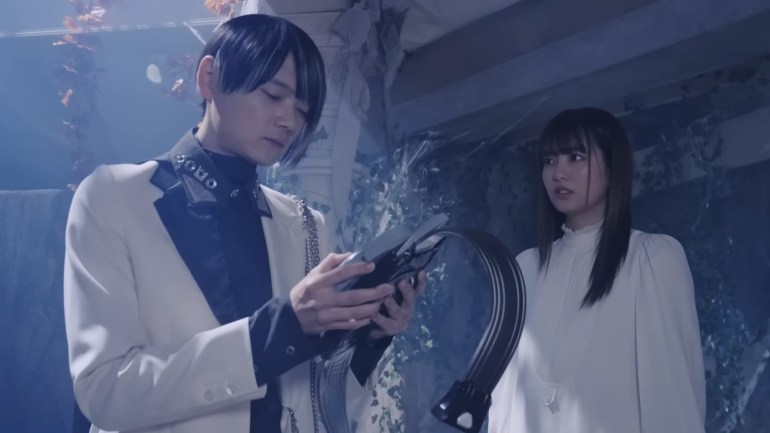
I was shocked by the—I don’t know—the sloppiness of the events, the sloppiness of the blocking, for Nox Odaka.
Previously, he was walking away from his responsibility, holding onto his transformation device, and acting as if he didn’t want to continue using his power to help people.
Then, in the following episode, Mr. Fujimi was trying to convince him to use that power responsibly. Before anything can really come of that, Catastrophe Gore somehow jumps into his transformation device and breaks it.
I don’t know how much sense that makes.
Was the transformation device somehow like a sleeping person that he could enter?
I don’t think so.
Does it contain a piece of somebody’s brain? Maybe, if they’re really leaning into the horror of Code. But only if that’s actually what’s happening.
Otherwise… that doesn’t make much sense to me.
Then there’s this dream connection that Nem has with Odaka before he disappears.
Is this actually Odaka?
Or is this Nem’s perception of Odaka?
I don’t know.
Are these cognitive constructs she’s forgetting? Are they representations of the people in her memories before they disappear?
Actually…
Now that I have the chance to think about it, I’m not sure that’s right.
I think these are actually the people she encountered in the dream while she was forgetting everything.
The people she talked to.
I think those encounters were real within the dream. Those conversations really happened. They were simply being removed from her mind as the dream progressed.
Maybe I’m wrong.
But that’s what feels logical to me.
That’s what feels like it makes the most sense.
Anyway, let me get back to my point about Nox Odaka.
Is it that he can’t use the power anymore, even though he wanted to?
Or is it that he didn’t want to use the power, and now he can’t even if he changes his mind?
That’s the part I struggle with.
Then again, people do this all the time.
We dilly-dally.
We’re wishy-washy.
We say we’re not going to do something, and then we decide to do it anyway.
Sometimes we’re afraid.
Sometimes we lack confidence.
Sometimes we’re just insecure.
But…
Now that I’ve said that out loud, it still doesn’t really feel like Odaka.
He’s always seemed like the kind of person who commits completely once he’s made up his mind.
On the other hand, maybe that’s exactly why he hesitates before making a decision.
Maybe he knows that once he chooses a path, he’s going to throw himself into it completely.
Now that his revenge against Code is over—meaning he destroyed their dream manipulation system—maybe he finally has the opportunity to walk away from this entire nightmare.
If he doesn’t have to fight anymore…
Why should he?
That’s an understandable way to think.
And maybe this is one of those situations where you don’t know what you have until it’s gone.
Maybe losing his transformation device made him realize:
I should have been in the fight.
I should have been helping people.
I should have been using this power while I still had it.
That’s completely reasonable.
But I don’t feel like that’s what the episode actually communicated.
That’s what frustrates me.
I genuinely think this may be a misstep.
It’s one of those Hitchcock—or maybe refrigerator—moments.
You don’t notice it while you’re watching.
Everything feels fine.
Then later you stop and think:
Wait a minute…
That doesn’t actually make sense.
That’s what I’m trying to call out.
This moment didn’t make sense to me.
And I honestly don’t know whether it’s a flaw in the episode…
…or whether I’m the one who’s misreading it.
I’d genuinely be curious to hear how everyone else interpreted it.

