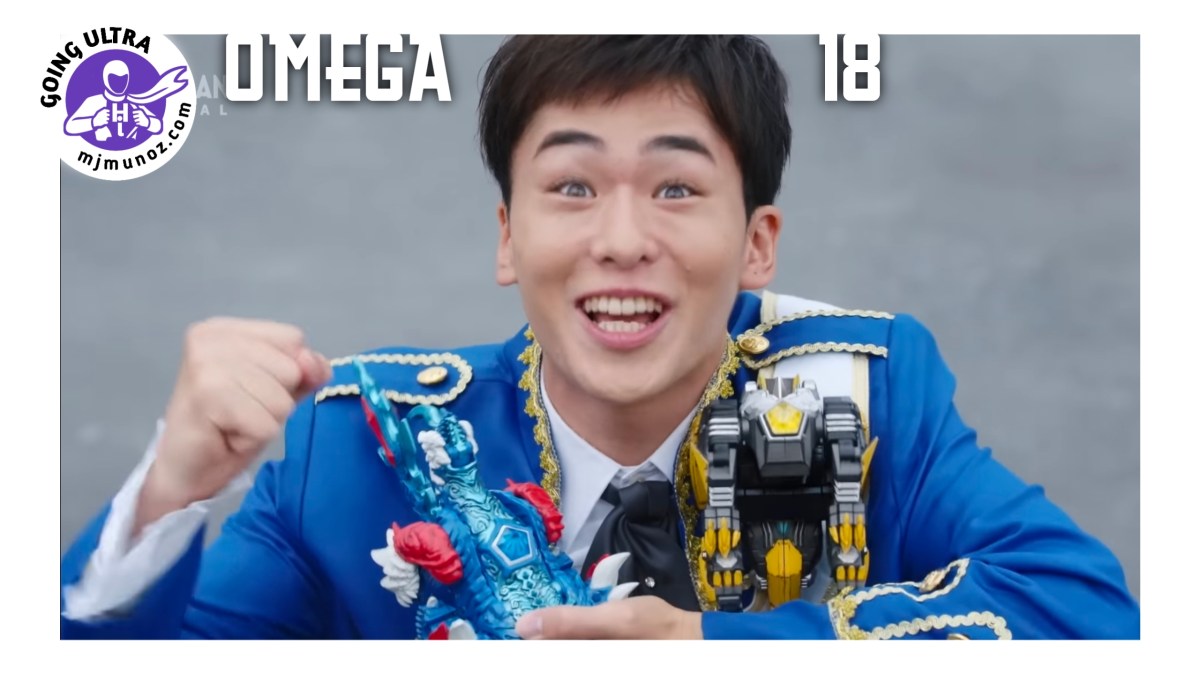
Ultraman Teo 09 – Going Ultra – Presented by Henshin Inspection
The video and audio above contain the full unfiltered analysis. What follows is the razor focused version of the strongest point I had to make.
How Ultraman Omega Episode 18 Sells Toys Without Feeling Like a Commercial
Ultraman Omega Episode 18 is a very fun episode. Is it very meaningful to the series overall? Not really. It’s a filler episode, or a one-off episode, whatever you want to call it. But that doesn’t matter to me because it was thoroughly entertaining.
It’s just good television.
One of the most surprising things about it is that while it’s random, bizarre, and weird, everything makes sense from an in-universe perspective. At the same time, it also makes sense from an out-of-universe “let’s sell some toys” perspective. Those two ideas actually dovetail together quite nicely, and that’s exactly what I want to see.
Training Makes the World Feel Real
The episode begins with Kosei and Sorato out camping. Really, they’re training.
I’m not entirely sure whether they’re training Kosei with the Meteokaiju or whether Sorato is simply sparring against them, but either way, they’re practicing.
I like seeing that because it makes sense.
If you’re going to put your life on the line every week fighting giant monsters, you should probably become as proficient as possible so you don’t die.
It’s refreshing to see the series acknowledge that.
Even if they had simply mentioned earlier that the team trains regularly, it would have made the world feel more believable. Actually seeing it is even better.
Later, the episode casually mentions that the team goes out for karaoke together.
It’s one small line, but it adds texture to their friendship. It makes them feel like real people who have lives outside of fighting monsters.
Just like the training.
Every Meteokaiju Gets a Chance to Shine
The training sequence also gives us something else.
We get to spend time with all three Meteokaiju.
From a story perspective, it isn’t entirely clear why Kosei keeps swapping between them so quickly. It almost feels like they’re giving up on him after only a few attempts, and Sorato even suggests Kosei might be trying too hard.
But from a meta perspective, it’s brilliant.
Instead of simply showing us the toys, the episode gives every Meteokaiju personality.
Rekiness gives Omega the toughest fight.
Trigaron ends up acting like an oversized cat getting its belly rubbed.
Valgeness behaves differently because of its ranged attacks before being recalled.
They’re not just accessories anymore. They start feeling like companions.
This Is How You Sell Toys
Then Alien Barossa Zahgon shows up.
After shrinking Sorato and Kosei, he plays with the Meteokaiju.
It’s funny because that’s exactly what fans probably do with the real toys.
On its own, that’s amusing.
But honestly, that’s the weaker way the episode sells them.
The stronger moment comes during the rescue.
Ayumu arrives after detecting abnormal gravity waves near where Sorato and Kosei disappeared. Eventually, all three miniature Meteokaiju spring to life.
They’re still toy-sized, but they’re fully animated.
Kosei is tiny.
Ayumu is normal size.
Alien Barossa Zahgon is fighting them inside his own house.
If you describe that scene to someone who hasn’t seen the episode, it sounds ridiculous.
Inside the episode, though, it makes complete sense.
Instead of watching giant kaiju fight through a city, we’re watching tiny living Meteokaiju battle Alien Barossa while miniature Kosei cheers them on.
It’s weird.
It’s quirky.
It’s incredibly charming.
I loved it.
Execution Is Everything
Last week I was annoyed enough by the toy promotion that I even made a meme about it.
Episode 18 completely erased that frustration.
Not because it stopped selling toys.
Because it finally sold them well.
Maybe I simply need to loosen up.
Maybe the previous episode handled the merchandising poorly while this one handled it the right way.
Or maybe it’s something else entirely.
Whatever the answer is, this episode changed my mind.
Merchandising isn’t automatically bad.
It all comes down to execution.
The idea itself isn’t inherently good or bad.
It’s how you execute that idea.
Episode 18 executes it beautifully.
Final Thoughts
This may not be an essential episode in Ultraman Omega‘s larger story, but it might be one of the best examples of how modern tokusatsu should handle merchandising.
The toys aren’t hidden.
They’re celebrated.
More importantly, they’re integrated into an entertaining story instead of interrupting one.
If every toy-focused episode were handled this well, I don’t think I’d complain about merchandising nearly as often.
I’d simply enjoy the show. And that’s exactly what happened here.
All Zeztz Analysis | All Omega Analysis
Drop a comment below or tag me @MJ_Scribe on Twitter. Let’s have some fun talking about this.
If you enjoy thoughtful stories for kids and families, check out my book Mockwing Mayhem. Its a heartfelt adventure about magical bugs battling monsters and protecting children.
You can find more of my reviews, reflections, and stories with spine at mjmunoz.com, and join the mailing list there for behind the scenes updates and new releases.
Dive deeper with Inspector’s Notes
What’s the Difference Between an Alien and a Kaiju in Ultraman?
One thing Ultraman Omega Episode 18 got me thinking about has nothing to do with the plot itself.
Is there actually an official and meaningful difference between aliens and kaiju in the Ultra Series?
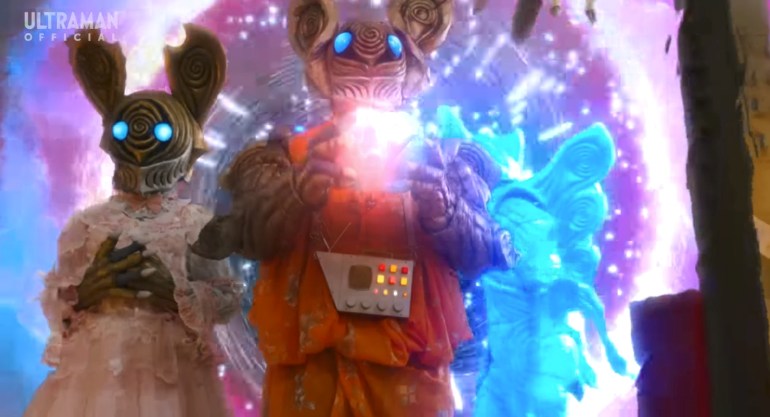
Alien Barossa shows up in Episode 18, and everyone consistently calls him an alien. That makes sense.
But then there are kaiju that come from outer space or other planets, and depending on the series they’re called Space Kaiju.
So what’s the difference?
Is it intelligence?
Is it whether they have a civilization?
Is it simply whatever the writers decide fits that particular character?
What really got me wondering was Ayumu tracking what I think was a kaiju signal—or some kind of kaiju energy—that ultimately led her to Alien Barossa and his sister.
If that’s what happened, then the terminology starts getting a little blurry.
Maybe there’s an official explanation that longtime Ultra fans already know.
Maybe there isn’t.
Either way, I’d love to be educated.
If you know where the Ultra Series officially draws the line between aliens and kaiju, let me know. It’s one of those little worldbuilding details that I never really thought about until Episode 18 made me stop and ask the question.
Is Old-School Ultraman Just Better?
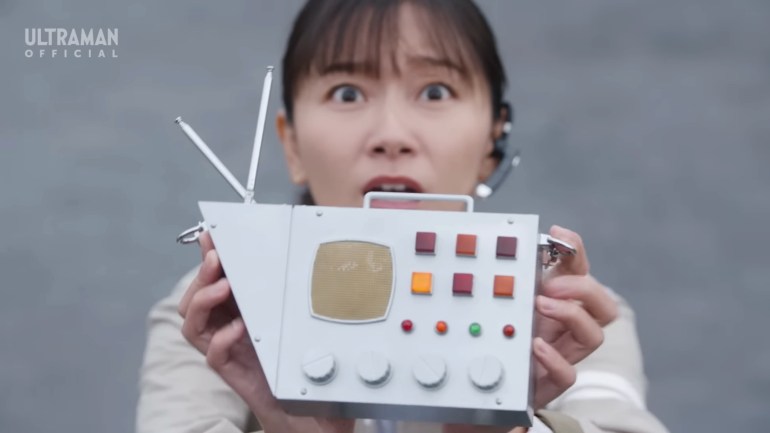
Ultraman Omega Episode 18 feels like a throwback. It’s got retro technology, it takes an almost silly approach to things, and it feels very Showa in the way it’s doing everything.
And yet…it’s a lot better than a lot of the modern stuff.
It even does a better job of selling the toys to me.
So it got me wondering: is old-school just better?
When people take that older, classic approach to Ultraman, does it just turn out better?
There are a few throwback episodes that immediately come to mind. The one with the musicians in Ultraman Blazar is excellent. In Ultraman Z, there’s the episode with the Ferris wheel that references the year 2023. It’s very simple, very odd, very strange…and it’s really good.
Those are both throwback episodes, and now I’d add Ultraman Omega Episode 18 to that list.
It’s using a newer character like Alien Barossa, but it surrounds him with older technology and an older vibe, and the result is just really, really good.
So I don’t know.
Is the older style of Ultraman just better?
Or am I missing something?
I’d genuinely like to hear what longtime Ultra fans think, because the more I watch these modern episodes that embrace the classic formula, the more I find myself enjoying them the most.
Was Ultraman Omega Episode 18 Random…or Secretly Brilliant?

Ultraman Omega Episode 18 is one of my favorite episodes of Omega. I don’t know if it’s better than Episode 5 or not, but it feels funny calling it one of my favorites because it’s kind of random.
And yet…it’s brilliant.
Or maybe I’m not even sure it’s brilliant.
I just know I enjoyed it.
You’ve got Alien Barossa capturing Kos and Sorato because he wants the Meteokaiju. Then you’ve got his sister capturing Kos because she wants him to be her Prince Charming after seeing a prince rescue a princess through her telescope years ago.
It’s just…weird.
Then Kos points out the scientific fact that light takes time to travel. So what she actually saw should have happened hundreds of years earlier. The episode plays with a real hard sci-fi idea, but it uses it in a very soft sci-fi way to make a joke while also doing something genuinely interesting.
It’s such an odd combination of ideas.
The whole episode feels like it’s somewhere between random and brilliant.
But I don’t actually think it’s random.
I think it’s well made. I think it’s well constructed. Everything fits together too well for it to be random.
At the same time, I’m struggling to explain why it works so well.
What’s the secret sauce?
Why does an episode with such a bizarre premise end up being one of my favorites of the series?
I’m genuinely curious what other people think.
Was Episode 18 just random and dumb?
Or was it secretly brilliant?
And if it was brilliant…what made it work?

