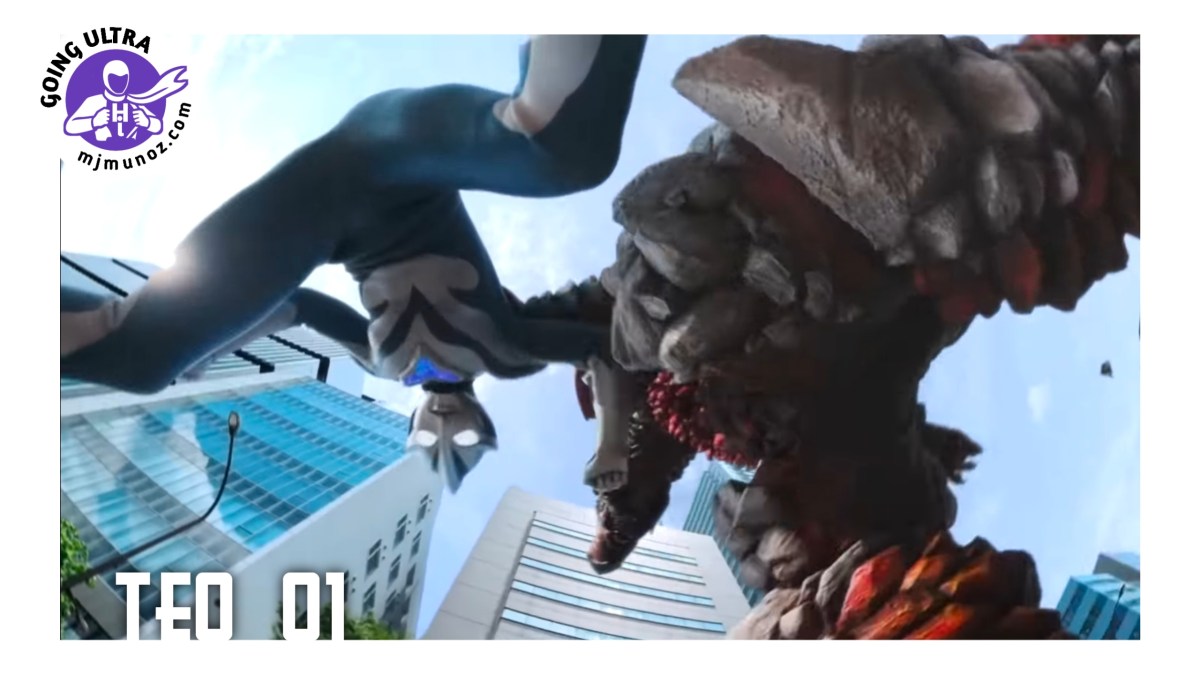
Ultraman Teo 01 – Going Ultra – Presented by Henshin Inspection
The video and audio above contain the full unfiltered analysis. What follows is the razor focused version of the strongest point I had to make.
Ibuki Doesn’t Just Look Like an Alien—He Feels Like One
The thing I liked most about Ultraman Teo Episode 1 is how well it conveys Ibuki’s loneliness. More importantly, he doesn’t just look like an alien. He genuinely feels alien.
Sometimes that’s because he doesn’t know how to fit into Earth’s culture. We even see that he carries these little flash cards on a ring where he makes notes for himself about different customs and behaviors. He studies humanity because none of it comes naturally to him.
There are even subtle moments where you can see his own culture peeking through. A man lowers his head and steps aside, and Ibuki asks if he’s letting him go first. It’s a tiny interaction, but I think it shows that his understanding of social customs is simply different. He’s awkward because he’s not an Earthling.
Even the English dub, which I’m watching, contributes to that feeling. His voice feels just a little strange at first. By the end of the episode it already felt more natural, and I don’t know whether that’s because I acclimated to it or because Ibuki himself is beginning to settle into this world.
Loneliness Is Everywhere in the Episode
The loneliness isn’t just in the dialogue. It’s built into the visuals.
There’s a shot where Ibuki is framed almost completely by himself. It’s like these black curtains close in from both sides until he’s standing in this thin vertical strip in the center of the frame. Even though he’s in a place that should be full of people, he feels completely alone.
That image really stuck with me.
His classmates reinforce the same idea in a different way.
Rintaro tells him he doesn’t want to make friends. Later, Kanna is disappointed that someone else showed up where the meteorite landed because she wanted to investigate it herself. They’re people who choose isolation.
Ibuki isn’t.
He’s the last survivor of Planet H12. He’s a stranger in a strange land, and he doesn’t want to have to be isolated and alone. Yet the people around him, who already have a home and a place where they belong, are the ones choosing to pull away from other people.
I think that’s a really interesting contrast.
There’s another moment when Vialoga appears. Everyone around him is watching through their phones, recording what they think is an amazing event. Ibuki isn’t looking through a screen. He’s looking with his own eyes because he knows exactly what this creature is capable of.
Once again, he’s alone in a way nobody else is.
Vialoga Isn’t Just a Monster
The destruction of Planet H12 gives emotional weight to everything that follows.
When Vialoga appears on Earth, Ibuki wants to run.
That isn’t cowardice.
He’s already watched this kaiju destroy his home. He watched his world explode. Nobody else in the crowd understands what they’re seeing, but Ibuki does. He’s carrying a burden that nobody else around him is carrying.
That makes his fear believable.
Choosing Connection Gives Ibuki the Strength to Fight
The turning point comes when Ibuki recognizes the little boy and his dog from earlier in the episode.
He had every reason to keep running.
Instead, he stands between that child and Vialoga. Alone. He stretches out his arms and is willing to be destroyed if that’s what it takes to protect someone else.
That’s when everything changes.
His device activates.
He transforms into Ultraman Teo.
For me, that’s the payoff to everything the episode has been building toward.
Ibuki begins this story isolated. He’s the last survivor of his world. He doesn’t understand Earth. He can’t quite connect with the people around him.
But the moment he chooses to reach beyond his own isolation and protect another person, that’s when he finds the strength to become Ultraman.
Final Thoughts
For me, Ultraman Teo Episode 1 isn’t really about Vialoga.
It isn’t even primarily about Teo’s first fight.
It’s about loneliness.
It’s about being a stranger in a strange land.
And it’s about discovering that the answer to loneliness isn’t running away from other people. It’s choosing connection anyway.
If that’s the emotional foundation the series is building on, then I think Ultraman Teo is off to a very promising start.
What do you think of Teo episode 1? Did you like it? Did you feel Ibuki’s lonliness?
All Zeztz Analysis | All Omega Analysis
Drop a comment below or tag me @MJ_Scribe on Twitter. Let’s have some fun talking about this.
If you enjoy thoughtful stories for kids and families, check out my book Mockwing Mayhem. Its a heartfelt adventure about magical bugs battling monsters and protecting children.
You can find more of my reviews, reflections, and stories with spine at mjmunoz.com, and join the mailing list there for behind the scenes updates and new releases.
Dive deeper with Inspector’s Notes
Ultraman Teo’s Beautiful Shadow Homage to Ultraman History
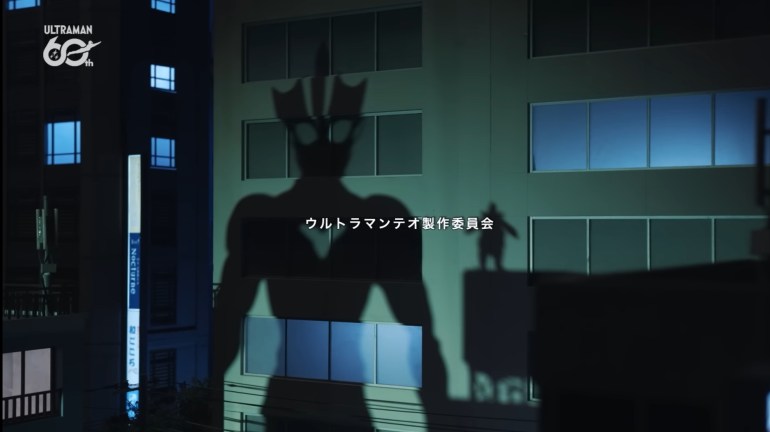
One of my favorite images in Ultraman Teo Episode 1 isn’t part of the fight at all. It’s this quiet shot from the ending sequence, and I don’t know if everyone realizes just how cool it is.
On the surface, it’s wonderfully simple tokusatsu craftsmanship.
We’re looking at a miniature city set with shadows cast across the buildings. The silhouettes are unmistakable. You can immediately recognize Ultraman Teo standing beside little Pucchi simply from their outlines. It’s essentially shadow puppetry, but executed with miniature filmmaking techniques that have been part of tokusatsu’s toolbox for decades.
That alone would have made for a beautiful image.
What makes it even more interesting is that it feels like a conversation with Ultraman’s past.
The original Ultraman used striking silhouette imagery in its opening titles. Ultraseven did something similar. More recently, Ultraman Omega used bold, colorful silhouette compositions during its opening sequence to introduce its principal characters.
Ultraman Teo takes that visual tradition and gives it a slightly different flavor. Instead of graphic silhouettes floating against abstract backgrounds, they’re projected onto a miniature cityscape. It’s an old-school practical effect being used in a fresh way.
I don’t know that I’ve ever seen the Ultra Series do this exact technique before.
What really sells the moment for me, though, isn’t just the image itself.
It’s the feeling.
Combined with the ending music, the silhouettes create something that’s melancholy, somber, and quietly beautiful. There’s almost a reflective quality to it, especially coming after an episode about a hero who has lost his entire world. Whether that emotional resonance is intentional or not, it landed for me.
One of the things I continue to appreciate about tokusatsu is that it often achieves memorable imagery through simple practical techniques rather than overwhelming spectacle. A carefully lit miniature, a shadow, and a familiar silhouette can sometimes communicate more than elaborate visual effects ever could.
That’s what this shot reminded me of.
It’s classy.
It’s understated.
And it’s a beautiful example of Ultraman remembering where it came from while still finding new ways to present those ideas.
Feeling Alone in a Room Full of People
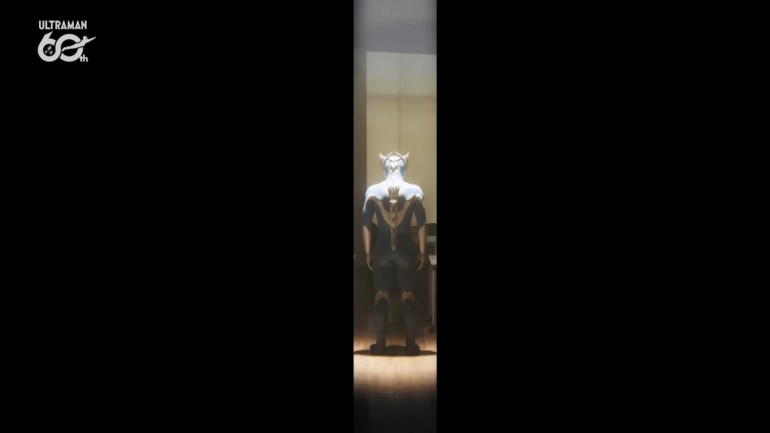
One of the most striking images in Ultraman Teo Episode 1 lasts only a few seconds.
It comes just before what I think is a commercial break. Teo stands at human size with his back to the camera, facing what looks like a classroom wall. Black bars close in from both sides until only a narrow vertical strip of the frame remains.
It’s a simple image.
But I think it communicates something profound.
Ibuki is uniquely alone. His planet is gone. His people are gone. His family is almost certainly gone. He’s a stranger in a strange land, trying to figure out how to live among people whose customs he barely understands.
The composition reflects that perfectly.
Everything falls away except him.
As I watched it, I was reminded of an episode of Buffy the Vampire Slayer that has stuck with me for years.
Cordelia tells Buffy that she can be in a room full of people and still feel completely alone.
That line always stayed with me because it’s true.
Loneliness isn’t always about physical isolation.
Sometimes you’re surrounded by classmates, coworkers, friends, or even family, and you still feel like nobody really knows you.
That’s the kind of loneliness I think this image captures.
What makes it even more interesting is that Ibuki’s loneliness isn’t self-inflicted. He desperately wants connection. Throughout the episode he’s trying to understand people, trying to talk to classmates, trying to find somewhere he belongs.
He’s reaching out.
The visual reminds us that reaching out doesn’t always make the loneliness disappear immediately.
I also couldn’t help thinking about how often we hear people talk about a modern loneliness epidemic. Whether that’s the theme Ultraman Teo is building toward or not, I don’t know yet. But if the series continues exploring that idea, I think it has the potential to resonate with a lot of people.
Because most of us will never lose an entire planet.
But many of us know exactly what it feels like to stand in a room full of people and still feel completely alone.
Ultraman Teo Proves Commercial Art Can Still Be Beautiful
People like to talk about AI slop these days.
Sometimes they talk about “human slop,” too. The idea that commercial art is somehow lesser simply because it’s made for a product or a franchise.
I don’t buy that.
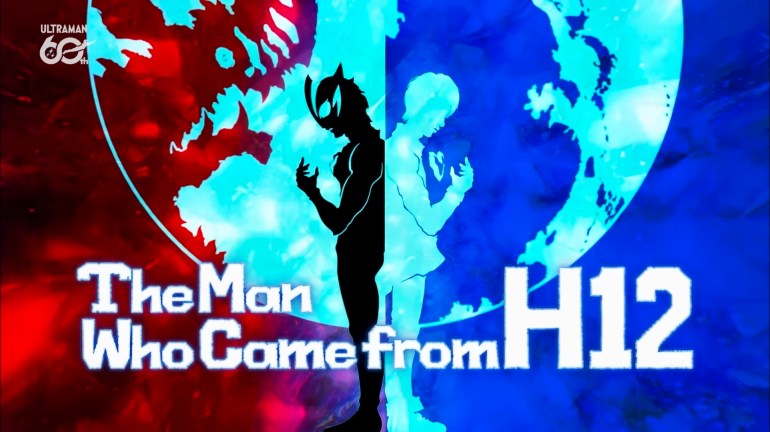
This title card from Ultraman Teo Episode 1 is a perfect example of why.
It’s only on screen for a few moments, but somebody put real thought into it. Whether it was painted digitally or created through more traditional methods doesn’t really matter to me. Someone still had to design it. Someone still had to think about the composition, the color, the silhouette, and the mood they wanted to create.
You can feel that care.
The image is striking. It’s iconic. I love the contrast between the red and blue halves of the composition, with Teo and Ibuki standing back-to-back in silhouette. Even though Teo’s colors are primarily blue and silver, the artwork uses red and blue to create visual tension that immediately catches your eye.
More importantly, it reinforces one of the episode’s emotional ideas.
Even split across two halves of the image, both Teo and Ibuki feel isolated. The composition itself communicates loneliness before either character says a word.
That’s good visual storytelling.
One of the reasons I love tokusatsu is that it regularly reminds me commercial art doesn’t have to be disposable.
Yes, Ultraman Teo exists, in part, to sell toys.
But that doesn’t prevent the artists, designers, filmmakers, and illustrators from making something beautiful.
In fact, I think moments like this are proof that commercial art can still be genuine art.
This isn’t even the series logo that’s going to appear every week.
It’s an episode-specific title card that lasts only a few seconds.
Somebody cared enough to make it memorable anyway.
I find that encouraging.
There’s a tendency to assume that if something is commercial, it’s automatically shallow. I don’t think that’s true. Sometimes artists working inside commercial projects create images that are thoughtful, elegant, and emotionally resonant.
For me, this title card is one of those images.
It’s simple.
It’s classy.
And it’s a wonderful reminder that craftsmanship still matters.

